


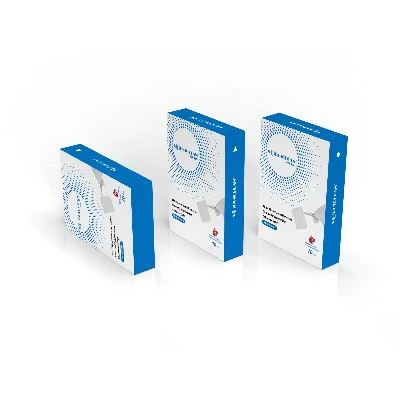
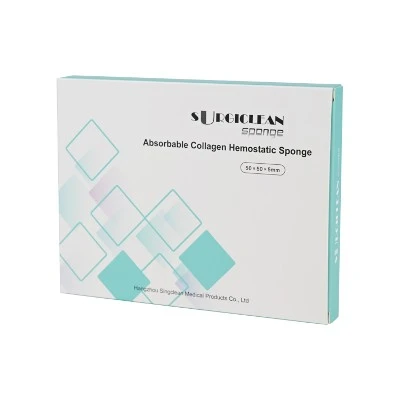

Is Absorbable Hemostatic Powder biodegradable?
As a supplier of Absorbable Hemostatic Powder, I often encounter questions from medical professionals, researchers, and potential customers regarding the biodegradability of our product. This is a crucial aspect, as biodegradability not only impacts the safety and efficacy of the hemostatic powder but also has implications for the overall patient experience and environmental considerations.
Understanding Biodegradability
Biodegradability refers to the ability of a substance to be broken down by living organisms, typically bacteria, fungi, or other microorganisms, into simpler substances such as water, carbon dioxide, and biomass. In the context of medical products, biodegradability is highly desirable as it reduces the risk of long - term foreign body reactions and eliminates the need for additional surgical procedures to remove the product.
For an absorbable hemostatic powder, biodegradability means that once it has fulfilled its hemostatic function at the site of bleeding, it will gradually be broken down and absorbed by the body. This process should occur in a timely and predictable manner, without causing any adverse effects.
The Science Behind Absorbable Hemostatic Powder Biodegradability
Our Absorbable Hemostatic Powder is formulated using advanced biomaterials that are specifically designed to be biodegradable. These materials are carefully selected based on their biocompatibility, hemostatic properties, and degradation characteristics.
Most of the hemostatic powders in our product line are composed of natural polymers or polysaccharides. For example, some powders contain chitosan, a biopolymer derived from chitin, which is found in the exoskeletons of crustaceans. Chitosan has excellent hemostatic properties as it can interact with blood cells and proteins to form a stable clot. At the same time, it is biodegradable. Enzymes in the body, such as lysozyme, can break down chitosan into smaller oligosaccharides, which are then further metabolized and excreted from the body.
Another common component in our absorbable hemostatic powders is gelatin. Gelatin is a denatured form of collagen, a protein that is abundant in the human body. When the hemostatic powder containing gelatin is applied to a bleeding site, it forms a gel - like matrix that helps to stop the bleeding. Over time, proteolytic enzymes in the body break down the gelatin into amino acids, which are then reused by the body for various physiological processes.

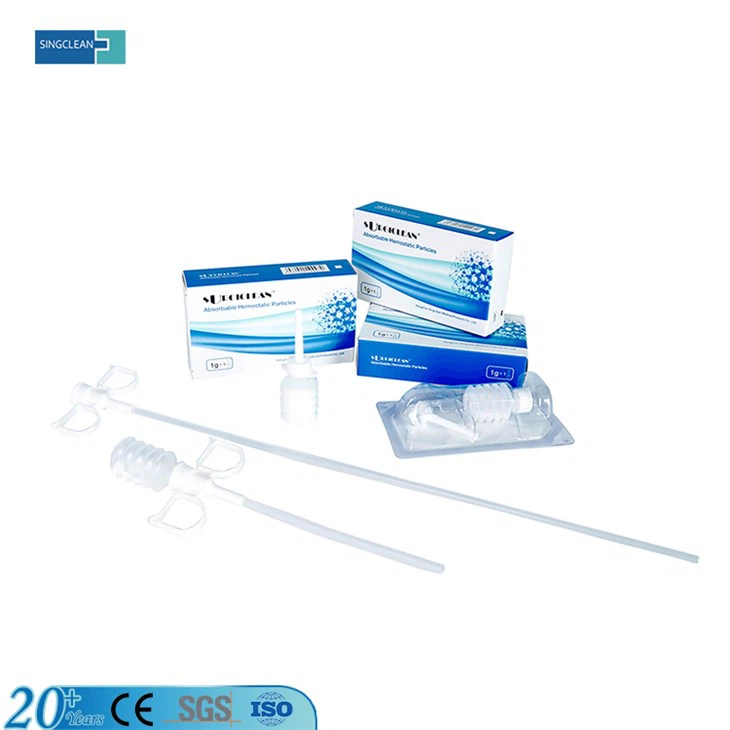
Benefits of Biodegradable Absorbable Hemostatic Powder
Patient Safety
The biodegradability of our hemostatic powder significantly enhances patient safety. Since the powder is gradually absorbed by the body, there is no need for a secondary surgical procedure to remove it. This reduces the risk of complications associated with foreign body retention, such as infection, inflammation, and tissue damage.
Efficacy
Biodegradable hemostatic powders can maintain their hemostatic efficacy while gradually degrading. The initial formation of a clot by the powder stops the bleeding, and as the powder degrades, it allows for normal tissue repair and regeneration to occur. This is particularly important in surgical procedures where a clean and healthy wound environment is essential for successful healing.
Environmental Impact
In addition to the benefits for patients, the biodegradability of our hemostatic powder also has a positive impact on the environment. Non - biodegradable medical products can contribute to the accumulation of waste in landfills and may have long - term environmental consequences. Our biodegradable powder breaks down naturally, reducing the environmental burden.
Evidence of Biodegradability
Extensive pre - clinical and clinical studies have been conducted to evaluate the biodegradability of our Absorbable Hemostatic Powder. In pre - clinical studies, animal models are used to observe the degradation process of the powder in vivo. These studies typically involve histological and biochemical analyses to determine the rate and mechanism of degradation.
Clinical trials also provide valuable data on the biodegradability of our product. By following patients over a period of time after the application of the hemostatic powder, we can monitor the body's response and the disappearance of the powder from the site of application. The results of these studies consistently demonstrate that our Absorbable Hemostatic Powder is biodegradable within a reasonable time frame and does not cause any significant adverse effects.
Applications of Biodegradable Absorbable Hemostatic Powder
Our biodegradable absorbable hemostatic powder has a wide range of applications in the medical field. It is commonly used in surgical procedures, including general surgery, orthopedic surgery, and cardiovascular surgery. In these procedures, the powder can be applied directly to the bleeding site to quickly stop the bleeding, reducing blood loss and improving the surgical outcome.
It is also used in dental surgery, where it can help to control bleeding after tooth extraction or other dental procedures. In addition, the powder has potential applications in emergency medicine, where rapid hemostasis is crucial for saving lives.
Related Products
If you are interested in learning more about our hemostatic products, you can visit the following links:
Contact for Procurement
If you are a medical institution, distributor, or researcher interested in our Absorbable Hemostatic Powder, we welcome you to contact us for procurement and further discussion. Our team of experts is ready to provide you with detailed product information, technical support, and competitive pricing. We are committed to providing high - quality biodegradable hemostatic solutions to meet your specific needs.
References
- Muzzarelli, R. A. A., Mattioli - Balaghi, M., & Boudrant, J. (1994). Chitosan: Properties and applications. In Chitin and chitosan (pp. 1 - 27). Elsevier.
- Silverstein, P., & DiPietro, L. A. (2004). The role of gelatin in wound healing. Journal of Long - Term Effects of Medical Implants, 14(3), 261 - 278.
- Wang, X., & Gao, C. (2010). Chitosan - based biomaterials for tissue engineering. Progress in Polymer Science, 35(1), 128 - 142.