


How does sponge hemostatic interact with the wound surface?
As a leading provider of sponge hemostatic products, I am often asked about how these remarkable medical devices interact with the wound surface to achieve rapid and effective hemostasis. In this blog post, I will delve into the science behind sponge hemostatic and explain the mechanisms by which they work to control bleeding and promote wound healing.
The Basics of Hemostasis
Before we discuss how sponge hemostatic interact with the wound surface, it's important to understand the basic process of hemostasis. Hemostasis is the body's natural response to bleeding, and it involves three main steps: vascular spasm, platelet plug formation, and blood clotting.

- Vascular spasm: When a blood vessel is damaged, the smooth muscle in the vessel wall contracts, causing the vessel to narrow. This reduces blood flow to the damaged area, which helps to minimize blood loss.
- Platelet plug formation: Platelets are small, disc-shaped cells in the blood that play a crucial role in hemostasis. When a blood vessel is damaged, platelets adhere to the exposed collagen in the vessel wall and release chemicals that attract more platelets to the site of injury. The platelets then aggregate to form a plug, which helps to seal the damaged blood vessel.
- Blood clotting: Blood clotting, also known as coagulation, is a complex series of chemical reactions that involves the activation of clotting factors in the blood. These clotting factors interact with each other to form a fibrin mesh, which traps red blood cells and platelets to form a clot. The clot then seals the damaged blood vessel and prevents further bleeding.
How Sponge Hemostatic Work
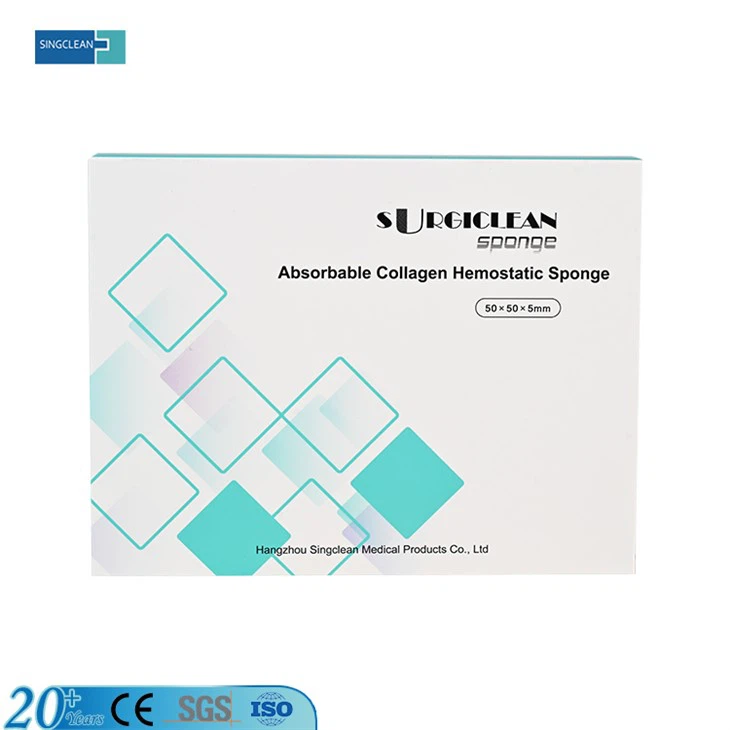
Sponge hemostatic are medical devices that are designed to promote hemostasis by providing a physical scaffold for platelet adhesion and activation, as well as by enhancing the blood clotting cascade. There are several different types of sponge hemostatic available on the market, including Absorbable Hemostatic Sponge, Hemostatic Collagen Sponge, and Collagen Hemostat. Each type of sponge hemostatic works slightly differently, but they all share the same basic principle of promoting hemostasis by interacting with the wound surface.
Physical Interaction with the Wound Surface
One of the primary ways that sponge hemostatic interact with the wound surface is by providing a physical scaffold for platelet adhesion and activation. The porous structure of the sponge provides a large surface area for platelets to adhere to, which helps to initiate the platelet plug formation process. In addition, the sponge can absorb blood and concentrate platelets and clotting factors at the site of injury, which enhances the coagulation cascade.
Chemical Interaction with the Wound Surface
In addition to providing a physical scaffold for platelet adhesion and activation, sponge hemostatic can also interact with the wound surface chemically. Many sponge hemostatic are made from materials that are known to promote hemostasis, such as collagen, gelatin, and chitosan. These materials can activate the clotting cascade by interacting with clotting factors in the blood, which helps to form a fibrin mesh and a blood clot.
Promotion of Wound Healing
In addition to promoting hemostasis, sponge hemostatic can also play a role in promoting wound healing. The porous structure of the sponge allows for the diffusion of oxygen and nutrients to the wound site, which helps to support the growth and proliferation of cells involved in the wound healing process. In addition, some sponge hemostatic are made from materials that have antibacterial properties, which can help to prevent infection and promote wound healing.
Clinical Applications of Sponge Hemostatic
Sponge hemostatic are used in a wide range of clinical applications, including surgery, trauma, and dental procedures. In surgery, sponge hemostatic are often used to control bleeding during and after the procedure. They can be placed directly on the bleeding site to promote hemostasis and reduce the need for sutures or other hemostatic techniques. In trauma, sponge hemostatic can be used to control bleeding in the field or in the emergency department. They can be applied quickly and easily to the wound site to stop bleeding and prevent further blood loss. In dental procedures, sponge hemostatic are often used to control bleeding after tooth extraction or other dental surgeries.
Conclusion
In conclusion, sponge hemostatic are a valuable tool in the management of bleeding and wound healing. They work by providing a physical scaffold for platelet adhesion and activation, as well as by enhancing the blood clotting cascade. In addition, sponge hemostatic can play a role in promoting wound healing by providing oxygen and nutrients to the wound site and by preventing infection. If you are in the market for sponge hemostatic products, I encourage you to contact us to learn more about our products and how they can benefit your patients. We offer a wide range of high-quality sponge hemostatic products that are designed to meet the needs of healthcare providers in a variety of clinical settings. Contact us today to discuss your procurement needs and take the first step towards improving patient outcomes.
References
- Hoffman M, Monroe DM. A cell-based model of hemostasis. Thromb Haemost. 2001;85(6):958-965.
- Weyrich AS, Zimmerman GA. Platelets: signaling hubs at the nexus of hemostasis, inflammation, and immunity. Arterioscler Thromb Vasc Biol. 2004;24(6):968-976.
- Berndt MC, Italiano JE Jr, Andrews RK. Platelet-collagen interaction: is GPVI the central receptor? Blood. 2001;97(6):1525-1532.
- Reddy ST, Junyent F, Spiller DG, et al. Mechanisms of platelet activation by collagen. Arterioscler Thromb Vasc Biol. 2011;31(1):1-11.
- Wu MX, Frenette PS. Platelets in inflammation and infection. J Clin Invest. 2014;124(5):1776-1783.