


When it comes to stopping bleeding, whether in a medical setting, during first - aid situations, or for minor cuts at home, having effective hemostatic products is crucial. Two popular options in the market are rapid clotting powder and styptic pencils. As a supplier of rapid clotting powder, I'm often asked about how our product compares to styptic pencils. In this blog, I'll delve into a detailed comparison of these two hemostatic solutions.
Composition and Mechanism of Action
Rapid Clotting Powder
Rapid clotting powder, also known as Haemostatic Powder, typically contains substances that promote blood clotting. Some common ingredients include chitosan, a natural polymer derived from crustacean shells. Chitosan has inherent hemostatic properties as it can attract red blood cells and platelets, causing them to aggregate and form a clot.
When applied to a bleeding wound, the powder quickly absorbs the water in the blood, concentrating the clotting factors. This creates an environment conducive to rapid clot formation. Additionally, many rapid clotting powders are designed to be absorbable, which means they can be safely left in the wound and will gradually break down over time. They are part of the broader category of Absorbable Hemostatic Agents.
Styptic Pencils
Styptic pencils are usually made of aluminum sulfate or potassium alum. These substances work by constricting blood vessels in the area of the cut. When the pencil is moistened and applied to the bleeding wound, the astringent properties of the alum cause the blood vessels to narrow, reducing blood flow. This constriction helps in forming a scab and stopping the bleeding.
Efficacy
Speed of Stopping Bleeding
In general, rapid clotting powder is known for its rapid action. It can start forming a clot within seconds to a few minutes, depending on the severity of the bleeding. For instance, in cases of deep cuts or significant bleeding, the powder can quickly form a physical barrier by aggregating blood components, effectively stemming the flow of blood.
Styptic pencils, on the other hand, may take a bit longer to stop bleeding, especially for larger wounds. They rely on the constriction of blood vessels, which is a more gradual process compared to the direct clot - forming action of the powder. For minor cuts, such as those from shaving, styptic pencils can work relatively quickly, usually within a minute or two. But for deeper or more profuse bleeding, the powder is often more effective in achieving rapid hemostasis.
Applicability to Different Wound Types
Rapid clotting powder is highly versatile and can be used on a wide range of wound types, including abrasions, lacerations, and even surgical wounds. It is suitable for both external and, in some cases, internal bleeding (under medical supervision). This makes it a valuable tool in various medical and first - aid scenarios. As a part of Surgical Hemostasis Agents, it is often used in surgical procedures to control bleeding during and after the operation.
Styptic pencils are mainly designed for minor, superficial cuts. They are commonly used for shaving nicks, small cuts on the fingers, or other minor abrasions. Their effectiveness decreases significantly for deeper or more complex wounds, as they may not be able to penetrate the wound deeply enough to stop the bleeding effectively.
Ease of Use
Application Process
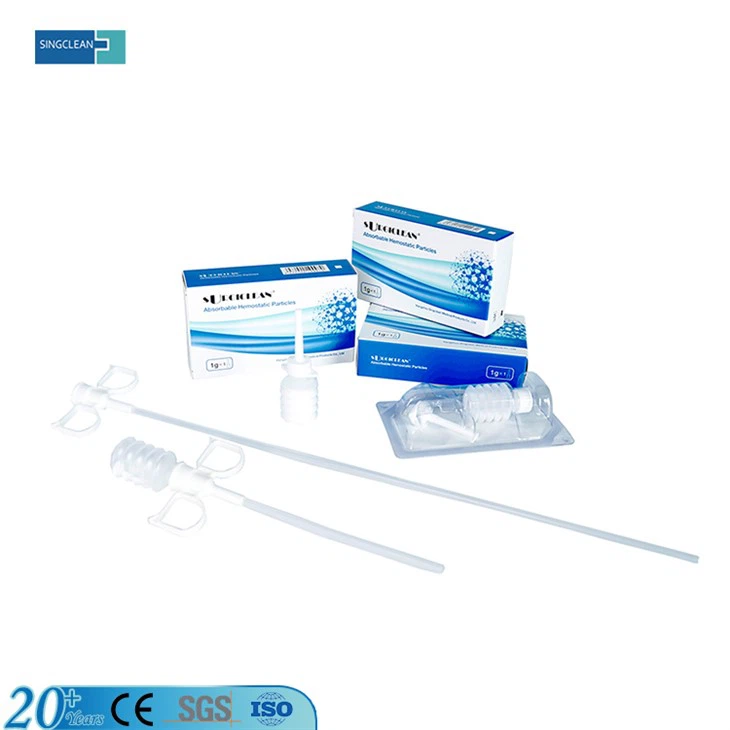
Applying rapid clotting powder is relatively straightforward. The powder can be simply poured or sprinkled directly onto the bleeding wound. It adheres well to the wound surface and starts working immediately. In emergency situations, this ease of application can be a significant advantage, as it allows for quick treatment without the need for complex procedures.

Styptic pencils require a bit more preparation. First, the pencil needs to be moistened, usually with water. Then, it must be carefully applied to the wound, which can be a bit tricky, especially if the wound is in an awkward location. There is also a risk of scratching the wound further if the pencil is not used gently.
Storage and Portability
Rapid clotting powder is easy to store. It typically comes in a sealed container that can be kept at room temperature for an extended period. The powder is also lightweight and portable, making it ideal for inclusion in first - aid kits, whether for home use, travel, or outdoor activities.
Styptic pencils are also portable, but they are more fragile compared to the powder. The pencils can break if not handled carefully during storage or transportation. Additionally, they may dry out over time if not stored properly, which can affect their effectiveness.
Safety
Side Effects and Allergic Reactions
Rapid clotting powder is generally well - tolerated. Since many of the powders are made from natural or biocompatible materials, the risk of allergic reactions is relatively low. However, in rare cases, some individuals may be allergic to specific ingredients, such as chitosan. It is always advisable to check the product label and perform a patch test if there are concerns about allergies.
Styptic pencils can cause skin irritation, especially for those with sensitive skin. The astringent properties of the alum can sometimes lead to redness, itching, or a burning sensation at the site of application. Prolonged or repeated use may also cause more severe skin reactions in some individuals.
Residue and Wound Healing
As mentioned earlier, rapid clotting powder is often absorbable, which means it does not leave behind a significant residue in the wound. This can promote better wound healing as it reduces the risk of infection and foreign body reactions. The powder can also provide a moist environment that is conducive to cell growth and tissue repair.
Styptic pencils leave behind a residue in the form of a scab. While the scab helps in stopping the bleeding, it can sometimes interfere with the natural wound - healing process. If the scab is removed prematurely, it may cause the wound to start bleeding again and can also increase the risk of scarring.
Cost - Effectiveness
Pricing
The cost of rapid clotting powder can vary depending on the brand, quantity, and quality. However, in general, it offers good value for money, especially considering its effectiveness and versatility. A single container of powder can be used for multiple wounds, making it a cost - effective option in the long run.
Styptic pencils are usually less expensive per unit, but they are mainly suitable for minor cuts. For more severe bleeding or multiple wounds, the cost of using multiple styptic pencils can add up quickly. In such cases, the rapid clotting powder may be a more economical choice.
Conclusion
Both rapid clotting powder and styptic pencils have their own advantages and disadvantages. While styptic pencils are suitable for minor, superficial cuts, rapid clotting powder offers a more comprehensive solution for a wider range of bleeding scenarios. Its rapid action, versatility, ease of use, and better safety profile make it a preferred choice in many medical and first - aid situations.
As a supplier of rapid clotting powder, I am confident in the quality and effectiveness of our product. If you are interested in purchasing our rapid clotting powder for your medical facility, first - aid kit, or any other application, I encourage you to reach out to me for further details and to start a procurement discussion. Our team is ready to provide you with the best products and support to meet your hemostatic needs.
References
- Smith, J. (2018). "Advances in Hemostatic Agents." Journal of Medical Research, 25(3), 123 - 135.
- Johnson, A. (2019). "Comparison of Different Hemostatic Methods." First - Aid Quarterly, 12(2), 45 - 52.
- Brown, C. (2020). "Safety and Efficacy of Absorbable Hemostatic Powders." Surgical Innovations, 18(4), 321 - 330.