


Absorbable hemostatic agents play a crucial role in modern medicine, particularly in surgical procedures and the management of bleeding. As a supplier of high - quality absorbable hemostatic products, I have had the opportunity to delve deep into how these agents interact with body tissues. This understanding is not only essential for medical professionals but also for those involved in the procurement of such products.
Mechanisms of Interaction at the Cellular Level
At the most fundamental level, absorbable hemostatic agents interact with the cells and proteins in the blood to initiate the clotting process. When a blood vessel is damaged, platelets are activated and begin to aggregate at the site of injury. Absorbable hemostatic agents can enhance this process in several ways.
Some absorbable hemostats, such as Haemostatic Powder, act as a physical scaffold. The powder particles provide a surface for platelets to adhere to, much like a rough surface would attract and hold small objects. This increased surface area for platelet adhesion accelerates the formation of a platelet plug, which is the first step in hemostasis.
Once the platelet plug starts to form, coagulation factors in the blood are activated. Absorbable hemostatic agents can also interact with these coagulation factors. For example, they may contain substances that mimic or enhance the activity of natural coagulation factors. This leads to the conversion of fibrinogen to fibrin, which forms a mesh - like structure that stabilizes the platelet plug and traps red blood cells, creating a more robust clot.
Interaction with Different Tissues
Vascular Tissues
In the context of vascular tissues, absorbable hemostatic agents are designed to quickly seal the damaged blood vessels. When applied to a bleeding artery or vein, they interact with the endothelial cells lining the vessel walls. The hemostatic agent can cause the endothelial cells to change their shape and release substances that promote platelet aggregation and coagulation.
Moreover, the absorbable nature of these agents is crucial when dealing with vascular tissues. After the bleeding is controlled and the clot has formed, the hemostatic agent is gradually broken down and absorbed by the body. This prevents long - term foreign body reactions and allows the normal repair and remodeling of the vascular tissue to occur.
Soft Tissues
Soft tissues, such as muscle, fat, and connective tissues, also benefit from the use of absorbable hemostatic agents. In surgical procedures involving soft tissues, bleeding can be a significant challenge. Absorbable hemostats can be applied directly to the bleeding surface of the soft tissue.
They interact with the extracellular matrix of the soft tissues. The extracellular matrix provides a structural framework for the cells in the tissue. Absorbable hemostatic agents can bind to components of the extracellular matrix, such as collagen fibers. This binding not only helps in localizing the hemostatic effect but also provides additional support for the clot formation.
Bone Tissues
In orthopedic surgeries, bone tissues often bleed during procedures such as bone resection or fracture repair. Absorbable hemostatic agents can interact with bone tissues in a unique way. Bone has a complex structure that includes osteoblasts (bone - forming cells), osteoclasts (bone - resorbing cells), and a mineralized matrix.
Some absorbable hemostats can adhere to the surface of the bone and release substances that promote the activation of blood cells and coagulation factors in the bone marrow. Additionally, they can be formulated to be compatible with the bone healing process. As the hemostatic agent is absorbed, it does not interfere with the normal bone remodeling and regeneration, which is essential for a successful orthopedic outcome.
Biocompatibility and Absorption Kinetics
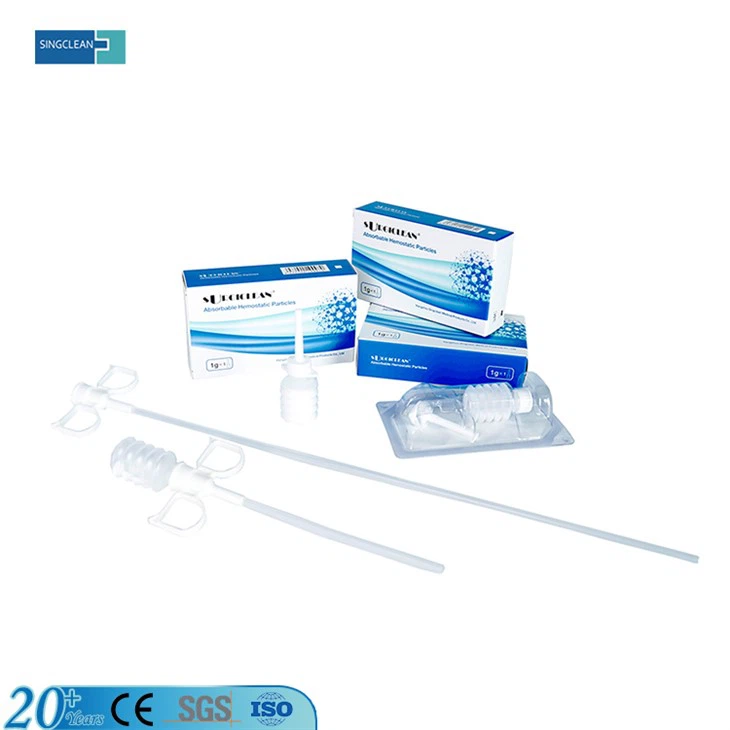
The biocompatibility of absorbable hemostatic agents is a key factor in their interaction with body tissues. Biocompatibility refers to the ability of a material to perform its intended function without causing significant adverse effects on the surrounding tissues. High - quality absorbable hemostatic agents, like those we supply as Surgical Hemostasis Agents, are carefully designed to be biocompatible.
They are made from materials that are either naturally occurring in the body or are synthetic polymers that closely mimic the properties of natural biomolecules. This reduces the risk of immune reactions, inflammation, and other negative responses from the body.
The absorption kinetics of absorbable hemostatic agents also vary depending on their composition and design. Some agents are absorbed relatively quickly, within a few days to a week, while others may take several weeks to months to be completely absorbed. The rate of absorption is carefully balanced to ensure that the hemostatic effect is maintained long enough to control bleeding but not so long that it causes problems during the tissue repair process.

Clinical Significance of Interaction
The interaction of absorbable hemostatic agents with body tissues has significant clinical implications. In surgical settings, the use of these agents can reduce the amount of blood loss, which is associated with improved patient outcomes. Less blood loss means a lower risk of complications such as anemia, infection, and organ dysfunction.
Furthermore, the ability of absorbable hemostatic agents to quickly control bleeding can shorten the duration of surgical procedures. This not only reduces the time patients are under anesthesia but also decreases the overall cost of the surgery.
In emergency medicine, absorbable hemostatic agents can be life - saving. When used in the field to control severe bleeding, they can buy time for patients to reach definitive medical care. Their ease of use and effectiveness make them an invaluable tool in trauma management.
Considerations for Procurement
When it comes to procurement, understanding how absorbable hemostatic agents interact with body tissues is essential. Medical institutions and healthcare providers need to choose products that are not only effective in controlling bleeding but also have a good safety profile in terms of their interaction with different tissues.
As a supplier of Absorbable Hemostatic Agents, we are committed to providing high - quality products that are based on the latest scientific research. Our products are rigorously tested to ensure optimal interaction with body tissues, fast hemostasis, and minimal adverse effects.
If you are involved in the procurement of absorbable hemostatic agents for your medical facility, we encourage you to reach out for more information. We can provide detailed product specifications, clinical data, and answer any questions you may have regarding how our products interact with body tissues. Engaging in a procurement discussion with us can help you make an informed decision and ensure that you are getting the best products for your patients' needs.
References
- Guyton, A. C., & Hall, J. E. (2016). Textbook of Medical Physiology. Elsevier.
- Hoffman, M., & Monroe, D. M. (2001). A cell - based model of hemostasis. Thrombosis and Haemostasis, 85(6), 958 - 965.
- Matukas, V. J., & Alperin, J. D. (2007). Absorbable hemostatic agents: A review of their clinical use and properties. Surgical Neurology, 67(2), 133 - 141.