


Chemical burns are a serious medical condition that can cause significant tissue damage, pain, and potential long - term complications. In the treatment of chemical burns, hemostatic particles play a crucial role, especially when there is bleeding associated with the burn injury. As a supplier of hemostatic particles, I am well - versed in how these tiny yet powerful substances work to address the issues related to chemical burns.
Understanding Chemical Burns
Chemical burns occur when the skin or other tissues come into contact with a corrosive or caustic chemical. These chemicals can range from strong acids, such as sulfuric acid, to strong bases like sodium hydroxide. When a chemical burn happens, it not only damages the outer layers of the skin but can also penetrate deeper tissues, causing cellular death, inflammation, and disruption of the normal physiological functions of the affected area. In many cases, the damaged blood vessels can lead to bleeding, which further complicates the situation and needs to be controlled promptly to prevent excessive blood loss and promote wound healing.
The Mechanism of Hemostatic Particles
Hemostatic particles work through multiple mechanisms to achieve hemostasis, especially in the context of chemical burns.
Physical Absorption
One of the primary ways hemostatic particles work is through physical absorption. These particles are often made of highly absorbent materials. When applied to the bleeding area caused by a chemical burn, they quickly absorb the blood plasma. As they absorb the plasma, they swell and form a gel - like substance. This gel physically blocks the damaged blood vessels, creating a barrier that prevents further blood flow. For example, some hemostatic particles are composed of starch - based polymers. These polymers have a high affinity for water molecules in the blood plasma. Once they come into contact with the blood, they rapidly absorb the plasma, increasing in volume and forming a plug at the site of the bleeding vessel.
Activation of the Coagulation Cascade
Hemostatic particles can also activate the body's natural coagulation cascade. The coagulation cascade is a complex series of enzymatic reactions that ultimately lead to the formation of a blood clot. Some hemostatic particles contain substances that can directly or indirectly activate key components of the coagulation cascade. For instance, certain particles may contain factors that activate platelets. Platelets are small cell fragments in the blood that play a vital role in the initial stages of clot formation. When activated, platelets adhere to the damaged blood vessel wall and to each other, forming a platelet plug. Additionally, these particles can trigger the activation of coagulation factors such as Factor VII, which initiates the extrinsic pathway of the coagulation cascade. This leads to the conversion of prothrombin to thrombin, and thrombin then converts fibrinogen to fibrin. Fibrin forms a mesh - like structure that traps blood cells and further stabilizes the clot.
Adhesion to Tissues
Another important mechanism is the adhesion of hemostatic particles to the damaged tissues. The particles have a sticky surface that allows them to adhere to the injured blood vessels and surrounding tissues. This adhesion helps to keep the particles in place at the site of bleeding, ensuring that the hemostatic effect is maintained. It also helps to prevent the particles from being washed away by the flowing blood. For example, some hemostatic particles are designed with a surface coating that enhances their adhesion to the negatively charged surfaces of damaged cells and blood vessels.
Advantages of Using Hemostatic Particles in Chemical Burns
There are several advantages of using hemostatic particles in the treatment of chemical burns.
Rapid Hemostasis
One of the most significant advantages is the ability to achieve rapid hemostasis. In cases of chemical burns, time is of the essence, and controlling bleeding quickly can prevent further blood loss and reduce the risk of shock. Hemostatic particles can start working within seconds to minutes after application, providing immediate relief from bleeding. This rapid action is crucial in emergency situations where every second counts.
Compatibility with Wound Healing
Hemostatic particles are generally biocompatible and do not interfere with the normal wound - healing process. In fact, by controlling bleeding, they create a more favorable environment for wound healing. The formation of a stable clot protects the underlying tissues from further damage, reduces the risk of infection, and provides a scaffold for the growth of new cells. Some hemostatic particles even have properties that can promote cell growth and tissue repair.
Ease of Application
These particles are easy to apply. They can be simply sprinkled or sprayed onto the bleeding area, which makes them suitable for use in various settings, including pre - hospital care, emergency departments, and surgical suites. Their ease of application also means that they can be used by medical professionals with different levels of training.
Our Hemostatic Particle Products
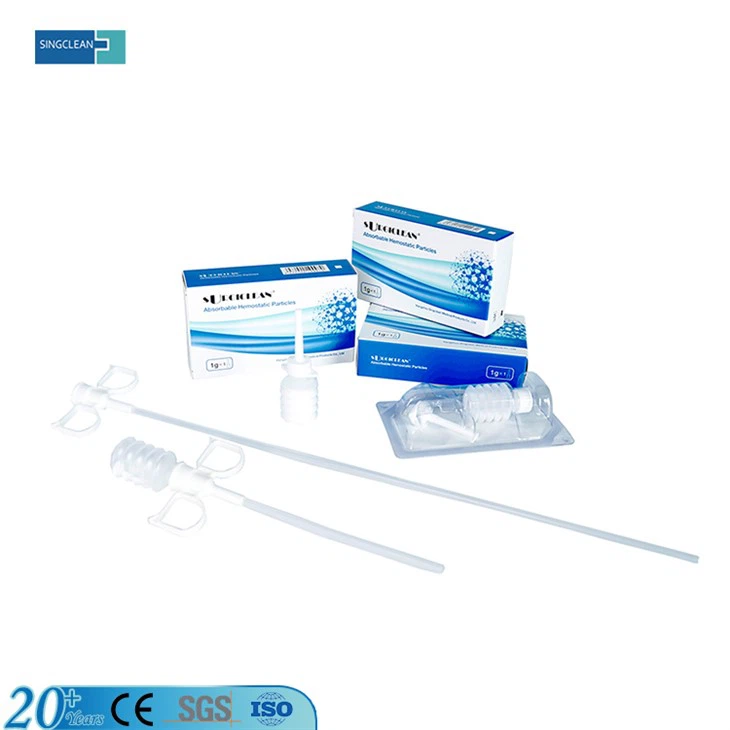
As a supplier of hemostatic particles, we offer a range of high - quality products, including Wound Clotting Powder, Haemostatic Powder, and Hemostatic Powder.
Our Wound Clotting Powder is designed for rapid and effective hemostasis in various types of wounds, including those caused by chemical burns. It has a high absorption capacity and can quickly form a stable clot. The Haemostatic Powder is formulated with special ingredients that not only stop bleeding but also have antibacterial properties, which is particularly important in chemical burn wounds where the risk of infection is high. Our Hemostatic Powder is a versatile product that can be used in both minor and severe bleeding situations. It is easy to apply and has been proven to be effective in clinical trials.

Conclusion
Hemostatic particles are an essential tool in the treatment of chemical burns. Their unique mechanisms of action, including physical absorption, activation of the coagulation cascade, and adhesion to tissues, make them highly effective in controlling bleeding. The advantages of rapid hemostasis, compatibility with wound healing, and ease of application make them a preferred choice for medical professionals.
If you are interested in our hemostatic particle products for the treatment of chemical burns or other bleeding - related conditions, we encourage you to contact us for procurement and further discussion. We are committed to providing high - quality products and excellent customer service to meet your specific needs.
References
- Hoffman, M., & Monroe, D. M. (2001). A cell - based model of hemostasis. Thrombosis and Haemostasis, 85(6), 958 - 965.
- Reddy, M. S., & Reddy, K. R. (2018). Hemostatic agents: A review. Journal of Clinical and Diagnostic Research, 12(12), RE01 - RE05.
- Velmahos, G. C., Toutouzas, K. G., Theophilou, D., & Shoemaker, W. C. (2002). Topical hemostatic agents in trauma: A review. Journal of Trauma and Acute Care Surgery, 53(3), 568 - 577.