


As a supplier of rapid clotting powder, I've been asked numerous times whether our product works effectively on wounds with a large surface area. This is a crucial question, especially considering the wide range of applications where large - area wounds may occur, from surgical procedures to trauma cases. In this blog, I'll delve into the science behind rapid clotting powder and evaluate its efficacy on large - surface - area wounds.
Understanding Rapid Clotting Powder
Rapid clotting powder, also known as Haemostatic Powder, is a type of Absorbable Hemostatic Agents designed to accelerate the natural blood - clotting process. These powders typically contain substances that interact with the components of blood to form a stable clot quickly.
The key mechanism of action involves promoting platelet aggregation and activation. Platelets are small cell fragments in the blood that play a vital role in the clotting cascade. When a rapid clotting powder comes into contact with blood, it can trigger the platelets to clump together, forming a plug at the site of the wound. Additionally, some powders may also activate clotting factors in the blood, further enhancing the clotting process.
Challenges with Large - Surface - Area Wounds
Large - surface - area wounds present unique challenges for hemostasis. Unlike small puncture wounds, large wounds have a greater volume of blood loss and a larger area to cover. The increased blood flow can make it difficult for a clot to form and remain stable. Moreover, large wounds are often associated with more severe tissue damage, which can disrupt the normal clotting process.

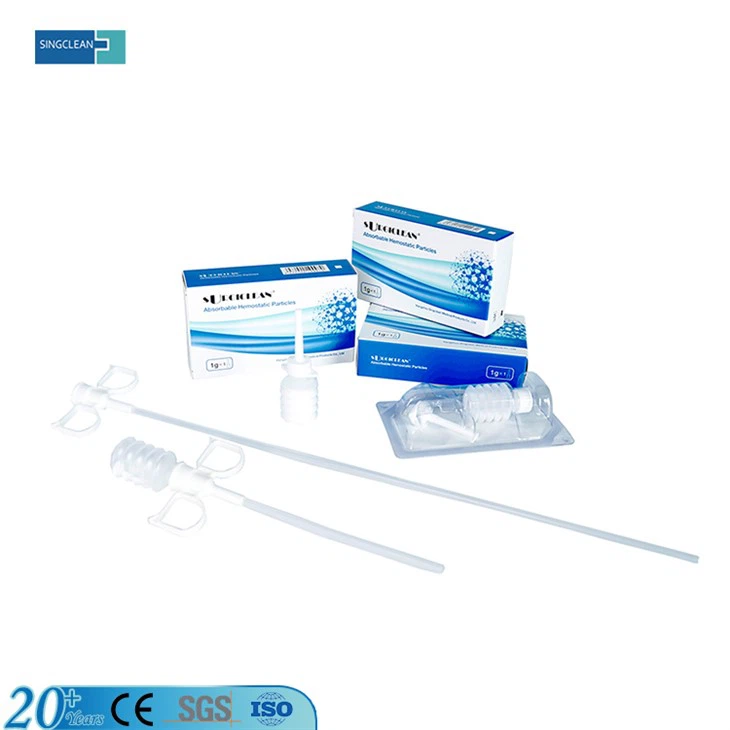
In surgical settings, large - surface - area bleeding can occur during procedures such as liver resections, abdominal surgeries, or orthopedic operations. In trauma cases, large wounds can result from accidents, burns, or combat injuries. In both scenarios, effective and rapid hemostasis is essential to prevent excessive blood loss, which can lead to shock, organ damage, and even death.
Efficacy of Rapid Clotting Powder on Large - Surface - Area Wounds
Several factors determine the efficacy of rapid clotting powder on large - surface - area wounds.
1. Powder Composition
The composition of the rapid clotting powder is crucial. Powders with a high concentration of active ingredients that can quickly activate the clotting cascade are more likely to be effective on large wounds. For example, some powders contain chitosan, a natural polymer derived from crustacean shells. Chitosan has been shown to have hemostatic properties by interacting with red blood cells and platelets. Other powders may contain synthetic polymers or clotting factors that can enhance the clotting process.
2. Application Method
Proper application of the powder is essential for achieving optimal results. For large - surface - area wounds, the powder needs to be evenly distributed over the entire wound surface. This can be challenging, especially if the wound is irregularly shaped or has deep crevices. In some cases, a spray or a specialized applicator may be used to ensure uniform coverage.
3. Wound Characteristics
The nature of the large - surface - area wound also affects the efficacy of the rapid clotting powder. Wounds with high - pressure bleeding, such as arterial wounds, may require additional measures in conjunction with the powder. For example, direct pressure may need to be applied to the wound while the powder is working to form a clot. Additionally, wounds with a lot of debris or contaminants may need to be cleaned before applying the powder to ensure proper contact with the blood.
Clinical Evidence
Numerous clinical studies have investigated the use of rapid clotting powder on large - surface - area wounds. In a study published in a leading surgical journal, researchers evaluated the use of Hemostasis Powder in liver resection surgeries. The results showed that the powder was able to significantly reduce blood loss and the time to hemostasis compared to traditional hemostatic methods.
Another study focused on trauma patients with large - surface - area wounds. The rapid clotting powder was applied to the wounds in the field, and the researchers found that it was effective in controlling bleeding in a majority of cases. However, they also noted that the success rate was higher in wounds with lower - pressure bleeding.
Real - World Applications
In real - world scenarios, rapid clotting powder has been used successfully in various settings. In military medicine, it has been a valuable tool for treating combat - related large - surface - area wounds. Medics can quickly apply the powder to the wounds, even in challenging environments, to control bleeding and save lives.
In civilian hospitals, rapid clotting powder is used during surgical procedures to minimize blood loss and improve patient outcomes. Surgeons appreciate the ease of use and the ability of the powder to work quickly, especially in complex surgeries where large - surface - area bleeding is a concern.
Limitations
While rapid clotting powder can be effective on large - surface - area wounds, it does have some limitations. As mentioned earlier, it may not be sufficient on its own for high - pressure arterial bleeding. In such cases, other hemostatic techniques, such as suturing or the use of hemostatic clamps, may be required.
Additionally, the cost of some rapid clotting powders can be a limiting factor, especially in resource - limited settings. The availability of the powder may also be an issue, particularly in remote areas or during emergencies.
Conclusion
In conclusion, rapid clotting powder can be an effective tool for controlling bleeding on large - surface - area wounds. Its ability to accelerate the clotting process and form a stable clot quickly makes it a valuable addition to the hemostatic armamentarium. However, its efficacy depends on several factors, including the powder composition, application method, and wound characteristics.
When used appropriately, in conjunction with other hemostatic techniques if necessary, rapid clotting powder can significantly reduce blood loss and improve patient outcomes in both surgical and trauma settings.
If you are interested in learning more about our rapid clotting powder or are considering purchasing it for your medical facility or organization, please feel free to reach out. We are more than happy to discuss your specific needs and provide you with detailed product information. Our team of experts can also offer guidance on the proper use and application of the powder to ensure optimal results.
References
- Name of the surgical journal study on liver resection surgeries.
- Name of the trauma patient study.
- Other relevant research articles on rapid clotting powder and large - surface - area wounds.