


As a supplier of haemostatic sponges, I often encounter inquiries from customers about alternative products. In the medical field, haemostatic sponges are widely used to control bleeding during surgical procedures, wound management, and other medical applications. However, due to various reasons such as cost, availability, and specific patient needs, some customers may be interested in exploring alternative options. In this blog post, I will discuss some of the alternative products to haemostatic sponges and their potential advantages and limitations.
1. Absorbable Gelatin Sponges
Absorbable gelatin sponges are one of the most common alternatives to traditional haemostatic sponges. These sponges are made from purified porcine or bovine gelatin and are designed to be absorbed by the body over time. They work by providing a physical matrix for blood clotting factors to adhere to, promoting the formation of a stable blood clot.
One of the main advantages of absorbable gelatin sponges is their biocompatibility. Since they are made from natural materials, they are less likely to cause an immune response or allergic reaction in patients. Additionally, their absorbable nature eliminates the need for removal after use, reducing the risk of infection and simplifying the wound management process.
However, absorbable gelatin sponges also have some limitations. They may not be as effective as some other haemostatic agents in cases of severe bleeding, and their absorption rate can vary depending on the size and location of the wound. Moreover, they can be relatively expensive compared to some other alternatives. You can learn more about Absorbable Hemostatic Sponge on our website.
2. Oxidized Regenerated Cellulose (ORC)
Oxidized regenerated cellulose is another popular alternative to haemostatic sponges. It is a synthetic material that is derived from cellulose and has been chemically modified to enhance its haemostatic properties. ORC works by interacting with blood components to form a gel-like substance that promotes clotting.
One of the key advantages of ORC is its versatility. It can be used in a variety of surgical procedures and wound types, and it can be easily cut or shaped to fit the specific needs of the patient. Additionally, ORC is biodegradable and is gradually absorbed by the body, eliminating the need for removal.
On the other hand, ORC may not be suitable for all patients. Some individuals may experience an allergic reaction to the material, and it can be more difficult to handle compared to some other haemostatic agents. In some cases, it may also interfere with the normal healing process if not used correctly.
3. Fibrin Sealants
Fibrin sealants are biological products that are composed of fibrinogen and thrombin, two key components of the blood clotting cascade. When these two components are combined, they form a fibrin clot that can help to stop bleeding. Fibrin sealants can be used in a variety of surgical procedures, including cardiovascular surgery, neurosurgery, and plastic surgery.
One of the main advantages of fibrin sealants is their high efficacy in controlling bleeding. They can form a strong and stable clot quickly, and they can be particularly useful in cases where traditional haemostatic methods are not sufficient. Additionally, fibrin sealants are biocompatible and are gradually absorbed by the body, reducing the risk of long-term complications.
However, fibrin sealants can be expensive, and their use may be limited by availability. They also require careful handling and storage to maintain their effectiveness, and they may not be suitable for all patients, especially those with certain medical conditions or allergies.
4. Collagen Hemostats
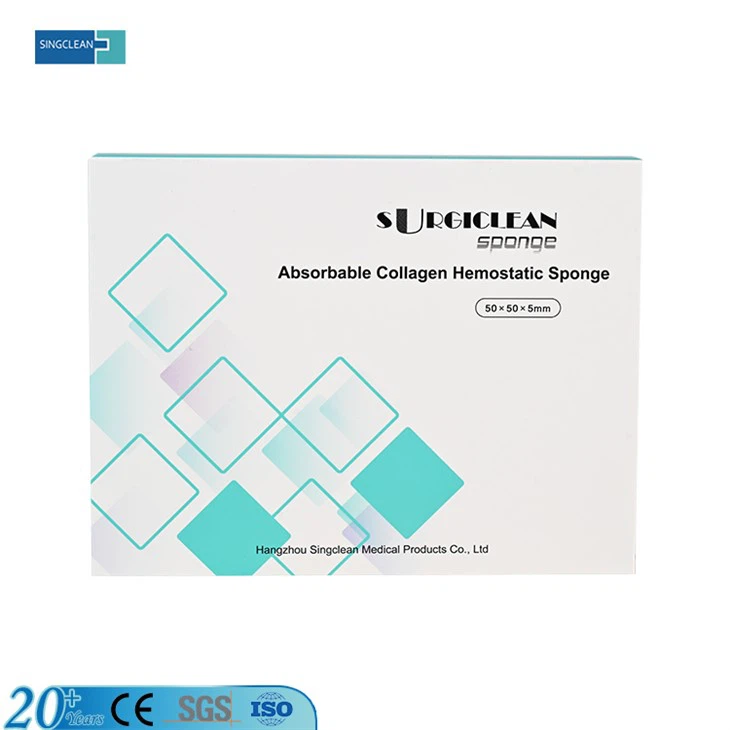
Collagen hemostats are made from purified collagen, a protein that is found in the extracellular matrix of the body. Collagen has natural haemostatic properties and can promote the adhesion and aggregation of platelets, leading to the formation of a blood clot.
One of the advantages of collagen hemostats is their ability to stimulate the body's natural healing process. Collagen provides a scaffold for cell growth and tissue repair, which can help to accelerate the healing of wounds. Additionally, collagen hemostats are biocompatible and are gradually absorbed by the body, reducing the risk of foreign body reactions.
Collagen hemostats are available in various forms, such as sponges, powders, and sheets. They can be used in a wide range of surgical and non - surgical applications. You can find more information about Collagen Hemostat on our website. However, like other haemostatic agents, collagen hemostats may not be effective in all cases of bleeding, and their performance can be affected by factors such as the type and severity of the wound.
5. Topical Hemostatic Agents
Topical hemostatic agents are substances that are applied directly to the surface of a wound to control bleeding. These agents can include powders, sprays, and gels, and they work by promoting clotting through various mechanisms, such as activating platelets or providing a physical barrier.
One of the advantages of topical hemostatic agents is their ease of use. They can be quickly applied to a wound, and they can be particularly useful in emergency situations or in cases where other haemostatic methods are not practical. Additionally, many topical hemostatic agents are relatively inexpensive and widely available.
However, topical hemostatic agents may not be as effective as some other haemostatic agents in cases of deep or severe bleeding, and they may need to be reapplied multiple times to achieve adequate hemostasis. Some topical agents may also cause skin irritation or allergic reactions in some patients.
Conclusion
In conclusion, while haemostatic sponges are a commonly used and effective tool for controlling bleeding, there are several alternative products available that may be suitable for different situations. Each alternative has its own advantages and limitations, and the choice of the most appropriate product depends on factors such as the type and severity of the bleeding, the patient's medical history, and the specific requirements of the surgical or wound management procedure.
As a haemostatic sponge supplier, we understand the importance of providing our customers with information about different options. We offer a range of high - quality haemostatic products, including Absorbable Hemostatic Sponge and Sponge Hemostatic, and we are always willing to assist our customers in choosing the most suitable product for their needs.
If you are interested in learning more about our products or discussing your procurement requirements, please feel free to contact us. We look forward to the opportunity to work with you and provide you with the best haemostatic solutions.

References
- Smith, J. D., & Johnson, A. B. (2018). Hemostatic agents in surgery: A review. Surgical Clinics of North America, 98(2), 273 - 286.
- Brown, C. E., & Green, D. F. (2019). Alternative hemostatic strategies in trauma. Trauma Surgery & Acute Care Open, 4(1), e000289.
- White, R. M., & Black, S. L. (2020). The role of collagen hemostats in wound management. Wound Repair and Regeneration, 28(3), 315 - 323.