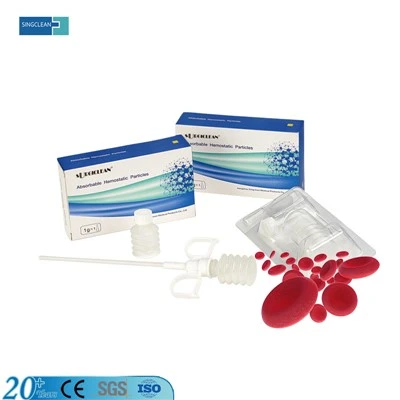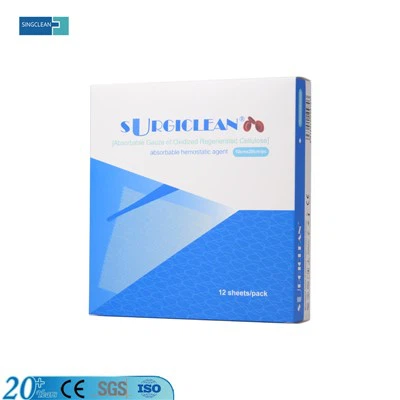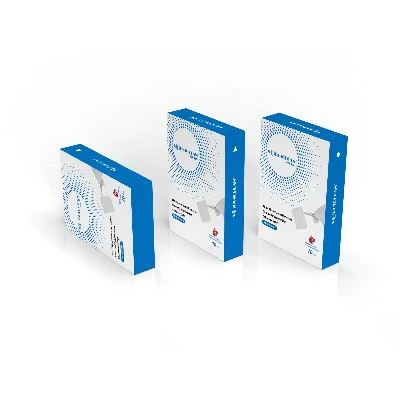
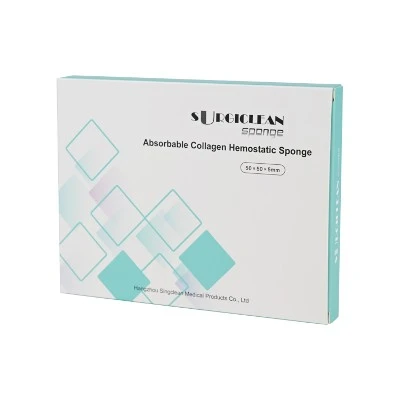

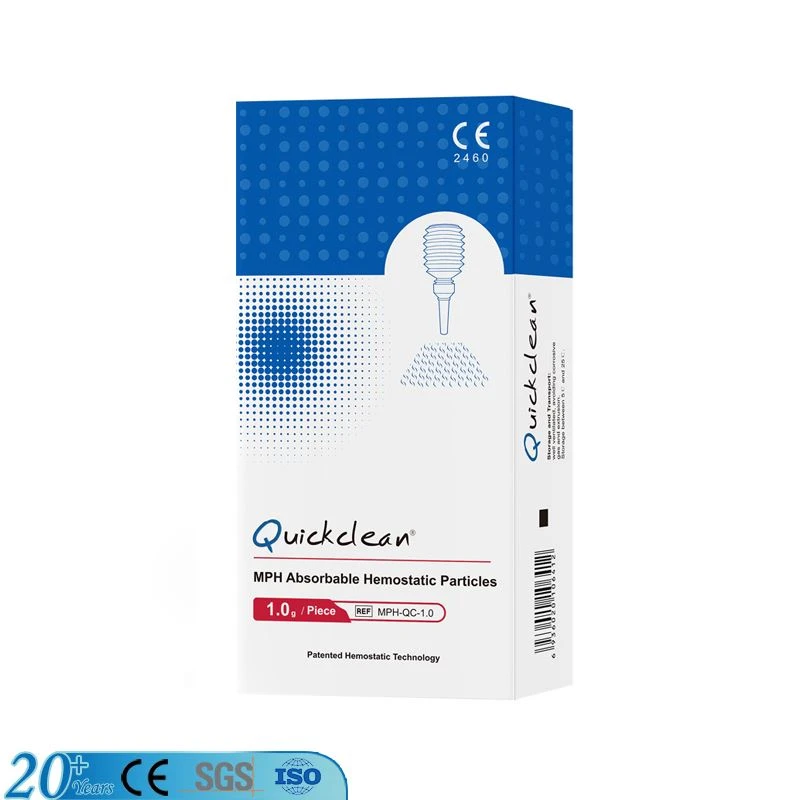
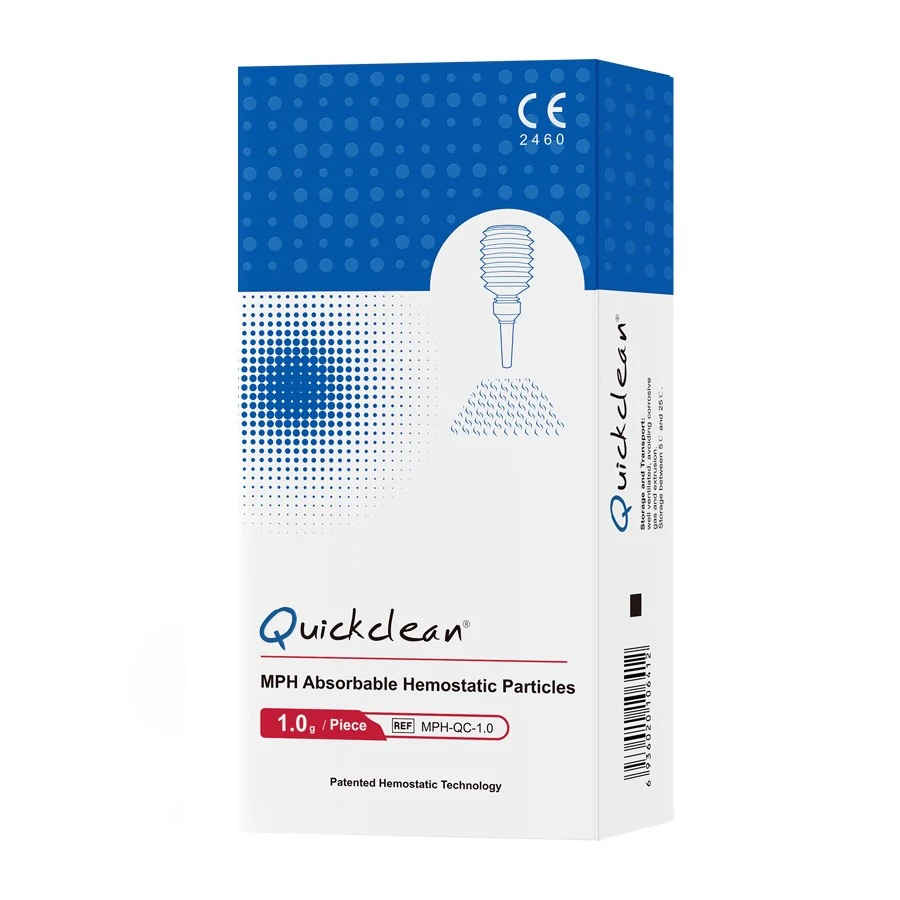
Quickclean® MPH Absorbable Hemostatic Particles are sterile, plant-based hemostatic microspheres supplied by Hangzhou Singclean Medical Products Co., Ltd. Each particle is produced from potato starch through emulsification and crosslinking, which leaves a porous, strongly hydrophilic microsphere that pulls water out of blood on contact and forms a gelled matrix across the bleeding surface. Quickclean MPH particles carry CE 2460 marking and ship in five vial sizes with four dedicated applicators for open, endoscopic and laparoscopic procedures.
01
100% potato-starch hemospheres
02
CE 2460
03
Four dedicated applicators
04
OEM and private label
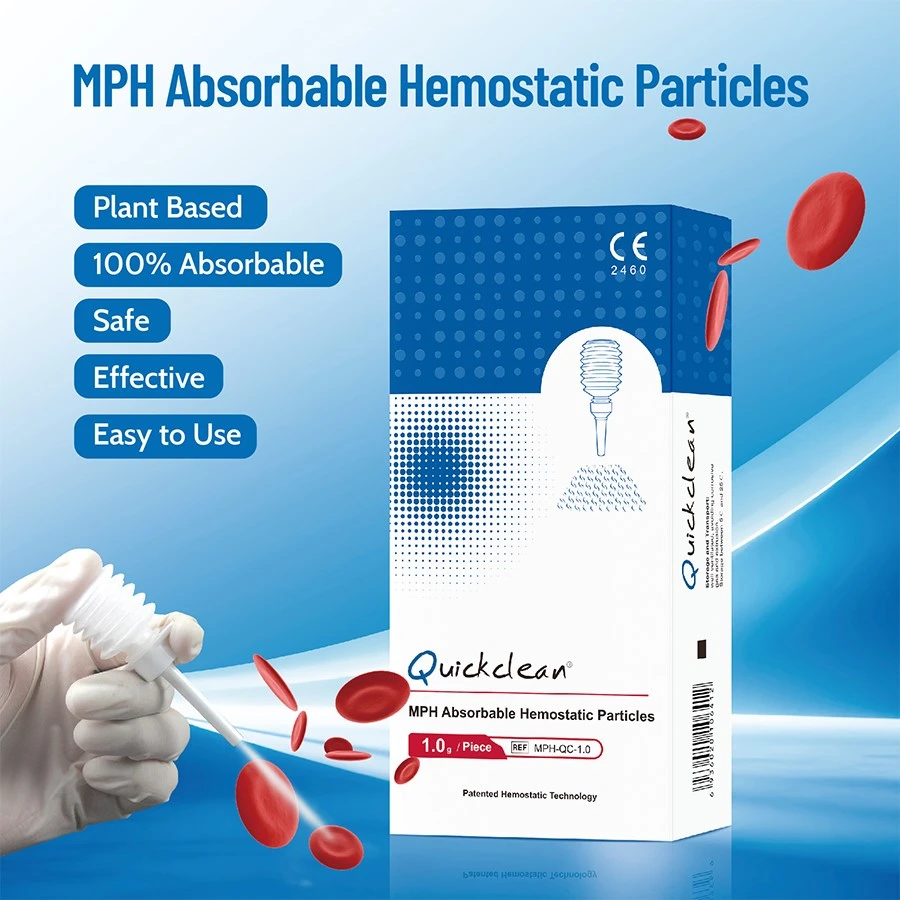
What Quickclean MPH Absorbable Hemostatic Particles Are
MPH stands for microporous polysaccharide hemospheres. The particles are spherical or ellipsoidal, with a spatial reticular microstructure and no components of animal or human origin. That composition is the reason the product carries no risk of xeno-protein reaction, and why it needs no mixing, no thawing and no refrigerated storage before use.
Once hemostasis is achieved, the particles are broken down by amylase and α-glucosidase into maltose and glucose, then into water and carbon dioxide. Absorption completes within 14 days, so no second procedure is needed to remove material and no residue is left at the site.
The product is indicated as an adjunctive hemostatic device in surgical procedures other than neurological and ophthalmic surgery, for capillary, venous and arteriolar bleeding where pressure, ligature and other conventional methods are ineffective or impractical.
Dual-Action Hemostasis at the Bleeding Surface
The particles work on two fronts at once:
Mechanical plugging. The hydrophilic molecular sieve absorbs and locks water several times its own weight within seconds, swelling into a gel that closes the bleeding surface and applies light pressure to peripheral vessels.
Accelerated endogenous clotting. Water is drawn out of the blood, so platelets, red cells, albumin, thrombin and fibrinogen are concentrated at the particle surface. Local clotting factor concentration rises, the coagulation cascade starts faster, and a fibrin network forms around the gel.
The result is a clot formed inside the particle matrix rather than on top of it, which is why the material holds on irregular, granular and diffusely oozing beds where a flat patch cannot conform. For the underlying physiology across all our hemostatic formats, see our hemostatic mechanism reference.
Model Numbers and Vial Specifications
Quickclean particles are identified by the MPH-QC prefix, which separates them from the Surgiclean MPH-SC series produced to the same specification.
| Specification |
|
|
||
| 0.5 g / piece | MPH-QC-0.5 | Single-use sterile vial with nozzle | ||
| 1.0 g / piece | MPH-QC-1.0 | Single-use sterile vial with nozzle | ||
| 2.0 g / piece | MPH-QC-2.0 | Single-use sterile vial with nozzle | ||
| 3.0 g / piece | MPH-QC-3.0 | Single-use sterile vial with nozzle | ||
| 5.0 g / piece | MPH-QC-5.0 | Single-use sterile vial with nozzle |
Shelf life is 3 years from manufacture. Store between 5 °C and 25 °C as stated in the instructions for use; the vial is sterilized with ethylene oxide and sealed in a foil bag.
TQ Applicator System for Open and Laparoscopic Delivery
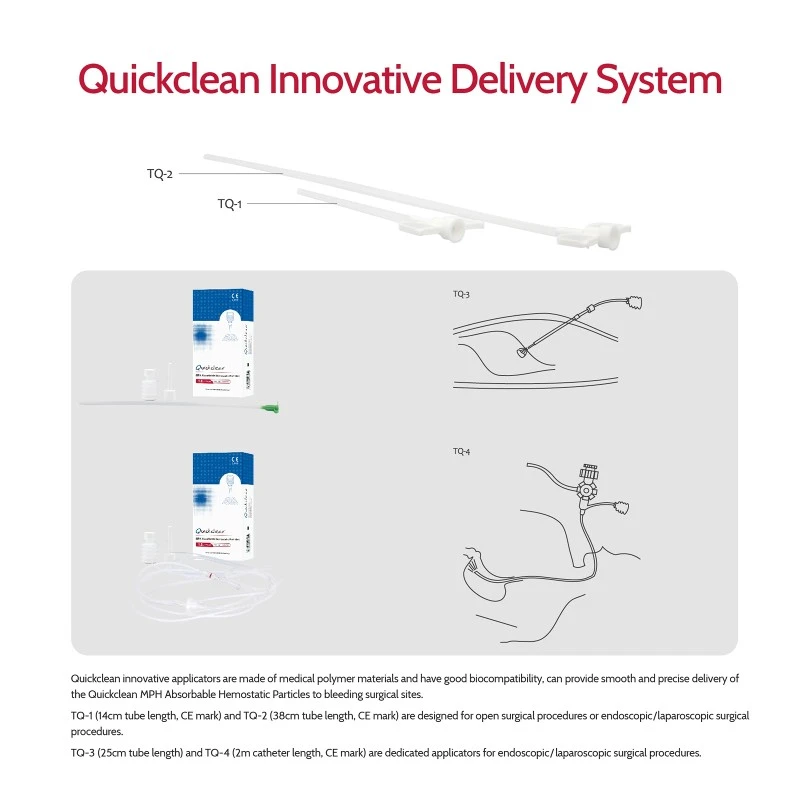
Delivery is where most powder hemostats fail in practice: the tip occludes, the powder lands off-target, or the applicator cannot reach the bleeding point through a trocar. The TQ series is built for that problem. All applicators are made of medical polymer materials with good biocompatibility and give smooth, controlled delivery to the bleeding site.
| Applicator | Length | Typical Use | Model No. |
| TQ-1 | 14 cm tube | Open surgery, superficial and moderately deep beds | APL-TQ-1 |
| TQ-2 | 38 cm tube | Open surgery; endoscopic and laparoscopic access | APL-TQ-2 |
| TQ-3 | 25 cm tube | Endoscopic and laparoscopic procedures | APL-TQ-3 |
| TQ-4 | 2 m catheter | Endoscopic and laparoscopic procedures, deep access | APL-TQ-4 |
For laparoscopic use, set the trocar before application, keep the tip under direct vision at all times, and replace the applicator if it occludes. Cutting 1–3 mm from the blocked tip restores flow in open procedures.
Bench Performance Data
In manufacturer bench testing, clots formed with the particles reached a strength of 68 ± 17 MA (mm) at 3 seconds, against 27 ± 15 MA (mm) at 10 seconds for the control group - roughly 2–3 times the strength of a physiological clot, and reached in about a third of the time.
In a comparative three-minute hemostasis test, absorbable hemostatic particles achieved a 100% success rate, against 76.4% for absorbable gauze and 58.3% for collagen sponge among the comparators tested.
These figures come from controlled laboratory comparison, not from a randomised clinical trial. We publish them as formulation evidence; clinical performance depends on access, bleeding rate and the volume applied. Full IFU documentation is available on request with each shipment.
Surgical Applications
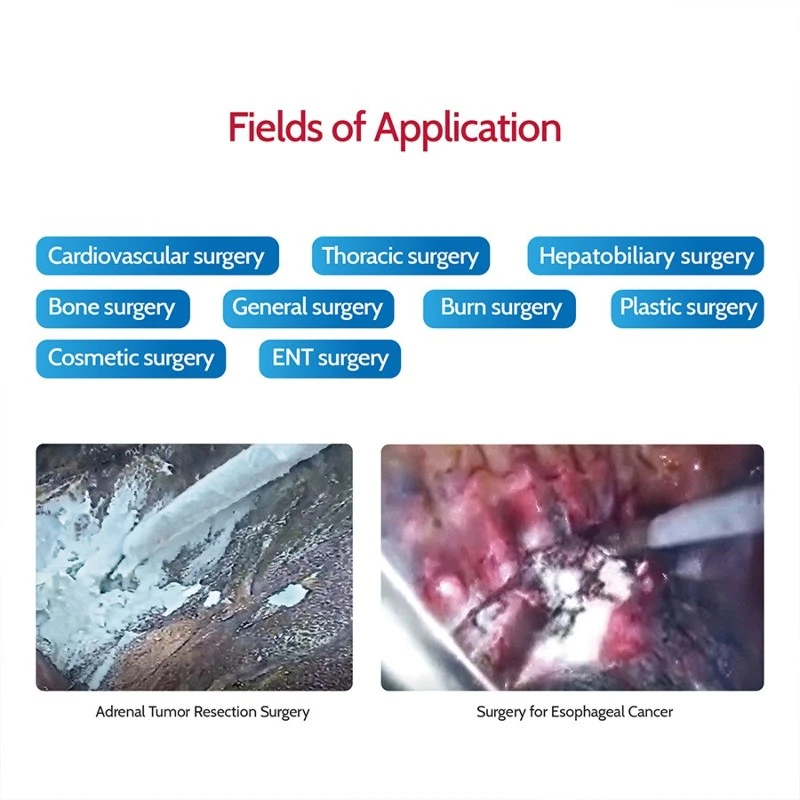
Quickclean particles are used across nine surgical fields:
Cardiovascular surgery - anastomotic oozing, tumour bed after resection
Thoracic surgery - lung stump sealing, lymph node dissection beds, chest wall resection
Hepatobiliary surgery - hepatic lobectomy raw surface, biliary reconstruction, liver transplantation
Bone surgery - cancellous bone bleeding, tumour curettage cavities
General surgery - gastric and rectal cancer lymph node dissection, thyroid and breast beds
Burn surgery - graft donor and recipient sites
Plastic surgery - flap margins, wide undermining
Cosmetic surgery - facial and body contouring planes
ENT surgery - nasal and sinus beds, tonsillar fossa
Application Technique in Five Steps
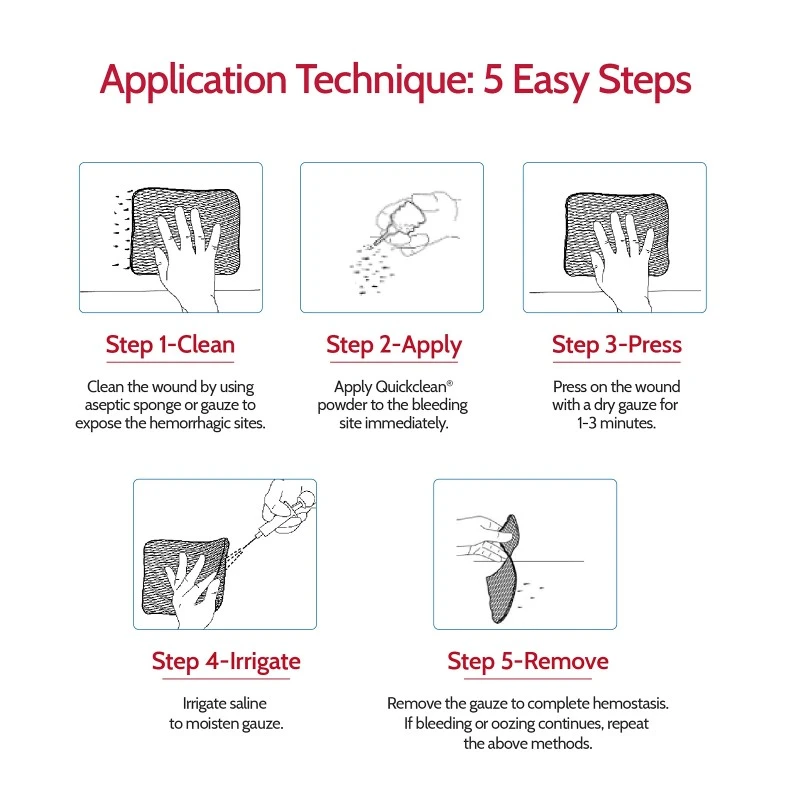
Clean - remove excess blood with an aseptic sponge or gauze to expose the bleeding points.
Apply - fit the nozzle, then spray the particles directly onto the site until the surface is fully covered.
Press - hold dry gauze over the area for 1–3 minutes; extend to 2–3 minutes for heavier bleeding.
Irrigate - moisten the gauze with saline and suction away excess particles.
Remove - lift the gauze and confirm hemostasis. If oozing continues, repeat the sequence.
Dosage. One gram covers roughly 15 cm² of wound surface at an average thickness of 1 mm. The maximum dose is 5 g per patient per procedure.
Indications, Contraindications and Handling
Do not use in neurological or ophthalmic procedures; safety and effectiveness have not been established there.
Do not inject or place the product inside blood vessels; embolisation risk.
Not recommended for children, pregnant women, or patients with starch allergy.
Not recommended with autologous blood salvage circuits.
In urological use, do not leave material in the renal pelvis or ureter.
Safety on bone surfaces has not been clinically studied.
Apply in a dry state. Contact with saline or other aqueous solutions before hemostasis reduces effect.
Remove excess material by irrigation and suction once bleeding stops.
Single use only. Do not resterilise; discard opened, unused product as medical waste.
Certification, Registration and Manufacturing Background
Quickclean MPH Absorbable Hemostatic Particles carry CE 2460 marking. The product is registered in Korea, Mexico, Peru and Panama, and is manufactured under ISO 13485 quality management at Hangzhou Singclean Medical Products Co., Ltd.
The particle formulation and the applicator each hold a patent certificate issued by the State Intellectual Property Office of China, granted in 2006 and 2014 respectively. The particles were named Zhejiang High-Quality Manufactured Products and Zhejiang Excellent Industrial Products, and received the Ingenuity Award at the China Manufacturing Excellence & Innovation Awards 2019.
OEM, Private Label and Trade Terms
|
Item |
Details |
|
MOQ |
10 pcs for standard stock; negotiable for OEM projects |
|
Lead time |
1–2 days for ready stock; 20–60 days made to order |
|
Trade terms |
FOB / CIF |
|
Loading port |
Ningbo or Shanghai |
|
Customisation |
Private label carton, IFU and language variants |
Distributors evaluating both labels can compare the Quickclean MPH-QC series with the Surgiclean absorbable hemostatic powder range, which uses the same formulation under the MPH-SC prefix. For external bleeding control in pre-hospital settings, the Quickclean diatomite hemostatic granules cover a different indication entirely.
FAQ
Q: Is Quickclean the same product as Surgiclean?
A: Same formulation, different brand and model prefix. Both are 100% potato-starch MPH particles made by Singclean; Surgiclean uses MPH-SC model numbers, Quickclean uses MPH-QC. The choice between them is a market and registration decision, not a formulation decision.
Q: Which vial size should a hospital standardise on?
A: Most general and hepatobiliary cases are covered by 1.0 g and 2.0 g vials, since 1 g treats roughly 15 cm². Keep 0.5 g for small or paediatric-adjacent fields and 5.0 g for large raw surfaces such as hepatic resection.
Q: Can the same applicator be used for open and laparoscopic cases?
A: Not ideally. TQ-1 (14 cm) suits open access, while TQ-2 (38 cm), TQ-3 (25 cm) and TQ-4 (2 m catheter) reach through trocars and deep tracts. Using a short applicator laparoscopically is the most common cause of off-target delivery.
Q: How long does absorption take?
A: Complete absorption within 14 days, degraded by amylase and α-glucosidase into maltose, glucose, water and carbon dioxide.
Q: Does it need refrigeration or reconstitution?
A: No reconstitution and no cold chain. Store at 5–25 °C and apply directly from the vial.
Q: Is Quickclean available under private label?
A: Yes. Carton, IFU and language localisation are handled per project, with certificates and batch documentation supplied for registration files.
Hot Tags: absorbable hemostatic particles, China absorbable hemostatic particles manufacturers, suppliers, factory, absorbable powder for bleeding prevention in surgery, absorbable powder for hemorrhage management in wounds, bleeding management in wounds powder, clinical sourced hemostatic powder, hemostatic powder for controlling hemorrhage in surgery, surgical absorbable hemostatic agent powder