



Overview
One principle, five different materials
In short: every format takes water out of the blood and holds the formed elements at the wound. What changes between formats is how the material holds what it has taken - a gelled matrix, active carboxyl chemistry, a collagen scaffold or a mineral pore system.
What differs between the five products - MPH particles, ORC gauze, ORC fibril, collagen sponge and diatomite granules - is how each one holds what it has taken, how fast it gels, and how the body removes it afterwards.
Mechanism comparison
The hemostatic mechanism
The five products do not share one mechanism description, and we do not present them as if they did. Each product has its own documented wording, summarised in the table below.
| Format | Mechanism |
|---|---|
| MPH absorbable particles | Dual action: a hydrophilic molecular sieve absorbs water from the blood instantly and gathers the formed components on the particle surface into a gelled matrix that acts as a mechanical barrier; at the same time the local concentration of platelets, coagulation factors and fibrin rises sharply, initiating and strengthening the endogenous coagulation mechanism. |
| ORC gauzeoxidized regenerated cellulose | Triple hemostatic mechanism - physical (absorbs water, increases viscosity, slows flow), chemical (iron-ion colloid seals the wound; lowered pH adsorbs, aggregates and activates platelets) and physiological (accelerates endogenous coagulation). |
| ORC fibriloxidized regenerated cellulose, non-woven | The same triple hemostatic mechanism diagram as the gauze, carried in a three-dimensional non-woven structure instead of a woven one. |
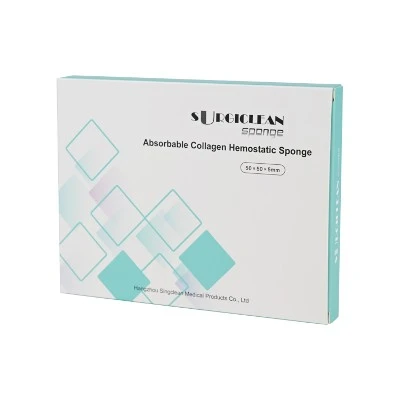
| Collagen spongebovine Achilles tendon collagen | Absorbs liquid dozens of times its own weight and forms blood clots on its surface; collagen molecules adsorb, aggregate and activate platelets and coagulation factors, initiating endogenous hemostasis. |
| Diatomite granulesmineral, calcined | The multilevel porous structure adsorbs plasma, concentrates coagulation components and accelerates clot formation; the granules absorb water from the blood so that blood at the wound thickens instantly and the concentration of platelets and clotting factors rises sharply. |
01 / MPH absorbable particles
MPH absorbable particles - dual action mechanism
Surgiclean MPH Absorbable Hemostatic Particles are made from potato starch using reverse-phase emulsification cross-linking technology, giving a space-net microstructure with a diameter between 30.8 and 97 μm. The material is EO sterilised and metabolised in vivo.
The hemostatic mechanism is dual action. Within the hemostatic mechanism the particles behave as a hydrophilic molecular sieve: they absorb water in the blood instantly and gather the formed components of the blood on the particle surface, producing a gelled matrix that forms a mechanical barrier to stop bleeding. In parallel, the local concentrations of platelets, coagulation factors and fibrin are greatly increased, which initiates and strengthens the endogenous coagulation mechanism.
Physical action
A hydrophilic molecular sieve takes water out of the blood and builds a gelled matrix as a mechanical barrier at the wound.
Biological action
Concentrated platelets, coagulation factors and fibrin initiate and strengthen the endogenous coagulation mechanism.

Comparative measurements
| Measured property | Experimental group | Control group |
|---|---|---|
| Time required | 3 s | 10 s |
| Blood clot strength MA Value | 68±17 | 27±15 |
What the particle is, and what it leaves behind
- Raw material: 100% plant based, with no components of animal or human origin, reducing the risk of foreign-body reaction and infection. The product is thrombin free, biocompatible and non-pyrogenic.
- Residue: the particles are degraded into maltose and glucose by amylase and α-glucosidase, and finally become water and carbon dioxide. The product can be fully absorbed within 14 days.
- Use conditions: no mixing, no refrigeration, no special storage requirement - the cap is removed and the powder applied directly to the bleeding site.
- Dosage: the maximum dosage should not exceed 5 g per person each time. As a working figure, each gram treats approximately 15 cm² of surgical wound at an average thickness of 1 mm.
- Delivery: four applicators - TQ-1 (14 cm tube) and TQ-2 (38 cm tube) for open or endoscopic/laparoscopic procedures, and TQ-3 (25 cm tube) and TQ-4 (2 m catheter) for endoscopic/laparoscopic procedures. TQ-1 and TQ-2 carry the CE mark.
- Specifications: 0.5 g, 1.0 g, 2.0 g, 3.0 g and 5.0 g per piece (MPH-SG-0.5 to MPH-SG-5.0).
- Certificates: CE 2460 and NMPA; the product presentation also lists TGA and Anvisa.
02 / ORC gauze
ORC gauze - triple hemostatic mechanism
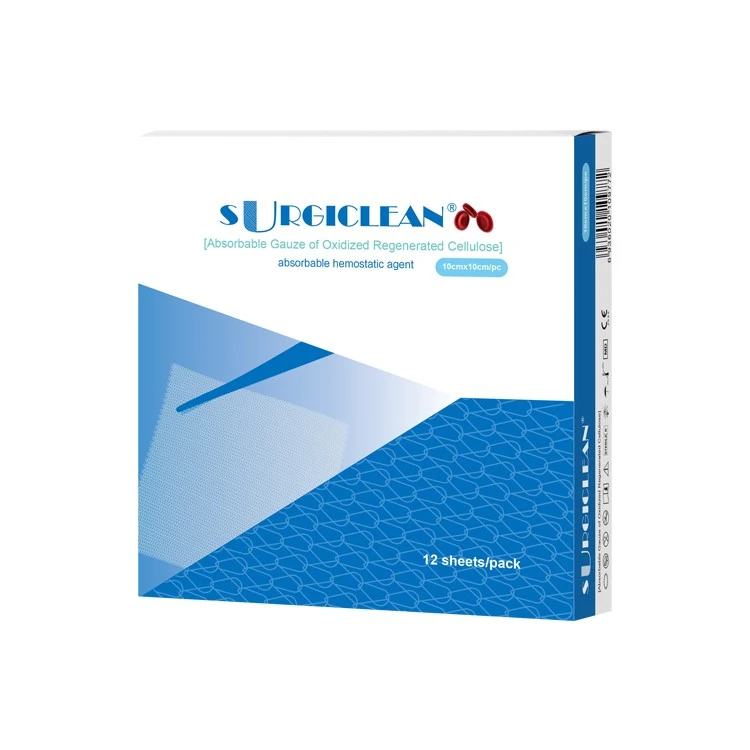
Surgiclean Absorbable Gauze of Oxidized Regenerated Cellulose is made from regenerated cellulose as raw material, which is oxidised and woven into gauze. The product ingredient is 100% oxidised regenerated cellulose; it is white with a pale yellow fabric and has a faint caramel-like aroma. It degrades in the body without residual material.
The hemostatic mechanism is three actions running from a single application step:
The chemistry behind that hemostatic mechanism is set out in our technical presentation. The specialised oxidation process endows the cellulose with abundant active carboxyl groups (–COOH). The triple action of chemical protein aggregation, physical barrier sealing and biological coagulation support.
| Mechanism | Action at the wound |
|---|---|
| Physical | Absorb water from the blood, increase blood viscosity and slow blood flow |
| Chemical | Combine with iron ions to form a brown colloid that seals the wound; and lower local pH, adsorb and aggregate platelets, and activate platelets to form thrombus |
| Physiological | Accelerate endogenous coagulation |
Data reported for the gauze
- Time of complete hemostasis: within 3 minutes.
- Absorption: the product can be completely degraded into glucose and cellobiose by biological enzymes and fully absorbed by the human body within 28 days.
- Water absorption: 6.0 times its weight, against 5.0 times for the comparator product xxxcel.
- Loss on drying: 8.0%, against 9.0% for the comparator - less moisture in the product itself, which relates to storage stability.
- Structure: at 100 μm the gauze shows a tighter interlooping mesh with smaller, more uniform interstitial spaces than the comparator, which relates to structural density and mechanical integrity during handling; at 5 μm both materials show a fasciculated morphology of aggregated microfilaments, described as increasing specific surface area for capillary-driven fluid absorption and platelet concentration.
Preclinical and clinical results
In the preclinical model, hemostatic efficacy was comparable to the market-leading product and significantly superior to traditional medical gauze, on both hemostatic time and blood loss (##P<0.01).
| Group | Large wound - hemostasis time | Large wound - blood loss | Small wound - hemostasis time | Small wound - blood loss |
|---|---|---|---|---|
| Model (medical gauze) | 760 ± 109 s | 9.36 ± 0.91 g | 548 ± 65 s | 1.61 ± 0.45 g |
| Test (Surgiclean) | 245 ± 41 s | 0.41 ± 0.24 g | 209 ± 41 s | 0.20 ± 0.04 g |
| Control (comparator) | 252 ± 72 s | 0.55 ± 0.29 g | 225 ± 47 s | 0.23 ± 0.07 g |
The clinical study used a randomised, parallel-controlled, non-inferiority design in breast surgery and gynaecological surgery. Complete hemostasis was achieved within 3 minutes in both groups - the same effectiveness as the control group.

Indication and exclusions
As a supporting hemostatic device the gauze is suitable for various surgical procedures except dental, cardiovascular, neurosurgery, ophthalmology and urology. It can help control the bleeding of capillaries, veins and small arteries where bleeding cannot be well controlled by traditional methods such as ligation. The application covers appendectomy, breast surgery, hernioplasty, gastric resection, operations to the throat and nose, liver and gallbladder operations, gynaecological operations, thyroid operations and treatment of superficial injuries.
The range covers sixteen sizes from 2 × 3 cm to 30 × 50 cm, can be cut or shaped to the area where bleeding needs to be controlled, and is placed by open or endoscopic technique.
03 / ORC fibril
ORC fibril - the same chemistry, released by structure
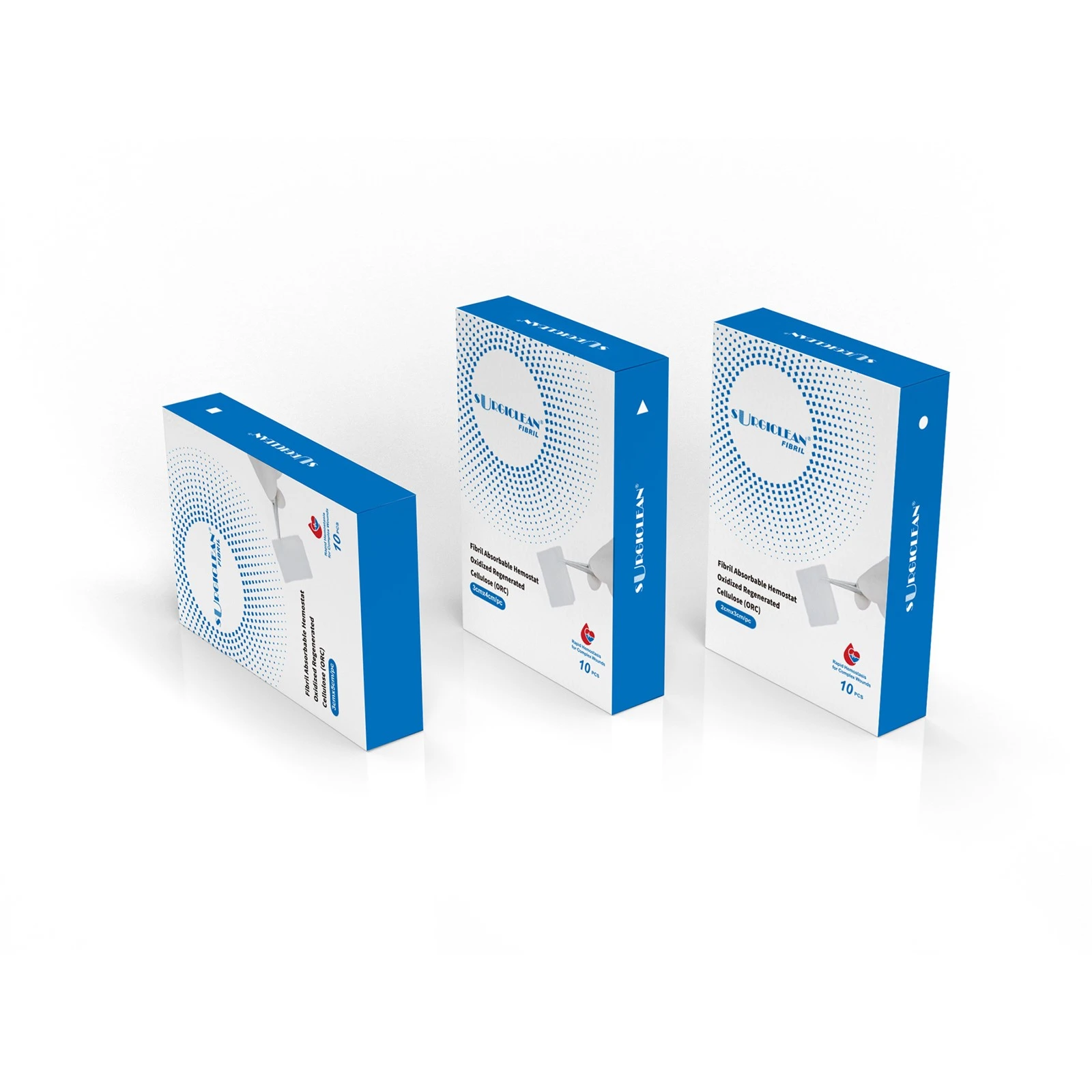
The fibril format is a sterile absorbable non-woven fabric made by oxidising regenerated cellulose. It is the next generation of the ORC line: the fabric separates into layers and can be pulled apart and manipulated for precise placement, which makes it easier to use than the knitted gauze in hard-to-reach or irregularly shaped bleeding sites.
Its hemostatic mechanism is identical to the gauze - the same physical, chemical and physiological actions. The difference is structure, and three structural properties do the work:
Loose network porous structure
Improves water absorption and accelerates the gelation and dissolution rate, while keeping a large contact area against the wound.
Fibre swelling
On contact with blood the single fibre swells visibly, and the material absorbs blood 20–30 times its own mass.
Layer separation
The fabric divides into multiple layers to match different wounds, and once it has absorbed water the hemostatic effect can be seen through the thin layer.
Performance
- Rate of hemostasis: 98.6% effective within 1 minute in clinical trials.
- Absorption: degraded into glucose by biological enzymes, then metabolised into CO₂ and H₂O by tissue. General absorption time 7–14 days; essentially absorbed within seven days.
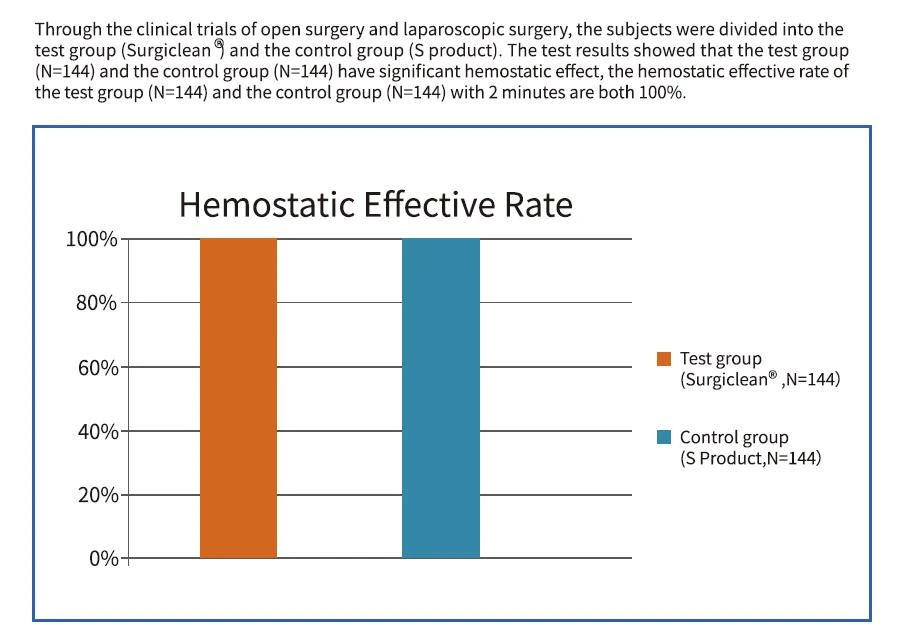
- Clinical trial: 144 subjects in the test arm and 144 in the control arm; hemostatic effective rate at 2 minutes was 100% in both.
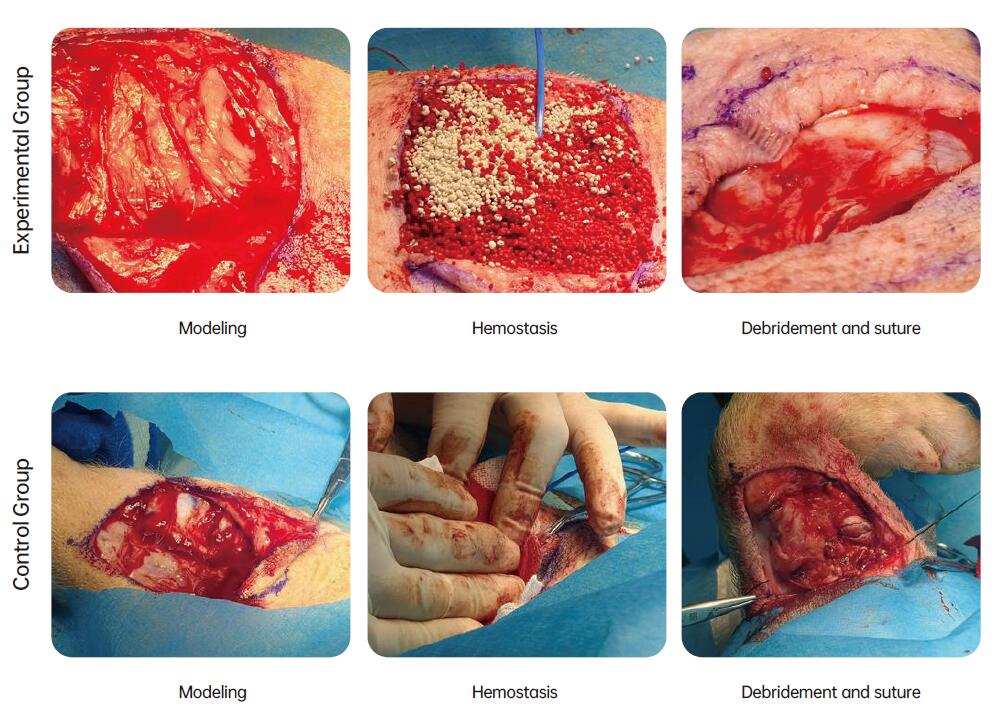
- Trial settings: six types of open surgery (thyroidectomy, lumpectomy, inguinal hernia repair, appendectomy, cholecystectomy, radical gastrectomy) and five laparoscopic procedures (cholecystectomy, thyroidectomy, inguinal hernia repair, appendectomy, liver and spleen surgery).
- Follow-up: B-ultrasound one month after operation; 138 test and 136 control subjects completed follow-up, with an absorption rate of 96.4% and 94.1% respectively. No foreign-body reaction, thrombosis, coagulation dysfunction or local allergic reaction occurred in either arm; one case of secondary bleeding occurred in the control arm.
- Degradation in minipigs: 61.80% for the test group and 48.25% for the control two days after implantation; comparable from days 3–4; 98.84% and 97.56% after 14 days, with similar degradation curves.
- Animal safety: haematoxylin-eosin staining of liver, heart, lung, kidney, spleen and chest in minipigs showed no obvious pathological change against the sham-operated group.
The indication matches the gauze: adjunctive control of capillary, venous and small arterial haemorrhage when ligation or other conventional methods are impractical or ineffective, and the product can be cut to size for endoscopic use. Seven sizes run from 2 × 3 cm to 10 × 10 cm. Four invention patents and one utility model patent cover the material and its manufacture.
04 / Collagen sponge
Collagen sponge - absorption plus platelet activation
The collagen sponge is a sterile, biodegradable sponge made from bovine Achilles tendon and processed by freeze-drying. It is light yellow to white and consists mainly of bovine collagen, whose triple helix structure gives it high tensile strength.
The hemostatic mechanism works on two levels. The sponge absorbs liquid dozens of times its own weight and forms blood clots on its surface, which blocks the vessels. At the same time collagen molecules adsorb, aggregate and activate platelets and coagulation factors, which initiates endogenous hemostasis. The porous structure also takes up exudate from the damaged tissue, keeping the wound clean and shielding it from external contamination.

Where it is indicated, and where it is not
It is an adjunctive hemostatic material for capillary, venous and non-pulsatile arteriolar bleeding when pressure, ligation or electrocautery is not enough, and suits abdominal surgery and a wide range of other procedures. It is applied with gentle pressure for 1–2 minutes to adhere to the wound surface and can be sutured or fixed if required.
05 / Diatomite granules
Diatomite granules - adsorption on a mineral surface
Quickclean Diatomite Hemostatic Granules are the first hemostatic product in China built on diatom-based ingredients, sourced from artificially cultivated marine diatoms. They are produced by controlled cultivation, granulation and high-temperature calcination, are white or off-white, absorb water at a rate of ≥60%, are sterilised by irradiation and are for single use. The indication is hemostasis of non-chronic surface wounds; the product is positioned for emergency bleeding control, arterial and venous bleeding included.
Why the pore structure drives the hemostatic mechanism
Diatomaceous earth carries a nanoporous structure built from hierarchical channels - micropores, mesopores and macropores. The larger pores accommodate and adsorb red blood cells and promote their rapid aggregation, while the interconnected channels accelerate liquid diffusion and penetration. The result is fast uptake and rapid concentration of the water in the blood, which is what raises hemostatic efficiency.

Four steps at the wound
Coverage
The wound bleeds and the granules cover it rapidly.
Adsorption concentration
The granules take up water and plasma, so the blood at the wound thickens instantly and the concentration of platelets and clotting factors rises sharply.
Fibrin network
The fibre network forms faster and the blood clot is stronger.
Debridement
The granules are removed easily and leave no material residue.
Safety and efficacy
- Cytotoxicity: cell survival above 90% for the finished granules - higher than blank control, raw diatomite material, Q***C*** kaolin and uncalcified granules.
- Animal model: in a rat tail transection bleeding model the granules produced faster clot formation and stronger hemostatic capability than blank control, etamine and Q***C***.
- Composition: completely free of animal-derived components, which removes the risk of xeno-protein allergy and pathogen transmission.
- Handling: ready to use, no pretreatment; the granular form minimises the risk of intravascular entry while covering the wound.
The product is supplied as 5 g per bag × 10 bags per box and 10 g per bag × 10 bags per box, for emergency hemostasis before hospitalisation - military, traffic accident, major emergency, high-risk occupation, outdoor sport and home kit scenarios.
Resorption timeline
How long the hemostatic mechanism lasts
| Product | What happens to it | Time |
|---|---|---|
| MPH particles | Degraded by amylase and α-glucosidase into maltose and glucose, finally to water and carbon dioxide | Within 14 days |
| ORC gauze | Degraded into glucose and cellobiose by biological enzymes | Within 28 days |
| ORC fibril | Degraded into glucose, then metabolised to CO₂ and H₂O by tissue | 7–14 days; essentially absorbed within 7 days |
| Collagen sponge | Biodegradable; no resorption time is published for this product | No Data Yet |
| Diatomite granules | Mineral; removed by debridement with no material residue | Not absorbed |
Practical use
Why the hemostatic mechanism fails in practice
Four things break the hemostatic mechanism in practice, and none of them is the material, and all four are procedural rather than material-related - they apply to every product on this page.
- The material never reaches the bleeding point. Powder that does not touch the point cannot act on it.
- The dry gauze is not pressed, or the pressing time is too short.
- The gauze is removed before it is fully soaked. The clot comes down with it and the wound bleeds again.
- The dose is too small. Adequate, rapid and correct application is the key to successful hemostasis.
ORC gauze compatibility restrictions
The ORC gauze carries four compatibility restrictions, each for a specific reason.
Escharotic chemicals
Do not use it after silver nitrate or any other escharotic chemical, because absorption can be prevented in chemically cauterised areas.
Enzyme-based agents
Do not mix or use it with enzyme-based hemostatic agents - the product has a low pH.
Blood recovery systems
Do not use it with a blood recovery system, because fragments can pass through the filter and block the system or the patient's vasculature.
Bone cement adhesives
Do not use it with methyl methacrylate adhesive for prosthetic orthopaedic devices, because it can reduce the strength of the adhesive.
Data summary
Test data at a glance
How each hemostatic mechanism performs, in the figures that matter at the table.
| Product | Hemostasis | Absorption | Supporting data |
|---|---|---|---|
| MPH particles | About 1 min | 14 days | Clot strength 6465 Pa against 3215 Pa for control; time required 3 s against 10 s |
| ORC gauze | Within 3 min | 28 days | Water absorption 6.0× against 5.0×; preclinical model and randomised clinical trial |
| ORC fibril | 98.6% within 1 min | 7–14 days | Absorbs 20–30× its own mass; two-arm clinical trial, n = 144 per arm, 100% at 2 min |
| Collagen sponge | 1–2 min gentle pressure | Not published | Absorbs liquid dozens of times its own weight |
| Diatomite granules | Faster than control, etamine and kaolin in a rat model | Not absorbed | Cell survival >90%; water absorption rate ≥60% |
FAQ
Frequently asked questions
QHow does an absorbable hemostat stop bleeding?
The hemostatic mechanism starts by removing water from the blood and holding the formed elements at the wound. The starch particles and the diatomite granules do this by adsorption and concentration. The collagen sponge adds direct activation of platelets and coagulation factors. The two ORC products add a chemical step, combining with iron ions to form a brown colloid and lowering local pH, on top of physical absorption and support for endogenous coagulation.
QHow long does it take to stop bleeding?
About 1 minute for the MPH particles, within 3 minutes for the ORC gauze, and 98.6% effective within 1 minute for the ORC fibril in clinical trials. For the particles the exact time depends on how much is applied and where.
QHow long does the material stay in the body?
14 days for the MPH particles, 28 days for the ORC gauze and 7–14 days for the ORC fibril. The diatomite granules are not absorbed - they are removed by debridement. No resorption time is published for the collagen sponge.
QCan Surgiclean replace routine surgical hemostasis?
No. It controls bleeding in a wide range of surgery, and is particularly suited to diffuse and complex bleeding and to bleeding in difficult-to-reach parts where suture ligation and electrocautery do not work well. It does not replace every hemostasis technique.
QWhich procedures cannot use the ORC gauze?
Dental, cardiovascular, neurosurgery, ophthalmology and urology.
QWhich procedures cannot use the MPH particles?
Neurological and ophthalmic surgery.
QIs the powder suitable for patients with a coagulation deficiency?
Yes. It speeds up the endogenous coagulation process by absorbing the water in the blood, aggregating the coagulation factors and providing a place for the hemostasis reaction. Clotting begins on contact regardless of the patient's coagulation status.
QDoes the material interfere with radiologic imaging?
No. Excess material is removed once hemostasis is achieved, as the instructions for use require, so nothing remains to appear on an image.
Sources
References

Hemostatic effect of oxidized regenerated cellulose hemostatic material in porcine coronary artery wound model
Read More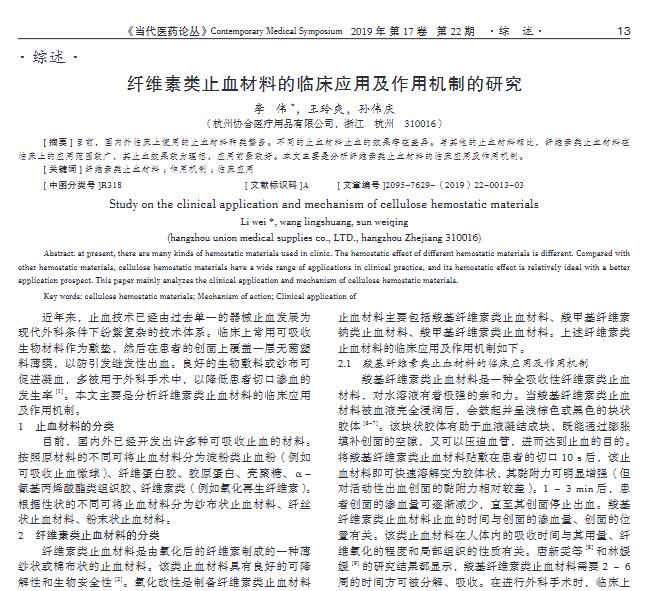
Research on the clinical application and mechanism of action of cellulose-based hemostatic materials
Read More
Osseous regeneration in the presence of oxidized cellulose and collagen
Read More
Study on hemostatic mechanism of water-soluble hemostatic textile materials
Read More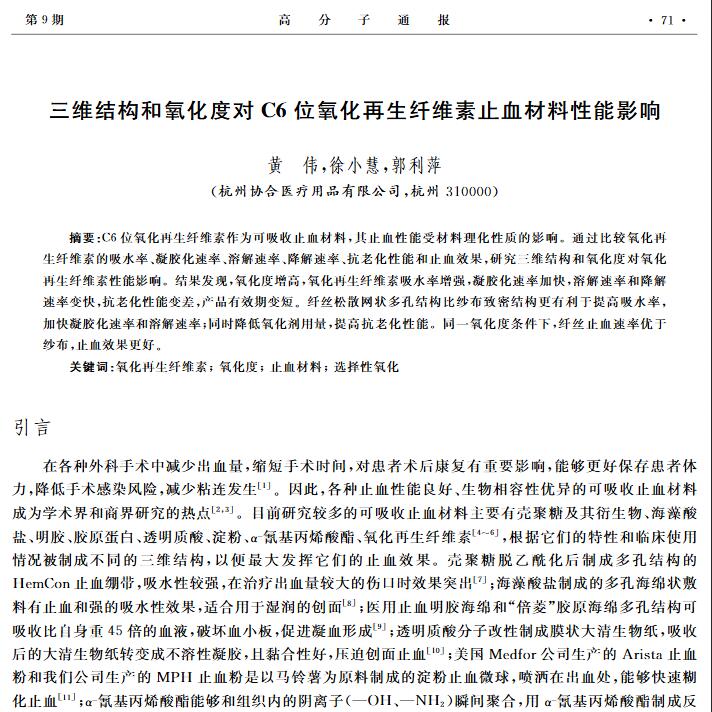
Effects of three-dimensional structure and degree of oxidation on the performance of hemostatic material of oxidized regenerated cellulose at C6 position
Read More
Efficacy and safety evaluation of an absorbable hemostatic filament
Read More
Diatomite hemostatic particles with hierarchical porous structure for rapid and effective hemostasis
Read MoreOEM / ODM & Distributor Enquiries
Hangzhou Singclean Medical Products Co., Ltd. has manufactured absorbable biomaterials since 2003. Speak to our technical team about mechanism documentation, product dossiers and registration support for your market.