


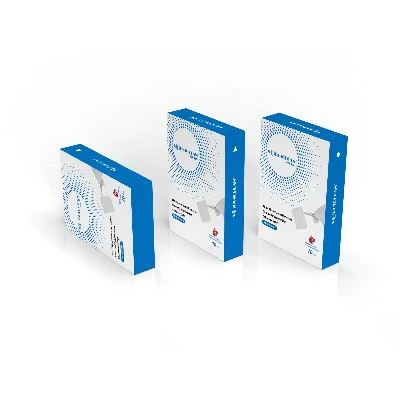
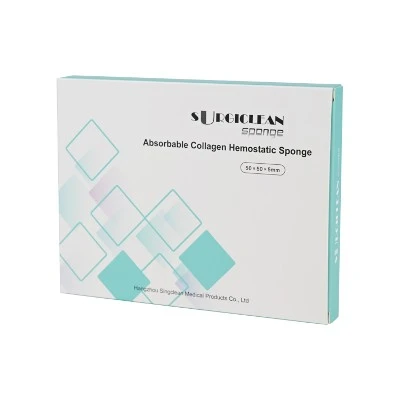

Hey there! As a supplier of Effective Hemostatic Sponges, I often get asked about the surface energy of these amazing products. So, let's dive right in and explore what the surface energy of an effective hemostatic sponge is all about.
First off, what's surface energy? Well, in simple terms, surface energy is the energy associated with the surface of a material. It's kind of like the energy that makes a liquid bead up on a surface or spread out. For a hemostatic sponge, surface energy plays a crucial role in how it interacts with blood and tissues.
When it comes to hemostatic sponges, a high surface energy is generally a good thing. Why? Because a sponge with high surface energy has a greater ability to attract and interact with blood components. This means it can more effectively initiate the clotting process. Blood contains a bunch of different components like platelets, fibrinogen, and various clotting factors. When the hemostatic sponge comes into contact with blood, its high - energy surface can grab onto these components and start the chain reaction that leads to the formation of a blood clot.
Let's talk about the materials used in our Effective Hemostatic Sponges. Most of our sponges are made from materials like collagen. Collagen is a natural protein that's found in our bodies, and it has some really interesting surface energy properties. Collagen has a unique molecular structure that gives it a relatively high surface energy. This allows it to bind well with platelets, which are key players in the clotting process. Platelets are sticky little cells in our blood, and when they come into contact with the high - energy surface of a Collagen Hemostatic Sponge, they start to activate and clump together.
Another important aspect of surface energy in hemostatic sponges is its effect on wettability. Wettability refers to how well a liquid (in this case, blood) spreads over the surface of the sponge. A sponge with high surface energy is more likely to be wetted by blood. This is super important because if the blood can spread easily over the sponge, it means that more of the blood components can interact with the sponge's surface, leading to a faster and more efficient clotting process.
Now, let's look at the practical implications of surface energy for our customers. In a medical setting, time is of the essence when it comes to stopping bleeding. Our Hemostatic Collagen Sponge with its optimized surface energy can significantly reduce the time it takes to achieve hemostasis. Whether it's a minor surgical procedure or a more complex trauma situation, our sponges can quickly and effectively stop bleeding, which not only improves patient outcomes but also reduces the risk of complications.
We also understand that different applications may require different levels of surface energy. For example, in a situation where there's a lot of blood flow, a sponge with a slightly higher surface energy might be more effective. On the other hand, for more delicate procedures where you don't want the sponge to stick too aggressively, a sponge with a slightly lower surface energy could be the way to go. That's why we offer a range of Collagen Hemostat products with different surface energy characteristics to meet the diverse needs of our customers.
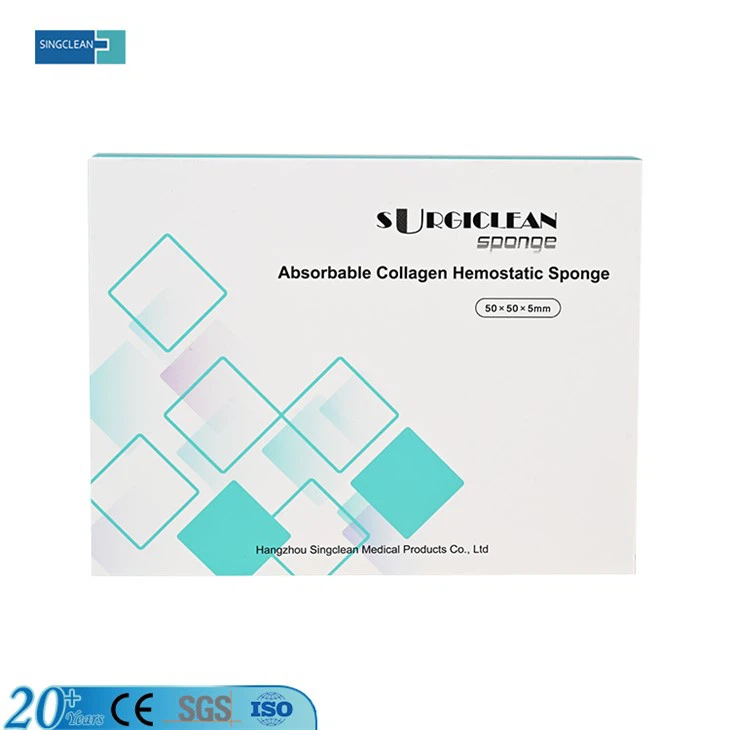

One of the challenges in developing hemostatic sponges is finding the right balance of surface energy. If the surface energy is too high, the sponge might stick too tightly to the tissues, which could cause problems when it comes to removing the sponge or could damage the surrounding tissues. On the other hand, if the surface energy is too low, the sponge might not be able to initiate the clotting process effectively. Our R & D team has spent a lot of time and effort in fine - tuning the surface energy of our sponges to make sure they offer the best possible performance.
We use advanced manufacturing techniques to control the surface energy of our sponges. By carefully selecting the raw materials and the processing methods, we can create sponges with consistent and precise surface energy levels. This ensures that every batch of our hemostatic sponges performs reliably and effectively.
In addition to the clotting function, the surface energy of our sponges also affects their biocompatibility. Biocompatibility means how well the sponge interacts with the body's tissues without causing an adverse reaction. A sponge with the right surface energy is more likely to be well - tolerated by the body. It won't trigger an excessive immune response, which is important for the overall healing process.
So, if you're in the medical field, whether you're a surgeon, a nurse, or involved in the procurement of medical supplies, you can see why the surface energy of our Effective Hemostatic Sponges is such an important factor. Our sponges are designed to provide fast, reliable, and safe hemostasis, thanks in large part to their optimized surface energy.
If you're interested in learning more about our products or have any questions about the surface energy of our hemostatic sponges, we'd love to hear from you. We're always happy to have a chat and discuss how our products can meet your specific needs. Whether you're looking for a solution for a particular surgical procedure or just want to explore the options for your medical facility, we're here to help.
Don't hesitate to reach out to us for more information and to start a procurement discussion. We're confident that our Effective Hemostatic Sponges will be a great addition to your medical supplies.
References
- Principles of Tissue Engineering, edited by Robert Lanza, Robert Langer, and Joseph Vacanti.
- Biomaterials Science: An Introduction to Materials in Medicine, by Buddy D. Ratner, Allan S. Hoffman, Frederick J. Schoen, and Jack E. Lemons.