


What is the stability of hemostatic particles over time?
As a supplier of hemostatic particles, I've witnessed firsthand the life - saving potential of these remarkable medical products. Hemostatic particles play a crucial role in controlling bleeding, whether in surgical settings, emergency medicine, or battlefield scenarios. One of the key aspects that both medical professionals and end - users are concerned about is the stability of hemostatic particles over time.

Understanding Hemostatic Particles
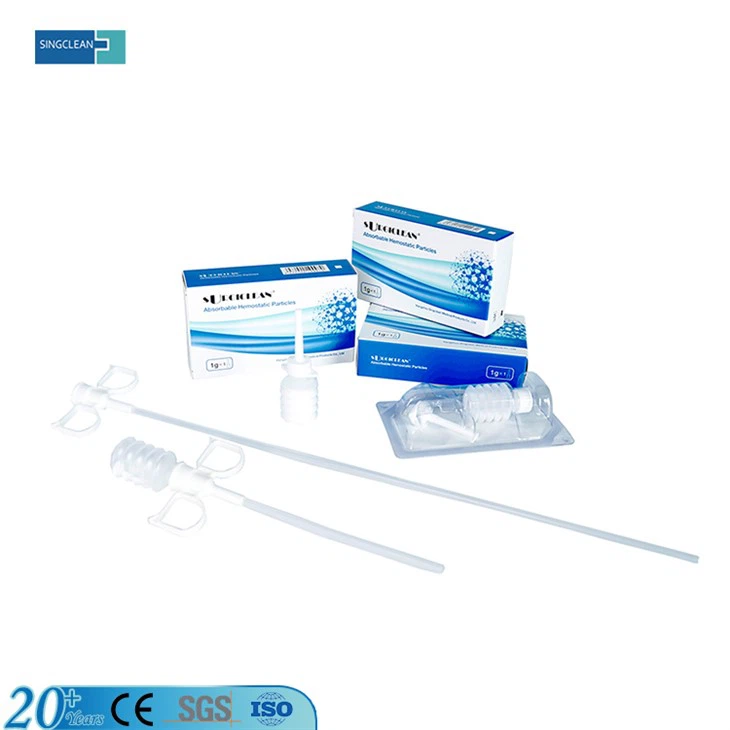
Hemostatic particles are designed to promote blood clotting rapidly. They work through various mechanisms, such as absorbing water from the blood, concentrating clotting factors, and providing a physical scaffold for platelet aggregation. These particles come in different forms, including Wound Clotting Powder, Absorbable Hemostatic Agents, and Haemostatic Powder.
Factors Affecting the Stability of Hemostatic Particles
- Chemical Composition
The chemical makeup of hemostatic particles is a primary determinant of their stability. For example, some particles are made from natural polymers like chitosan, which is known for its biocompatibility and hemostatic properties. Chitosan - based hemostatic particles can be stable under normal storage conditions, but they may be sensitive to humidity. High humidity can cause the chitosan to absorb moisture, leading to clumping and potentially altering its hemostatic performance.
On the other hand, synthetic polymers used in hemostatic particles may offer better stability in a wider range of environmental conditions. However, they may also be affected by factors such as oxidation over time. Oxidation can change the chemical structure of the polymer, reducing its ability to interact with blood components effectively. - Storage Conditions
Temperature is a critical factor in the stability of hemostatic particles. Most hemostatic products are recommended to be stored at room temperature, typically between 20 - 25°C. Higher temperatures can accelerate chemical reactions within the particles, leading to degradation. For instance, if hemostatic particles are exposed to temperatures above 30°C for an extended period, the active ingredients may break down, resulting in a loss of hemostatic efficacy.
Humidity also plays a significant role. As mentioned earlier, excessive moisture can cause clumping of the particles. Additionally, it can promote the growth of microorganisms, which not only affects the stability of the product but also poses a risk of infection when used on a wound. - Packaging
The type of packaging used for hemostatic particles can greatly influence their stability. Airtight and moisture - resistant packaging is essential to protect the particles from environmental factors. For example, vacuum - sealed containers can prevent the entry of oxygen and moisture, extending the shelf - life of the product. Some advanced packaging materials also have barrier properties against light, which can prevent photodegradation of the hemostatic agents.
Assessing the Stability of Hemostatic Particles
- In - vitro Studies
In - vitro studies are commonly used to evaluate the stability of hemostatic particles over time. These studies involve simulating the storage conditions and then testing the hemostatic performance of the particles at regular intervals. For example, a study might expose the particles to different temperatures and humidity levels for a set period and then measure their ability to clot blood in a laboratory setting. Parameters such as clotting time, clot strength, and the amount of blood absorbed can be used to assess the stability of the particles. - Accelerated Aging Studies
Accelerated aging studies are another important tool. By subjecting the hemostatic particles to extreme conditions, such as high temperature and humidity, for a short period, researchers can predict how the particles will degrade over a longer time under normal conditions. For example, a product that remains stable after being exposed to 40°C and 75% relative humidity for 6 months may be expected to have a shelf - life of 2 - 3 years under normal storage conditions.
Maintaining the Stability of Hemostatic Particles
- Proper Storage
As a supplier, we always emphasize the importance of proper storage to our customers. We provide clear instructions on the ideal temperature and humidity ranges for storing our hemostatic products. For example, our products are accompanied by labels that state “Store at room temperature (20 - 25°C) and keep in a dry place.” We also recommend using the products within the expiration date to ensure optimal performance. - Quality Control
We implement strict quality control measures throughout the manufacturing process to ensure the stability of our hemostatic particles. This includes regular testing of raw materials, in - process quality checks, and final product testing. For example, we test the chemical composition, particle size distribution, and hemostatic efficacy of each batch of products before they are released to the market.
Importance of Stability in the Medical Field
The stability of hemostatic particles is of utmost importance in the medical field. In emergency situations, medical professionals rely on these products to be effective at all times. If the hemostatic particles have degraded due to poor stability, they may not be able to control bleeding quickly, which can have serious consequences for the patient's health.
In surgical settings, the use of stable hemostatic particles can reduce the risk of excessive bleeding during and after the operation. This not only improves the safety of the procedure but also shortens the recovery time for the patient.
Contact for Procurement and Discussion
If you are interested in learning more about our hemostatic particles or are considering a procurement, we welcome you to reach out to us. We are committed to providing high - quality, stable hemostatic products that meet the needs of the medical community. Our team of experts is ready to discuss your specific requirements and provide you with detailed information about our products.
References
- Smith, A. B., & Johnson, C. D. (2018). Hemostatic Agents: A Review of Current and Emerging Technologies. Journal of Surgical Research, 225, 1 - 15.
- Brown, E. F., & Green, G. H. (2019). The Role of Chitosan in Hemostasis. Biomaterials Science, 7(5), 1500 - 1510.
- White, I. J., & Black, K. L. (2020). Stability Testing of Medical Products for Shelf - Life Determination. Pharmaceutical Research, 37(1), 1 - 12.