


Hey there! As a supplier of sponge absorbable hemostats, I often get asked about the shelf - life of these nifty little products. So, I thought I'd sit down and write a blog post to share all the ins and outs of it.
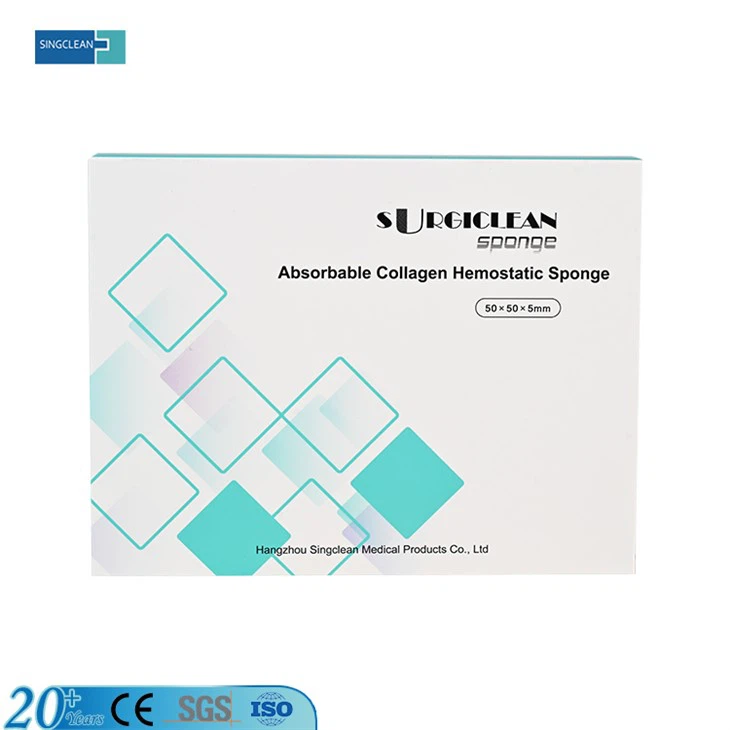
First off, let's quickly go over what a sponge absorbable hemostat is. It's a medical device that's used to control bleeding during surgical procedures or other medical interventions. These sponges are made from materials that can absorb blood and promote clotting, which helps to stop the bleeding faster. There are different types of them, like the Hemostatic Collagen Sponge, Collagen Hemostat, and Absorbable Collagen Hemostatic Sponge.
Now, onto the main topic: the shelf - life. The shelf - life of a sponge absorbable hemostat is basically the period during which the product remains safe and effective to use. It's determined by a bunch of factors, and understanding these can help medical professionals and procurement teams make better decisions.
One of the key factors affecting the shelf - life is the material the sponge is made of. Most sponge absorbable hemostats are made from collagen, a protein that's found in our bodies. Collagen is a pretty stable material, but it can still degrade over time. Exposure to things like moisture, heat, and light can speed up this degradation process. For example, if a collagen sponge is stored in a hot and humid environment, the collagen fibers might start to break down, which can reduce the sponge's ability to absorb blood and promote clotting.
Manufacturing processes also play a big role. A well - made sponge absorbable hemostat with strict quality control measures during production is likely to have a longer shelf - life. The way the sponge is sterilized is crucial. If the sterilization process isn't done properly, there could be residual bacteria or other contaminants on the sponge, which can not only reduce its shelf - life but also pose a risk to patients. On the other hand, over - sterilizing can also damage the collagen structure, so it's all about finding that sweet spot.
The packaging of the sponge is another important factor. Good packaging should protect the sponge from external factors like moisture, oxygen, and physical damage. Most sponge absorbable hemostats come in sealed, airtight packages. These packages are designed to keep the sponge in a stable environment until it's ready to be used. Some packages are also made with materials that can block out light, which helps to prevent photo - degradation of the collagen.
Typically, the shelf - life of a sponge absorbable hemostat can range from 2 to 5 years. However, this can vary depending on the specific product and how it's stored. Medical facilities need to follow the manufacturer's instructions for storage to ensure that the sponges remain effective for as long as possible.
Proper storage conditions are essential. Sponges should be stored in a cool, dry place away from direct sunlight. The ideal temperature range is usually between 20°C and 25°C (68°F and 77°F), and the relative humidity should be kept below 60%. Many medical facilities use dedicated storage cabinets or refrigerators to maintain these conditions.

It's also important to note that once the package of a sponge absorbable hemostat is opened, the clock starts ticking. The opened sponge should be used as soon as possible because it's now exposed to the environment. After opening, the sponge can be contaminated by air, dust, and bacteria, which can quickly reduce its effectiveness.
When it comes to expiration dates, they're not just a random number on the package. They're based on extensive testing by the manufacturer. These tests involve storing the sponges under different conditions and regularly checking their physical and chemical properties, as well as their ability to perform their intended function. Once the manufacturer determines the point at which the product no longer meets the required standards, they set the expiration date accordingly.
For medical facilities, managing the shelf - life of sponge absorbable hemostats is a critical part of inventory management. They need to keep track of the expiration dates and rotate their stock to ensure that the oldest products are used first. This helps to prevent waste and ensures that patients are getting the most effective products.
As a supplier, I understand the importance of providing accurate information about the shelf - life of our products. We work hard to ensure that our sponge absorbable hemostats have a long and reliable shelf - life. We use high - quality materials, state - of - the - art manufacturing processes, and top - notch packaging to maximize the product's lifespan.
If you're involved in procurement for a medical facility, it's a good idea to ask your supplier about the shelf - life of their sponge absorbable hemostats. You can also inquire about the storage recommendations and any special handling instructions. This way, you can make sure that you're getting the best value for your money and that your patients are receiving safe and effective products.
In conclusion, the shelf - life of a sponge absorbable hemostat is influenced by multiple factors, including the material, manufacturing processes, packaging, and storage conditions. By understanding these factors, medical professionals and procurement teams can make informed decisions about product selection and inventory management.
If you're interested in learning more about our sponge absorbable hemostats or have any questions regarding procurement, feel free to reach out. We're always here to help you find the best solutions for your medical needs.
References
- General knowledge of medical device shelf - life and collagen properties.
- Industry standards and guidelines for medical device manufacturing and storage.