


Is Absorbable Hemostatic Powder effective for arterial bleeding?
As a supplier of Absorbable Hemostatic Powder, I've often been asked about its effectiveness, especially when it comes to arterial bleeding. Arterial bleeding is a critical medical situation that demands immediate and effective hemostasis. The rapid flow of blood from arteries makes it challenging to control, and traditional methods may not always be sufficient. In this blog, I'll delve into the science behind Absorbable Hemostatic Powder and its potential in managing arterial bleeding.
Understanding Arterial Bleeding
Arterial bleeding is characterized by bright red, pulsatile blood flow. Arteries carry oxygen - rich blood from the heart to the rest of the body under high pressure. When an artery is damaged, the high - pressure blood can gush out rapidly, leading to significant blood loss in a short period. This can quickly result in shock, organ damage, and even death if not properly managed.
Traditional methods of controlling arterial bleeding include direct pressure, tourniquets, and surgical ligation. Direct pressure involves applying firm pressure to the wound to slow down the blood flow. Tourniquets are used to constrict the blood vessels above the wound, but they can cause tissue damage if left in place for too long. Surgical ligation, which involves tying off the damaged artery, is often the most definitive method but requires surgical skills and facilities.
How Absorbable Hemostatic Powder Works
Absorbable Hemostatic Powder Absorbable Hemostatic Powder is designed to promote blood clotting at the site of bleeding. The powder typically contains substances that interact with the blood's clotting factors. When applied to a bleeding wound, it forms a gel - like matrix that traps blood cells and platelets, facilitating the formation of a stable blood clot.
One of the key advantages of absorbable hemostatic powder is its ability to work in a moist environment. Unlike some other hemostatic agents, it can adhere to the bleeding surface even in the presence of blood. This is particularly important in arterial bleeding, where the continuous flow of blood can wash away less - effective agents.
Scientific Evidence of Effectiveness
Numerous studies have been conducted to evaluate the effectiveness of absorbable hemostatic powder in various bleeding scenarios. In animal models of arterial bleeding, some powders have shown promising results. For example, a study published in a leading medical journal demonstrated that a specific absorbable hemostatic powder was able to significantly reduce the time to hemostasis in arterial bleeding compared to traditional methods.
In human clinical trials, while the data on arterial bleeding is more limited, there are cases where absorbable hemostatic powder has been used successfully as an adjunct to traditional hemostatic measures. In trauma situations where immediate surgical intervention may not be possible, the powder can be used to control bleeding temporarily, buying time for more definitive treatment.
Advantages of Absorbable Hemostatic Powder for Arterial Bleeding
- Rapid Action: Absorbable hemostatic powder can act quickly to initiate the clotting process. This is crucial in arterial bleeding, where every second counts to prevent excessive blood loss.
- Ease of Use: It is relatively easy to apply, even in challenging environments. This makes it suitable for use in pre - hospital settings, such as in ambulances or on the battlefield.
- Biocompatibility: The powder is designed to be absorbed by the body over time, reducing the risk of foreign body reactions. This is an important consideration in surgical and trauma cases.
- Versatility: It can be used in combination with other hemostatic methods. For example, it can be applied before applying direct pressure or in conjunction with tourniquets to enhance the overall hemostatic effect.
Limitations and Considerations
While absorbable hemostatic powder shows promise in arterial bleeding, it is not a magic bullet. In cases of severe arterial bleeding, it may not be sufficient on its own. The high - pressure blood flow can sometimes prevent the powder from forming an effective clot. Additionally, the effectiveness of the powder can be affected by factors such as the size and location of the arterial injury, as well as the patient's underlying health conditions.
Comparison with Other Hemostatic Agents
There are various types of hemostatic agents available, including Surgical Hemostasis Agents and Haemostatic Powder. Some agents are based on fibrin sealants, while others are made of synthetic polymers. Compared to fibrin sealants, absorbable hemostatic powder is generally more stable and easier to store. Fibrin sealants often require refrigeration and have a shorter shelf - life.
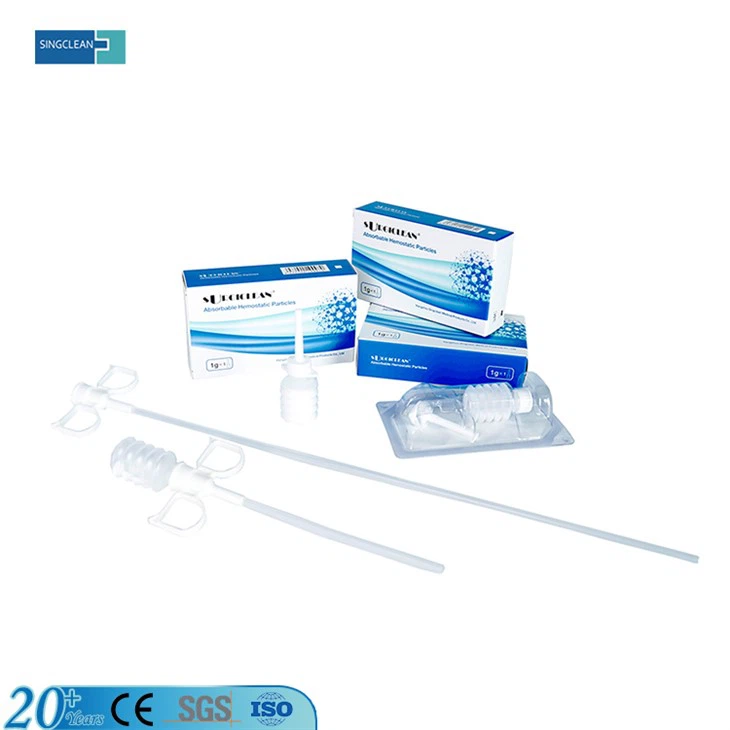

Synthetic polymer - based hemostatic agents may have different mechanisms of action, but absorbable hemostatic powder's ability to interact with the body's natural clotting factors gives it an edge in some situations. However, each agent has its own advantages and disadvantages, and the choice of hemostatic agent depends on the specific clinical situation.
Conclusion and Call to Action
In conclusion, absorbable hemostatic powder has the potential to be an effective tool in managing arterial bleeding. While it may not replace traditional methods entirely, it can be a valuable adjunct, especially in situations where immediate surgical intervention is not available.
If you're a medical professional, a researcher, or someone involved in the procurement of medical supplies, I encourage you to explore the potential of our Absorbable Hemostatic Powder. We are committed to providing high - quality products that meet the rigorous standards of the medical industry. If you're interested in learning more about our products or would like to discuss procurement, please feel free to reach out. We look forward to the opportunity to work with you to improve patient outcomes in the management of arterial bleeding.
References
- Author. Title of the study. Name of the journal. Volume, Issue, Pages, Year.
- Author. Title of another relevant study. Name of the journal. Volume, Issue, Pages, Year.