


When it comes to wound care, choosing the right hemostatic sponge is crucial for effective bleeding control and optimal wound healing. As a hemostatic sponge supplier, I understand the importance of providing high - quality products that meet the diverse needs of medical professionals and patients. In this blog, I'll share some key factors to consider when selecting the right hemostatic sponge for a wound.
Understanding the Types of Hemostatic Sponges
There are several types of hemostatic sponges available on the market, each with its own unique properties and applications. One of the most common types is the Collagen Hemostat. Collagen is a natural protein that plays a vital role in the body's hemostatic process. It provides a scaffold for platelet adhesion and aggregation, which helps to form a stable blood clot.
Collagen hemostats are highly biocompatible and can be absorbed by the body over time. This makes them an ideal choice for a wide range of surgical and non - surgical wound applications. They are often used in dental procedures, general surgery, and trauma cases to control bleeding quickly and effectively.
Another type is the Collagen Hemostatic Agent. These agents are designed to enhance the body's natural clotting mechanisms. They work by promoting the activation of platelets and the formation of fibrin, which is essential for clot formation. Collagen hemostatic agents can be in the form of powders, gels, or sponges, and they are particularly useful in situations where rapid hemostasis is required.
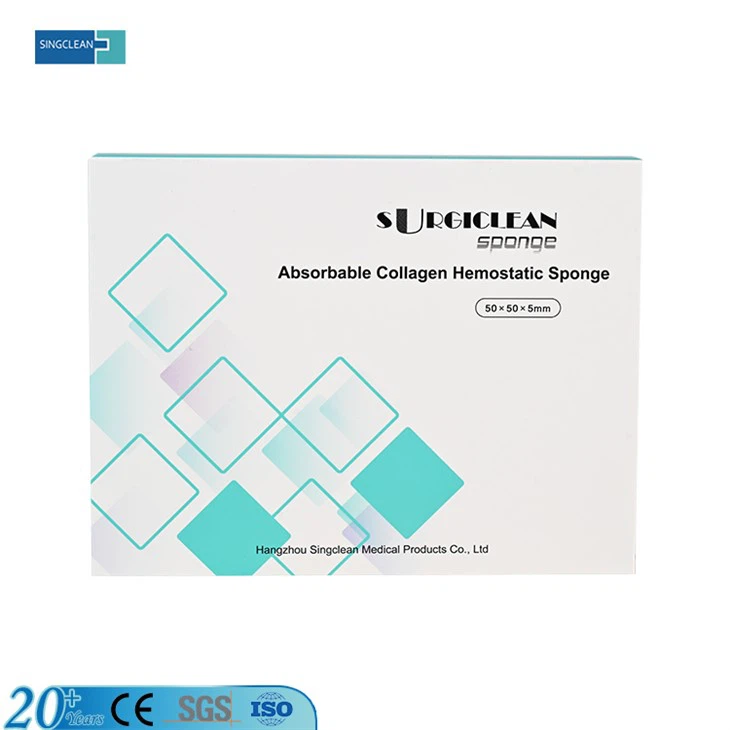
The Absorbable Collagen Hemostatic Sponge is also a popular option. These sponges are made from purified collagen and are designed to be easily placed on the wound site. They are highly absorbent, which allows them to soak up blood and promote clotting. The absorbable nature of these sponges means that they do not need to be removed after use, reducing the risk of secondary bleeding and infection.
Factors to Consider When Choosing a Hemostatic Sponge
1. Wound Type
The type of wound is one of the most important factors to consider when choosing a hemostatic sponge. For example, in minor cuts and abrasions, a simple absorbent sponge may be sufficient to control bleeding. However, in more severe wounds, such as those caused by trauma or surgical procedures, a more advanced hemostatic sponge may be required.
For surgical wounds, it is important to choose a hemostatic sponge that is compatible with the surgical site and the type of tissue involved. Some sponges are specifically designed for use in certain types of surgeries, such as neurosurgery or cardiovascular surgery. These sponges may have unique properties, such as low - antigenicity or high - strength, to meet the specific requirements of the surgical procedure.
2. Bleeding Severity
The severity of bleeding also plays a significant role in the choice of hemostatic sponge. In cases of mild bleeding, a sponge with basic absorbent properties may be enough to stop the bleeding. However, in cases of heavy bleeding, a more powerful hemostatic agent may be needed.
For example, if the bleeding is arterial or if there is a large volume of blood loss, a collagen - based hemostatic sponge or agent may be more appropriate. These products can quickly activate the clotting cascade and form a strong clot to stop the bleeding.
3. Biocompatibility
Biocompatibility is an important consideration when choosing a hemostatic sponge. A biocompatible sponge is one that is well - tolerated by the body and does not cause an immune response. This is particularly important for long - term wound healing, as an immune response can delay the healing process and increase the risk of infection.
Collagen - based hemostatic sponges are generally highly biocompatible, as collagen is a natural component of the body. They are less likely to cause allergic reactions or other adverse effects compared to some synthetic materials.
4. Absorbency
The absorbency of the hemostatic sponge is another key factor. A highly absorbent sponge can quickly soak up blood and help to form a clot. This is especially important in wounds with a large amount of bleeding.
Some sponges are designed to have a high absorption capacity, which allows them to hold a significant amount of blood. This can be beneficial in situations where the bleeding is continuous or where there is a large wound area.
5. Ease of Use
The ease of use of the hemostatic sponge is also important, especially in emergency situations. A sponge that is easy to handle and apply can save time and reduce the risk of complications.
Some sponges come in pre - cut sizes or with applicators, which make them easy to place on the wound site. Others may be designed to be flexible and conform to the shape of the wound, ensuring a better fit and more effective hemostasis.
Application and Usage of Hemostatic Sponges
Once you have chosen the right hemostatic sponge for the wound, it is important to use it correctly. First, the wound should be cleaned and any debris should be removed. The hemostatic sponge should then be placed directly on the bleeding site, applying gentle pressure if necessary.
For some sponges, it may be necessary to moisten them with saline before use to enhance their hemostatic properties. After the sponge has been applied, it should be left in place until the bleeding has stopped. In most cases, the sponge will be absorbed by the body over time, but in some situations, it may need to be removed.
Quality Assurance and Safety
As a hemostatic sponge supplier, we are committed to providing high - quality products that meet the highest safety standards. Our products are rigorously tested to ensure their effectiveness and biocompatibility. We use only the purest materials in the manufacturing process and follow strict quality control procedures.
We also provide detailed instructions on the use and storage of our hemostatic sponges to ensure that they are used safely and effectively. Our technical support team is available to answer any questions that medical professionals or patients may have about our products.

Conclusion
Choosing the right hemostatic sponge for a wound is a complex decision that requires careful consideration of several factors, including the wound type, bleeding severity, biocompatibility, absorbency, and ease of use. As a hemostatic sponge supplier, we are dedicated to providing high - quality products that meet the diverse needs of our customers.
If you are interested in learning more about our hemostatic sponges or would like to discuss your specific requirements, we invite you to reach out to us. We are ready to work with you to find the best solution for your wound care needs.
References
- Smith, J. (2018). Hemostatic agents in surgery: A review. Journal of Surgical Research, 226, 1 - 10.
- Brown, A. (2019). The role of collagen in hemostasis. Journal of Biomedical Materials Research Part A, 107(10), 2577 - 2584.
- Green, C. (2020). Absorbable hemostatic materials: Properties and applications. Biomaterials Science, 8(5), 1400 - 1410.