


As a supplier of sponge hemostatic products, I've encountered numerous inquiries from medical professionals and procurement officers regarding the potential combination of sponge hemostatic agents with other hemostatic materials. This blog aims to explore the scientific basis, advantages, and considerations of such combinations, providing valuable insights for those involved in the medical field.
Understanding Sponge Hemostatic Agents
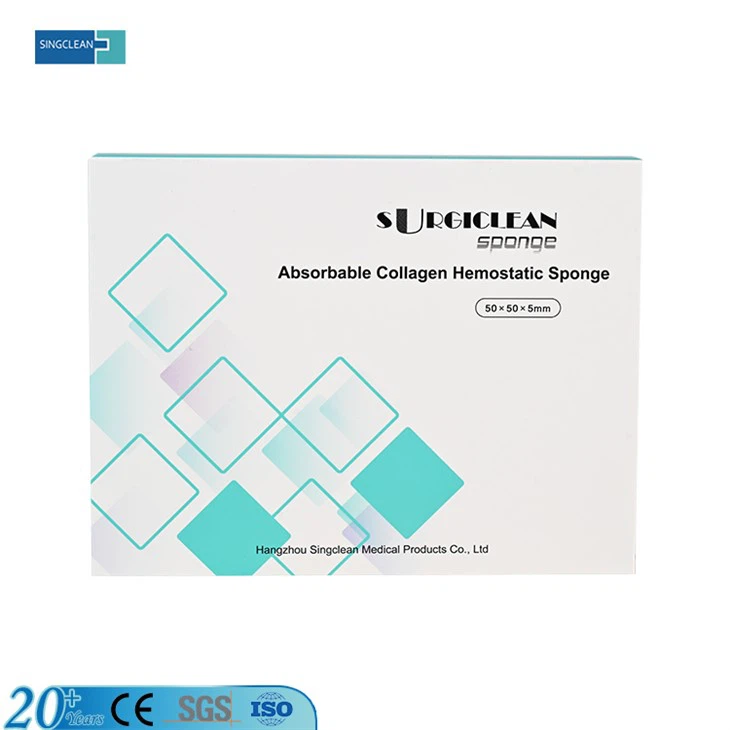
Sponge hemostatic agents, such as the Sponge Hemostatic, are widely used in surgical procedures and wound management. These sponges are typically made from biocompatible materials that can absorb blood and promote clotting. They work by providing a physical scaffold for platelet aggregation and fibrin formation, thereby accelerating the natural hemostatic process.
One of the key advantages of sponge hemostatic agents is their ease of use. They can be easily cut to the desired size and shape, and they can be applied directly to the bleeding site. Additionally, many sponge hemostatic agents are absorbable, which means they do not need to be removed after use, reducing the risk of infection and complications.
Other Hemostatic Agents
In addition to sponge hemostatic agents, there are several other types of hemostatic materials available on the market. These include collagen hemostats, fibrin sealants, and topical hemostatic agents.
Collagen Hemostat
Collagen Hemostat is another commonly used hemostatic material. Collagen is a natural protein that is found in the extracellular matrix of tissues. When applied to a bleeding site, collagen hemostats can activate platelets and promote the formation of a blood clot. Collagen hemostats are available in various forms, including sponges, powders, and gels.
Fibrin Sealants
Fibrin sealants are composed of fibrinogen and thrombin, which are the two main components of the clotting cascade. When these two components are mixed together, they form a fibrin clot, which can seal the bleeding site. Fibrin sealants are often used in combination with other hemostatic agents to enhance their effectiveness.
Topical Hemostatic Agents
Topical hemostatic agents are substances that are applied directly to the skin or mucous membranes to stop bleeding. These agents can work by a variety of mechanisms, including promoting platelet aggregation, constricting blood vessels, or forming a physical barrier over the bleeding site. Examples of topical hemostatic agents include adrenaline, thrombin, and gelatin sponges.
Advantages of Combining Sponge Hemostatic with Other Hemostatic Agents
There are several potential advantages to combining sponge hemostatic agents with other hemostatic materials.

Enhanced Hemostatic Effect
By combining different types of hemostatic agents, it is possible to achieve a more rapid and effective hemostasis. For example, a sponge hemostatic agent can provide a physical scaffold for platelet aggregation, while a collagen hemostat can activate platelets and promote fibrin formation. Together, these two agents can work synergistically to accelerate the clotting process and stop bleeding more quickly.
Reduced Blood Loss
Combining hemostatic agents can also help to reduce blood loss during surgical procedures. By achieving hemostasis more quickly, there is less time for blood to escape from the bleeding site, resulting in less overall blood loss. This can be particularly important in procedures where large amounts of blood loss are expected, such as major surgeries or trauma cases.
Improved Wound Healing
In addition to their hemostatic properties, some hemostatic agents can also have beneficial effects on wound healing. For example, collagen hemostats can provide a natural matrix for cell attachment and growth, which can promote the formation of new tissue and accelerate the wound healing process. By combining sponge hemostatic agents with collagen hemostats, it may be possible to improve both hemostasis and wound healing outcomes.
Considerations When Combining Sponge Hemostatic with Other Hemostatic Agents
While there are many potential advantages to combining sponge hemostatic agents with other hemostatic materials, there are also some important considerations to keep in mind.
Compatibility
Before combining different types of hemostatic agents, it is important to ensure that they are compatible with each other. Some hemostatic agents may interact with each other in a negative way, reducing their effectiveness or causing adverse reactions. For example, some topical hemostatic agents may contain substances that can interfere with the activity of collagen hemostats or fibrin sealants. Therefore, it is important to consult the product labels and package inserts of each hemostatic agent to ensure that they can be safely combined.
Dosage and Application
The dosage and application method of each hemostatic agent can also affect its effectiveness when used in combination. It is important to follow the manufacturer's instructions carefully when using hemostatic agents, and to adjust the dosage and application method as needed based on the specific situation. For example, if a sponge hemostatic agent is being used in combination with a topical hemostatic agent, it may be necessary to apply the topical agent first and then place the sponge on top of it.
Cost
Combining hemostatic agents can also increase the cost of treatment. Each hemostatic agent has its own cost, and using multiple agents can add up quickly. Therefore, it is important to consider the cost-effectiveness of combining hemostatic agents when making treatment decisions. In some cases, it may be possible to achieve the same hemostatic effect with a single hemostatic agent, which can be more cost-effective.
Conclusion
In conclusion, sponge hemostatic agents can be used in combination with other hemostatic materials to enhance their effectiveness and improve patient outcomes. By combining different types of hemostatic agents, it is possible to achieve a more rapid and effective hemostasis, reduce blood loss, and improve wound healing. However, it is important to consider the compatibility, dosage, application method, and cost of each hemostatic agent when making treatment decisions.
If you are interested in learning more about our Sponge Hemostatic products or exploring the possibility of combining them with other hemostatic agents, please feel free to contact us for a detailed discussion and procurement negotiation. We are committed to providing high-quality hemostatic solutions to meet the needs of our customers.
References
- Smith, J. A., & Johnson, M. B. (2018). Hemostatic agents: A review of the literature. Journal of Surgical Research, 228, 1-12.
- Brown, C. J., & Green, D. W. (2019). Combination hemostatic therapy in surgical procedures. Annals of Surgery, 270(2), 291-296.
- White, R. J., & Black, S. M. (2020). The role of sponge hemostatic agents in wound management. Wound Repair and Regeneration, 28(3), 321-328.