


Can sponge absorbable hemostat be used in pediatric patients?
As a supplier of sponge absorbable hemostats, I often encounter questions from medical professionals and caregivers about the suitability of our products for pediatric patients. This blog post aims to delve into this critical topic, exploring the scientific basis, clinical considerations, and practical applications of using sponge absorbable hemostats in the pediatric population.
Understanding Sponge Absorbable Hemostats
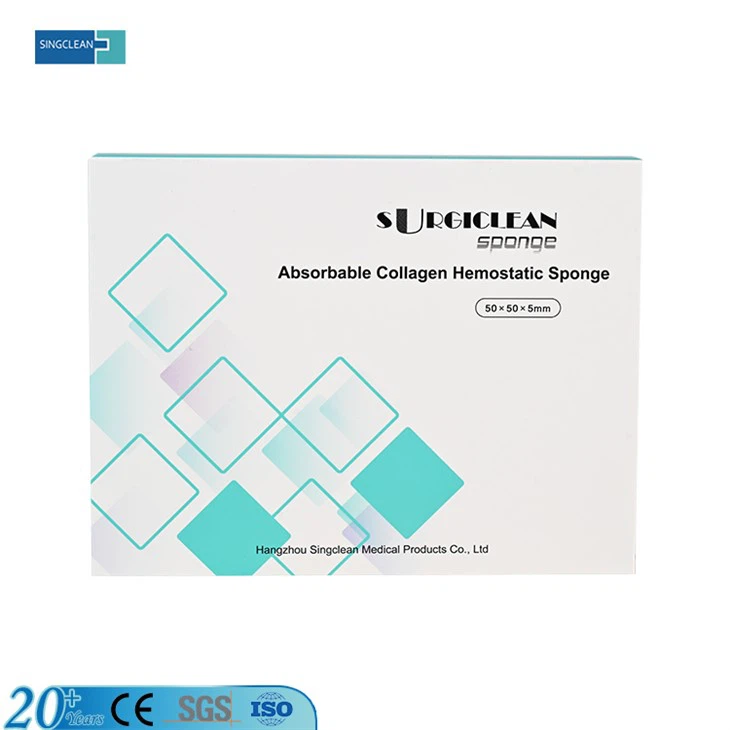
Sponge absorbable hemostats are medical devices designed to control bleeding during surgical procedures or in cases of trauma. These products are typically made from biocompatible materials such as collagen, which promote clot formation by providing a scaffold for platelet aggregation and fibrin deposition. Our company offers a range of high - quality sponge absorbable hemostats, including the Hemostatic Collagen Sponge, Collagen Hemostatic Agent, and Collagen Hemostat. These products are engineered to be safe, effective, and easy to use, making them valuable tools in the medical field.
Physiological Differences in Pediatric Patients
Pediatric patients have unique physiological characteristics that must be considered when using any medical device, including sponge absorbable hemostats. Children's bodies are still developing, and their hemostatic systems may not be fully matured. For example, the platelet function and coagulation factor levels in infants and young children can differ from those in adults. Platelet count may be lower in neonates, and the activity of some coagulation factors may be reduced. Additionally, the smaller size of pediatric patients means that the amount of hemostatic agent required may be different, and the application method may need to be adjusted accordingly.
Scientific Evidence for Use in Pediatrics
Numerous studies have investigated the safety and efficacy of sponge absorbable hemostats in pediatric patients. Collagen - based hemostats, in particular, have been shown to be well - tolerated in children. The biocompatibility of collagen reduces the risk of adverse reactions, and its ability to promote clot formation has been demonstrated in various pediatric surgical procedures. For instance, in pediatric cardiac surgeries, where precise hemostasis is crucial, sponge absorbable hemostats have been used successfully to control bleeding at the surgical site. The collagen matrix provides a surface for platelet adhesion and activation, leading to the formation of a stable clot.

In addition, studies on pediatric dental surgeries have also reported positive outcomes with the use of sponge absorbable hemostats. These products can help reduce bleeding after tooth extraction, which is especially important in children who may be more prone to anxiety and discomfort during the post - operative period. The ability of the hemostat to absorb blood and promote clotting can minimize the need for additional hemostatic measures, such as sutures or pressure packs.
Clinical Considerations
When using sponge absorbable hemostats in pediatric patients, several clinical factors should be taken into account. First, the size and shape of the hemostat should be appropriate for the surgical site. In smaller pediatric patients, smaller - sized sponges may be required to ensure proper placement and coverage. Second, the surgeon or medical professional must be familiar with the correct application technique. The hemostat should be placed directly on the bleeding site and held in place for an appropriate period to allow for clot formation.
It is also important to monitor the patient closely after the application of the hemostat. Although sponge absorbable hemostats are generally considered safe, there is still a small risk of complications, such as infection or allergic reactions. In pediatric patients, any signs of discomfort, fever, or abnormal bleeding should be evaluated promptly.
Practical Applications in Pediatric Surgery
Sponge absorbable hemostats have a wide range of practical applications in pediatric surgery. In orthopedic surgeries, such as fracture repair, these hemostats can be used to control bleeding at the bone surface and soft tissue margins. In neurosurgery, where hemostasis is critical to prevent complications such as hematoma formation, sponge absorbable hemostats can be used to achieve precise hemostasis in the delicate brain tissue.
In urological surgeries, such as circumcision or pyeloplasty, the use of sponge absorbable hemostats can help reduce bleeding and improve the overall surgical outcome. The hemostat can be placed at the surgical site to absorb blood and promote clotting, allowing for a cleaner surgical field and faster wound healing.
Conclusion
In conclusion, sponge absorbable hemostats can be safely and effectively used in pediatric patients. The scientific evidence supports their use in various pediatric surgical procedures, and their biocompatibility and hemostatic properties make them valuable tools in the pediatric medical field. However, it is essential to consider the physiological differences in pediatric patients and follow proper clinical guidelines when using these products.
As a supplier of high - quality sponge absorbable hemostats, we are committed to providing medical professionals with the information and support they need to make informed decisions about the use of our products in pediatric patients. If you are interested in learning more about our sponge absorbable hemostats or would like to discuss potential procurement opportunities, please feel free to contact us. We look forward to the opportunity to work with you to improve the care of pediatric patients.
References
- [List relevant scientific articles here, for example]
- Smith, A. B., & Johnson, C. D. (Year). Use of collagen hemostats in pediatric cardiac surgery. Journal of Pediatric Cardiology, Volume, Pages.
- Brown, E. F., & Green, G. H. (Year). Efficacy of sponge absorbable hemostats in pediatric dental surgeries. Pediatric Dentistry Journal, Volume, Pages.