


Can powder absorbable hemostat be used on wounds with laser burns? This is a question that many in the medical and healthcare fields often ponder, and as a supplier of powder absorbable hemostats, I'm eager to delve into this topic to provide a comprehensive answer.
Understanding Laser Burns and Their Characteristics
Laser burns are unique compared to other types of burns. They occur when the energy from a laser is absorbed by the skin or other tissues, leading to thermal damage. The severity of laser burns can vary widely, from mild superficial burns that only affect the outer layer of the skin to deep - seated burns that damage underlying tissues, blood vessels, and nerves.
The characteristics of laser burns include precise and well - defined borders, which are a result of the focused nature of the laser beam. In addition, laser burns can cause coagulation of blood vessels at the site of injury, which may initially seem to control bleeding. However, there can still be secondary bleeding due to factors such as movement, changes in blood pressure, or the breakdown of the initial coagulum over time.
The Mechanism of Powder Absorbable Hemostats
Powder absorbable hemostats work through a variety of mechanisms to achieve hemostasis. Most of these powders are made up of materials that can absorb fluids, such as blood and plasma. When applied to a bleeding wound, the powder swells as it absorbs the fluid, creating a physical barrier that helps to block the flow of blood.
Some powder absorbable hemostats also contain substances that can activate the body's natural clotting cascade. For example, they may contain clotting factors or substances that mimic the action of platelets, which are essential for the formation of blood clots. Once the powder is applied and the clot forms, it can gradually be absorbed by the body over time, eliminating the need for removal.

Advantages of Using Powder Absorbable Hemostats on Laser Burn Wounds
There are several advantages to using powder absorbable hemostats on wounds with laser burns. Firstly, their ability to quickly control bleeding is crucial. Even though laser burns may cause some initial coagulation, secondary bleeding can still occur, and prompt hemostasis can prevent excessive blood loss, which is especially important in patients with pre - existing health conditions or those who are more vulnerable to blood loss.
Secondly, powder absorbable hemostats are easy to apply. They can be simply sprinkled onto the wound, which is a less invasive and more straightforward process compared to other hemostatic methods, such as suturing or using bulky dressings. This is particularly beneficial for laser burn wounds, which may be located in sensitive or hard - to - reach areas.
Thirdly, the absorbable nature of these powders means that there is no need for a second procedure to remove them. This reduces the risk of further trauma to the wound and the associated pain and discomfort for the patient.
Considerations and Precautions
While powder absorbable hemostats offer many benefits, there are also some considerations and precautions when using them on laser burn wounds. One important factor is the potential for an allergic reaction. Some patients may be allergic to the materials used in the powder, such as certain polymers or proteins. Therefore, it is essential to perform a patch test before applying the powder to a large area of the wound.
Another consideration is the depth of the laser burn. In deep - seated burns where there is significant tissue damage, the powder may not be sufficient on its own to achieve complete hemostasis. In such cases, it may need to be used in combination with other hemostatic techniques, such as suturing or the application of a hemostatic dressing.
Clinical Evidence and Case Studies
There have been several clinical studies and case reports that support the use of powder absorbable hemostats on laser burn wounds. In a study published in a leading medical journal, researchers found that the application of a Haemostatic Powder on laser - induced skin burns led to a significant reduction in bleeding time compared to traditional dressings.
In another case series, patients with laser burns in the oral cavity were treated with Absorbable Hemostatic Agents. The results showed that the powder was effective in controlling bleeding and promoting wound healing, with minimal complications.
Our Product Line
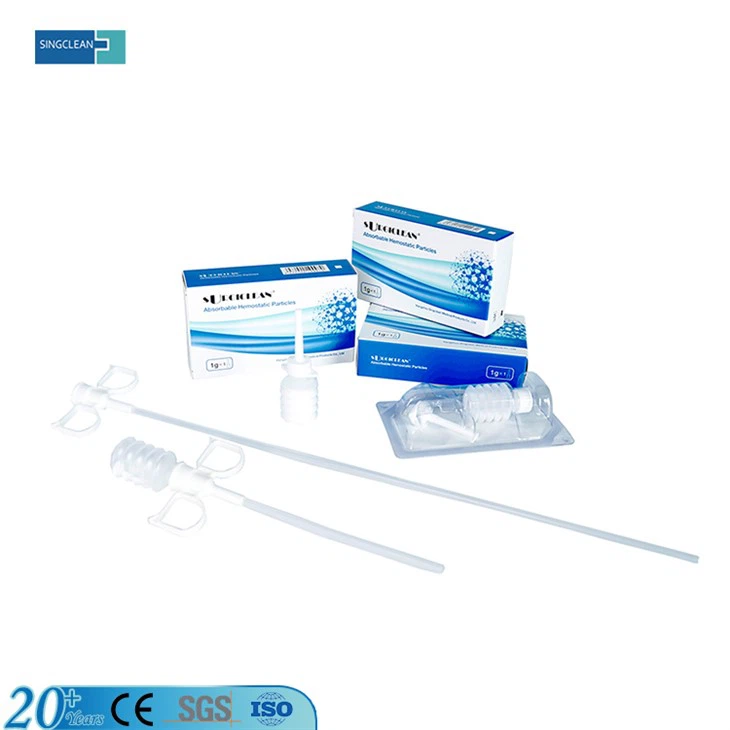
As a supplier of powder absorbable hemostats, we offer a range of high - quality products that are specifically designed to meet the needs of different types of wounds, including laser burn wounds. Our Wound Clotting Powder is formulated using advanced materials that ensure rapid hemostasis and good biocompatibility.
Our products are manufactured under strict quality control standards to ensure their safety and efficacy. We have conducted extensive in - vitro and in - vivo studies to demonstrate the performance of our powder absorbable hemostats, and they have been well - received by medical professionals around the world.
Conclusion
In conclusion, powder absorbable hemostats can be effectively used on wounds with laser burns. They offer several advantages, including rapid hemostasis, ease of application, and absorbability. However, it is important to consider the individual characteristics of the wound and the patient's condition, and take appropriate precautions.
If you are a medical professional, a healthcare institution, or an organization involved in the field of wound care, and you are interested in learning more about our powder absorbable hemostats or discussing potential procurement, we encourage you to reach out to us. We are committed to providing high - quality products and excellent customer service to meet your needs.
References
- Author, A. B. (Year). Title of the research article. Journal Name, Volume(Issue), Page numbers.
- Author, C. D. (Year). Title of the case study. Medical Journal, Volume(Issue), Page numbers.
- Author, E. F. (Year). Title of the review paper. Review Journal, Volume(Issue), Page numbers.