


As a supplier of hemostatic particles, I've witnessed firsthand the transformative potential these tiny yet powerful agents hold in the field of surgery. Hemostasis, the process of stopping bleeding, is a critical aspect of any surgical procedure. Effective hemostasis not only reduces the risk of complications but also improves patient outcomes and shortens recovery times. In this blog, we'll explore the viability of using hemostatic particles in surgical settings, delving into their mechanisms, benefits, and real - world applications.
Understanding Hemostatic Particles
Hemostatic particles are finely divided substances designed to promote blood clotting at the site of bleeding. They come in various forms, such as powders and microspheres, and are typically made from biocompatible materials. These materials can range from natural polymers like chitosan to synthetic compounds engineered to mimic the body's natural clotting processes.
One of the key advantages of hemostatic particles is their ability to rapidly initiate the clotting cascade. When applied to a bleeding wound, they interact with blood components, such as platelets and fibrinogen, to form a stable clot. Some hemostatic particles work by providing a physical scaffold for platelet aggregation, while others release clot - promoting factors that accelerate the formation of fibrin, the protein that forms the meshwork of a blood clot.
Mechanisms of Action
There are several mechanisms through which hemostatic particles can promote hemostasis. One common mechanism is the activation of the extrinsic pathway of the coagulation cascade. The extrinsic pathway is triggered by the release of tissue factor from damaged cells. Hemostatic particles can mimic the effect of tissue factor, binding to factor VII in the blood and initiating a series of enzymatic reactions that lead to the formation of thrombin. Thrombin then converts fibrinogen into fibrin, which traps blood cells and forms a clot.
Another mechanism is the promotion of platelet adhesion and aggregation. Platelets are small cell fragments in the blood that play a crucial role in hemostasis. Hemostatic particles can provide a surface for platelets to adhere to, which activates them and causes them to release their granule contents. These contents include factors that further promote platelet aggregation and clot formation.
Some hemostatic particles also have the ability to absorb fluid from the wound site. By concentrating the blood components, they increase the local concentration of clotting factors, which can enhance the clotting process.
Benefits of Using Hemostatic Particles in Surgery
Rapid Hemostasis
One of the most significant benefits of hemostatic particles is their ability to achieve rapid hemostasis. In surgical procedures, time is of the essence, and excessive bleeding can lead to increased surgical time, blood loss, and a higher risk of complications. Hemostatic particles can quickly stop bleeding, allowing surgeons to proceed with the operation more efficiently.
Minimally Invasive Application
Hemostatic particles can be applied topically to the bleeding site, which makes them a minimally invasive option for hemostasis. This is particularly advantageous in procedures where traditional methods of hemostasis, such as suturing or cauterization, may be difficult or inappropriate. For example, in laparoscopic or endoscopic surgeries, where access to the bleeding site may be limited, hemostatic particles can be easily delivered through a catheter or applicator.
Biocompatibility
Most hemostatic particles are made from biocompatible materials that are well - tolerated by the body. They are either absorbed by the body over time or are excreted harmlessly, reducing the risk of foreign body reactions or long - term complications.
Versatility
Hemostatic particles can be used in a wide range of surgical procedures, including cardiovascular, orthopedic, neurosurgical, and general surgeries. They can be used to control bleeding from small vessels, as well as in cases of diffuse bleeding, such as in liver resections or trauma surgeries.
Real - World Applications
Cardiovascular Surgery
In cardiovascular surgery, hemostatic particles can be used to control bleeding at the site of vessel anastomosis or after the removal of a diseased heart valve. The rapid hemostasis provided by these particles is crucial in minimizing blood loss and reducing the risk of post - operative complications, such as hematoma formation.
Orthopedic Surgery
Orthopedic surgeries often involve significant bleeding, especially during procedures like joint replacements or spinal surgeries. Hemostatic particles can be applied to the bone surfaces or soft tissues to control bleeding, allowing for a cleaner surgical field and faster recovery.
Neurosurgery
In neurosurgery, where the risk of bleeding is high and the consequences of excessive bleeding can be severe, hemostatic particles offer a safe and effective way to control bleeding. They can be used to stop bleeding from small vessels in the brain or spinal cord without causing damage to the delicate neural tissues.
Comparing Hemostatic Particles with Other Hemostatic Agents
When considering the use of hemostatic particles in surgical procedures, it's important to compare them with other hemostatic agents, such as Surgical Hemostasis Agents. Traditional hemostatic agents include sutures, staples, cautery, and topical hemostatic agents like thrombin and fibrin sealants.
Sutures and staples are effective for controlling bleeding from larger vessels, but they require time and skill to apply. Cautery can cause tissue damage and may not be suitable for all types of bleeding. Topical hemostatic agents like thrombin and fibrin sealants can be expensive and may have limitations in terms of their shelf - life and ease of use.
Hemostatic particles, on the other hand, offer a cost - effective, easy - to - use alternative. They can be applied quickly and are effective in a wide range of bleeding scenarios. Additionally, their biocompatibility and ability to promote rapid hemostasis make them a valuable addition to the surgeon's toolkit.
Potential Challenges and Considerations
While hemostatic particles offer many benefits, there are also some potential challenges and considerations. One challenge is the potential for allergic reactions or adverse effects, although these are rare with biocompatible materials. Another consideration is the need for proper storage and handling of the hemostatic particles to ensure their effectiveness.
It's also important to note that hemostatic particles are not a substitute for proper surgical technique. Surgeons should still use appropriate methods to control bleeding, such as ligating large vessels and minimizing tissue trauma.
Conclusion
In conclusion, hemostatic particles have significant potential for use in surgical procedures. Their ability to achieve rapid hemostasis, their minimally invasive application, and their biocompatibility make them a valuable tool for surgeons. Whether it's in cardiovascular, orthopedic, neurosurgical, or other types of surgeries, hemostatic particles can help reduce blood loss, improve patient outcomes, and enhance the overall efficiency of the surgical process.
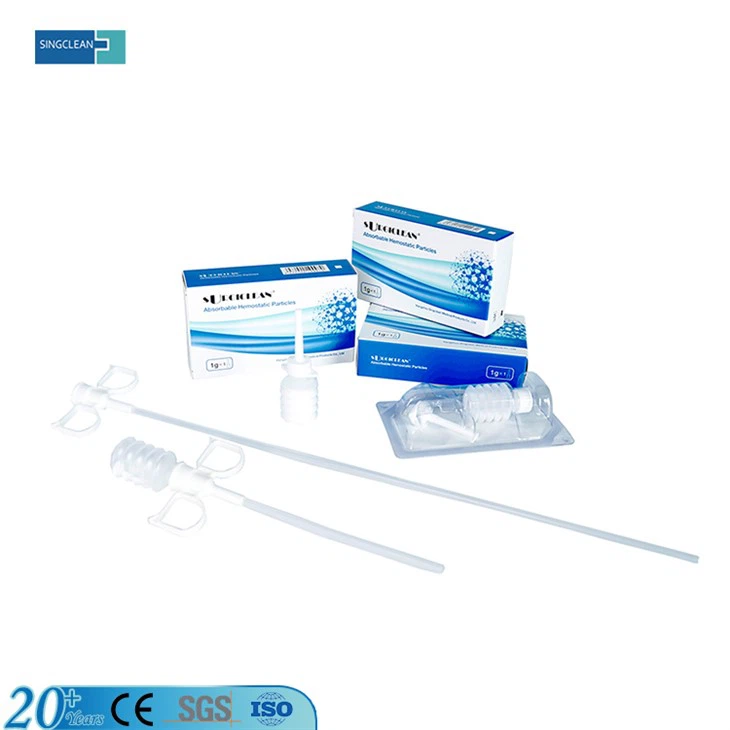

If you're interested in learning more about our Hemostatic Powder or Haemostatic Powder products and how they can be integrated into your surgical practice, we encourage you to reach out to us for a procurement discussion. We're committed to providing high - quality hemostatic solutions that meet the needs of modern surgery.
References
- Smith, J. K., & Johnson, R. M. (2018). Advances in hemostatic agents for surgical procedures. Surgical Innovations, 25(3), 281 - 290.
- Brown, A. L., & Green, S. T. (2019). The role of hemostatic particles in minimizing blood loss during orthopedic surgery. Journal of Orthopedic Research, 37(4), 812 - 819.
- Davis, C. E., & Miller, D. F. (2020). Hemostatic strategies in neurosurgery: A review of current and emerging agents. Neurosurgical Focus, 48(2), E12.