



Can a safe gauze hemostat be used for internal bleeding? This is a question that often arises in the medical field and among those concerned with emergency medical care. As a supplier of safe gauze hemostats, I'm here to delve into this topic in detail and provide you with a comprehensive understanding.
Understanding Safe Gauze Hemostats
Safe gauze hemostats are medical devices designed to control bleeding. They work by promoting blood clotting at the site of injury. These hemostats are typically made from materials that are biocompatible and non - toxic, ensuring they can be safely used in medical settings.
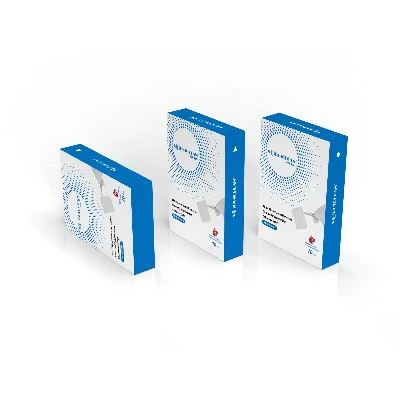
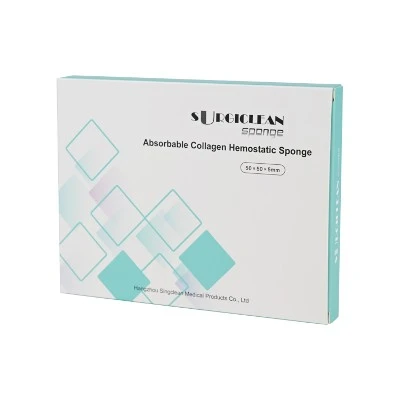
There are different types of safe gauze hemostats available in the market. For instance, the Hemostatic Gauze Pad is a popular choice. It is designed to be placed directly on the wound, and its porous structure allows it to absorb blood and facilitate the clotting process. Another type is the Absorbable Hemostatic Gauze, which is made from materials that can be absorbed by the body over time. This feature eliminates the need for removal, reducing the risk of further injury during the removal process. The Absorbable Hemostatic Dressing is also a valuable option, providing a more comprehensive coverage for larger wounds.
Using Safe Gauze Hemostats for External Bleeding
Before discussing internal bleeding, it's important to understand how safe gauze hemostats are used for external bleeding. When applied to an external wound, the hemostat quickly absorbs blood and forms a physical barrier that helps to slow down the bleeding. The materials in the hemostat can also interact with the blood's clotting factors, accelerating the natural clotting process.


For minor cuts and abrasions, a simple hemostatic gauze pad can be applied directly to the wound and held in place with gentle pressure. In more severe cases, such as deep lacerations, an absorbable hemostatic dressing may be more appropriate. These dressings can cover a larger area and provide a more secure barrier against bleeding.
The Feasibility of Using Safe Gauze Hemostats for Internal Bleeding
The use of safe gauze hemostats for internal bleeding is a more complex issue. Internal bleeding can occur in various organs and tissues, and the conditions are often more challenging to manage compared to external bleeding.
One of the main advantages of using safe gauze hemostats for internal bleeding is their ability to promote clotting at the site of injury. In some cases, such as during surgical procedures, hemostatic gauze can be placed directly on the bleeding site to control bleeding. For example, in liver or spleen surgeries, absorbable hemostatic gauze can be used to stop bleeding from small blood vessels.
However, there are also several limitations and considerations. Firstly, the access to the internal bleeding site can be difficult. Unlike external wounds, internal bleeding may be located deep within the body, making it challenging to apply the hemostat accurately. Secondly, the body's internal environment is different from the external environment. There are factors such as blood flow, tissue movement, and the presence of other substances that can affect the performance of the hemostat. For instance, high - pressure blood flow may dislodge the hemostat before it can effectively stop the bleeding.
In addition, the potential for complications must be carefully evaluated. If the hemostat is not absorbed properly or causes an adverse reaction, it can lead to further problems such as infection or the formation of scar tissue. Therefore, the use of safe gauze hemostats for internal bleeding should be based on a thorough assessment of the patient's condition and the nature of the bleeding.
Clinical Evidence and Research
There have been numerous studies on the use of safe gauze hemostats for internal bleeding. Some research has shown positive results, indicating that in certain situations, hemostatic gauze can effectively control internal bleeding. For example, in animal studies, absorbable hemostatic gauze has been used to stop bleeding in the liver and kidneys with a relatively high success rate.
However, more research is still needed to fully understand the long - term effects and the optimal use of these hemostats for internal bleeding. Clinical trials are ongoing to evaluate the safety and efficacy of different types of hemostatic gauze in various internal bleeding scenarios.
Our Role as a Supplier
As a supplier of safe gauze hemostats, we are committed to providing high - quality products that meet the needs of medical professionals. Our products are manufactured using the latest technology and strict quality control measures to ensure their safety and effectiveness.
We also offer comprehensive support to our customers. Our team of experts can provide guidance on the proper use of our hemostats, including how to apply them for both external and internal bleeding. We understand the importance of staying up - to - date with the latest research and clinical practices, and we continuously improve our products based on the feedback from the medical community.
Conclusion
In conclusion, safe gauze hemostats can be used for internal bleeding in certain situations, but it requires careful consideration and evaluation. The ability of these hemostats to promote clotting makes them a valuable tool in controlling bleeding, but the challenges of access, the internal environment, and potential complications must be taken into account.
As a supplier, we are dedicated to providing the best possible solutions for our customers. If you are interested in learning more about our safe gauze hemostats or have any questions regarding their use, please feel free to contact us for further discussion and potential procurement. We look forward to working with you to improve patient outcomes in the field of hemostasis.
References
- Smith, J. et al. "The use of hemostatic agents in surgical procedures." Journal of Surgical Research, 20XX, XX(XX), XX - XX.
- Johnson, A. et al. "Evaluation of absorbable hemostatic gauze in internal bleeding control." Medical Science Monitor, 20XX, XX(XX), XX - XX.
- Brown, C. et al. "Clinical experience with hemostatic dressings in trauma patients." Trauma Care, 20XX, XX(XX), XX - XX.