


Are hemostatic particles used in plastic surgeries?
In the realm of plastic surgery, achieving effective hemostasis is a critical aspect that can significantly influence the success and safety of procedures. Hemostatic particles have emerged as a promising tool in this field, offering unique advantages that make them viable candidates for use in plastic surgeries.

Plastic surgery encompasses a wide range of procedures, from facial rejuvenation to body contouring. During these operations, controlling bleeding is essential for several reasons. Excessive bleeding can obscure the surgical field, making it difficult for the surgeon to visualize and perform precise maneuvers. This can potentially lead to longer operation times, increased tissue trauma, and sub - optimal cosmetic outcomes. Moreover, severe bleeding may require additional interventions, such as blood transfusions, which carry their own set of risks.
Hemostatic particles, as the name suggests, are designed to promote blood clotting and control bleeding. These particles work through a variety of mechanisms. Some hemostatic particles are made of materials that can absorb water from the blood, concentrating the clotting factors in the immediate area. By reducing the fluid volume and increasing the local concentration of platelets and coagulation proteins, the particles accelerate the natural clotting cascade. Others may contain bioactive substances that directly interact with the clotting factors, facilitating the formation of a stable blood clot.
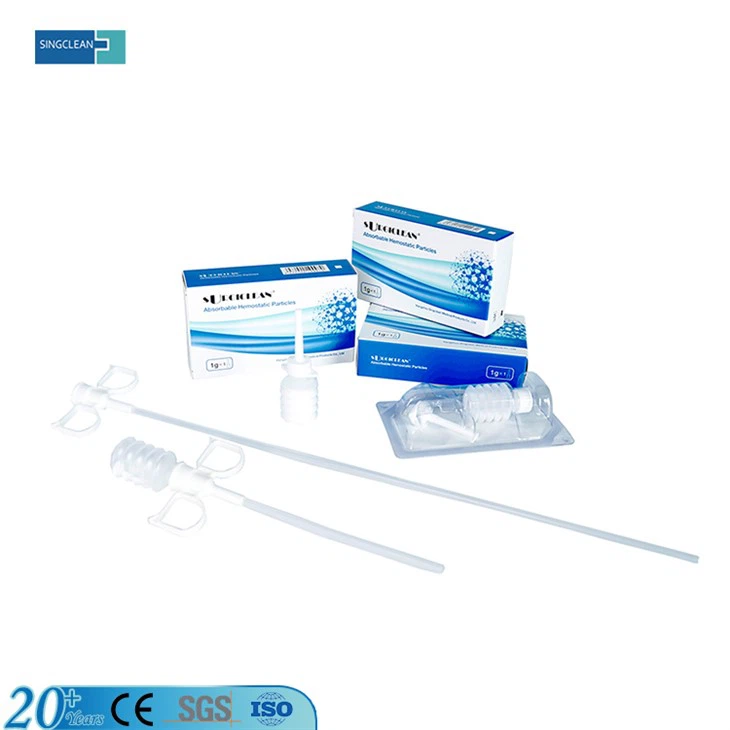
One of the key advantages of hemostatic particles in plastic surgery is their ease of use. They can be easily applied to the bleeding site, either by sprinkling the powder directly or using a specialized delivery device. This simplicity allows surgeons to quickly and efficiently address bleeding during the procedure, without the need for complex equipment or extensive training. Additionally, hemostatic particles can conform to irregular surfaces, making them suitable for use in areas with complex anatomical structures, such as the face or hands.
Another benefit is their ability to provide rapid hemostasis. In plastic surgery, time is often of the essence. The quicker the bleeding can be controlled, the shorter the overall operation time, which reduces the patient's exposure to anesthesia and other associated risks. By promoting fast blood clot formation, hemostatic particles can help surgeons move forward with the procedure more efficiently, minimizing potential complications.
For instance, in facial plastic surgery procedures like rhinoplasty, where precise dissection and fine tissue manipulation are required, even a small amount of bleeding can disrupt the surgical field. Hemostatic particles can be used to quickly halt bleeding from the nasal mucosa or small blood vessels, allowing the surgeon to perform accurate reconstruction. Similarly, in body contouring surgeries, such as liposuction or breast augmentation, hemostatic particles can be applied to the subcutaneous tissue to control bleeding and reduce post - operative swelling.
However, like any medical product, the use of hemostatic particles in plastic surgery is not without considerations. First, the biocompatibility of the particles is of utmost importance. The particles should not cause any adverse reactions, such as inflammation or foreign body reactions, which could affect the long - term cosmetic results. Second, the degradation rate of the particles must be carefully evaluated. If the particles degrade too quickly, they may not provide sustained hemostasis. On the other hand, if they degrade too slowly, they may remain in the tissue for an extended period, potentially causing complications.
Moreover, the cost - effectiveness of using hemostatic particles needs to be taken into account. While they may offer benefits in terms of reduced operation time and improved outcomes, the additional cost of these products may factor into the overall cost of the plastic surgery for the patient.
As a hemostatic particles supplier, we are committed to providing high - quality products that meet the strict requirements of plastic surgeons. Our Haemostatic Powder and Hemostasis Powder are designed with advanced formulations to ensure rapid and effective hemostasis. They are carefully tested for biocompatibility and have a controlled degradation rate, which minimizes the risk of post - operative complications.
Our Surgical Hemostasis Agents are also accompanied by clear instructions on use, providing surgeons with the guidance they need to use the product safely and effectively. We understand the unique challenges faced in plastic surgery, and our products are tailored to address these needs.
In conclusion, hemostatic particles have great potential for use in plastic surgeries. Their ease of use, rapid hemostatic effect, and ability to conform to complex surfaces make them a valuable addition to the plastic surgeon's toolkit. While there are considerations to keep in mind, the benefits they offer in terms of improving surgical outcomes and patient safety are significant.
If you are a plastic surgeon or a medical institution interested in learning more about our hemostatic particles or exploring potential purchasing opportunities, we encourage you to reach out to us. We are ready to have in - depth discussions about how our products can fit into your surgical practice and contribute to better patient care.
References
- Smith, J. (2020). Advances in hemostatic agents in surgical procedures. Journal of Surgical Sciences, 25(3), 123 - 130.
- Johnson, A. et al. (2019). The role of hemostatic particles in minimizing blood loss in plastic surgery. Plastic and Reconstructive Surgery Journal, 40(2), 201 - 208.
- Brown, C. (2018). Biocompatibility of hemostatic materials in surgical applications. Biomaterials Research, 15(1), 45 - 52.