Brief Introduction
Hemostasis is one of the most fundamental and critical aspects of surgical procedures. Over time, the evolution of surgical instruments and methods for bleeding control has mirrored the broader development of surgical technology. Traditional hemostatic tools-including monopolar and bipolar electrocautery, hemostatic clips, staplers, and sutures-have played a central role in clinical practice. In recent years, devices such as ultrasonic scalpels, lasers, and advanced vessel-sealing systems like LigaSure have also become more widely used.
Each traditional tool operates on unique principles:
Monopolar Electrocautery: Uses high-frequency current to generate thermal coagulation.
Limitations: Significant thermal damage and surgical smoke obscuring visibility.
PK Knife: Utilizes bipolar radiofrequency to form a plasma layer that breaks molecular bonds.
Limitations: Less heat damage but emits toxic smoke.
Ultrasonic Scalpel: Converts electrical to mechanical energy to cause protein denaturation and tissue disintegration.
Limitations: Slower operation, high cost, limited to tensioned tissues, and small cutting capacity.
VIO Electrosurgical System: Combines high-frequency energy with clamp pressure to denature collagen and seal vessels.
Advantages: Integrates cutting and coagulation, shortens procedure time.
LigaSure System: Uses real-time feedback and high-frequency low-voltage energy to fuse vessels.
Limitations: High cost, limited precision for delicate tissue dissection, minor smoke emission.
Despite their wide clinical application, traditional devices face challenges in delicate surgeries, hard-to-reach bleeding sites, and cases requiring rapid recovery. Issues include surgeon-dependent efficacy, prolonged hemostasis time, risk of thermal injury, foreign body reaction, and the need for post-operative removal in some cases, increasing patient burden and risk of secondary surgeries.
Advantages of absorbable hemostatic materials
In response, absorbable hemostatic materials have emerged as a promising solution, particularly in situations where conventional methods fall short. These novel materials promote localized coagulation, serve as an exogenous scaffold, and offer advantages such as:
Rapid hemostasis;
Complete bioabsorption-no need for removal;
Minimal foreign body reaction and high biocompatibility;
Avoidance of secondary procedures, enhancing patient recovery and comfort.
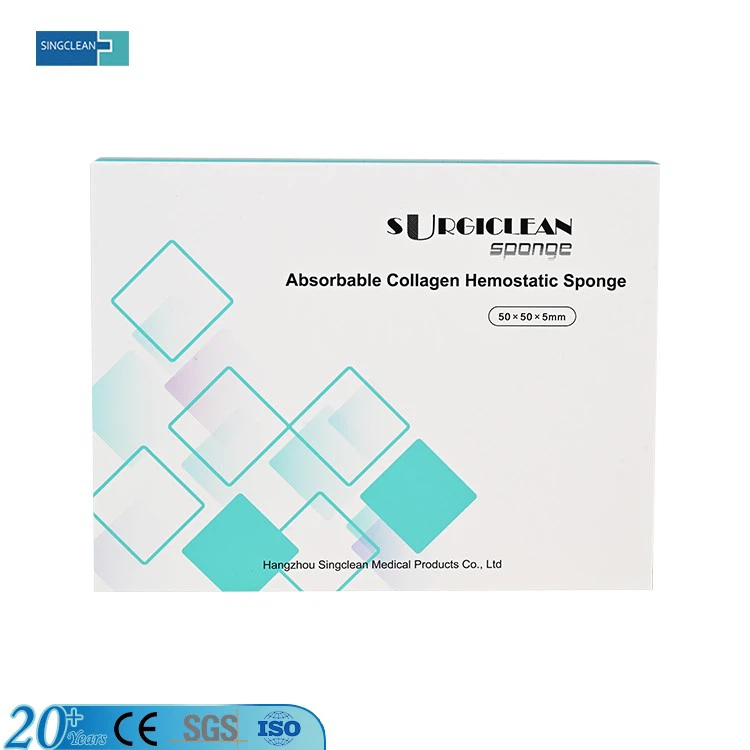
With ongoing innovation in biomedical materials, absorbable hemostats are becoming key alternatives to traditional tools-offering safer, faster, and more precise bleeding control in modern surgery. Surgiclean, the absorbable hemostats brand from China, dedicated in supplying safe and effective hemostasis solution for surgeries, including Powder Absorbable Hemostat, Gauze Absorbable Hemostat, Fibril Absorbable Hemostat and Sponge Absorbable Hemostat. For more information about Surgiclean, please follow us.
What we use in production