


Hey there! I'm a supplier of gauze absorbable hemostats, and today I want to dig into an interesting question: Is the hemostatic effect of gauze absorbable hemostat affected by body temperature?
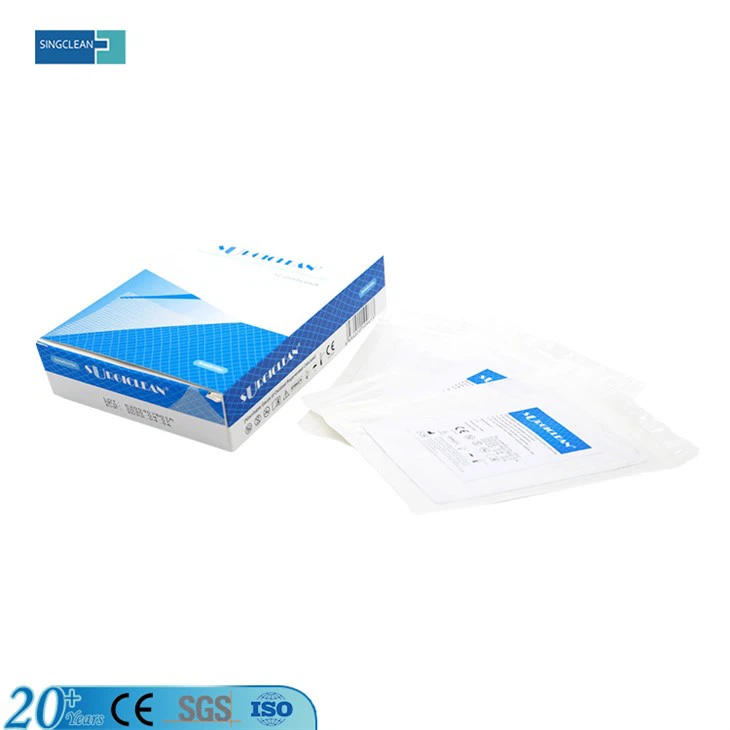
Let's first get a basic understanding of what a gauze absorbable hemostat is. You can check out Absorbable Hemostatic Gauze to learn more about it. These hemostats are super useful in medical settings. They're designed to help stop bleeding quickly and effectively. And the best part? They're absorbable, which means they can be broken down by the body over time, reducing the need for removal and minimizing the risk of infection.
Now, onto body temperature. Our bodies are like these amazing, self - regulating machines. The normal body temperature hovers around 37°C (98.6°F). But it can vary a bit depending on factors like time of day, physical activity, and health conditions. Sometimes, during surgeries or in cases of trauma, the body temperature might deviate from the norm. So, the big question is, how does this change in temperature impact the hemostatic effect of our gauze absorbable hemostats?
To understand this, we need to know how these hemostats work. Most of them, like the ones you can find in Hemostatic Dressing, rely on chemical and physical mechanisms to promote clotting. For example, some hemostats contain substances that interact with blood components, like platelets and fibrinogen, to form a clot. Others work by providing a physical scaffold for the clot to form on.
When it comes to the effect of body temperature, there are a few things to consider. At normal body temperature, the chemical reactions involved in blood clotting occur at an optimal rate. Enzymes that play a crucial role in the clotting cascade are most active around 37°C. Our gauze absorbable hemostats are engineered to work in harmony with these natural clotting processes.
If the body temperature drops, say to around 35°C (95°F) or lower, which can happen during long - term surgeries or in cases of hypothermia, the clotting process can slow down. Enzymes become less active, and the mobility of blood components is reduced. This can potentially affect the hemostatic effect of the gauze absorbable hemostat. The interaction between the hemostat and the blood might not be as efficient, leading to a longer time for the clot to form and potentially less effective bleeding control.
On the other hand, if the body temperature rises, like in cases of fever where it can go above 38°C (100.4°F), the situation is a bit more complex. Higher temperatures can increase the rate of chemical reactions. In theory, this could speed up the clotting process. But at the same time, high temperatures can also cause damage to blood cells and proteins. If the temperature gets too high, it might disrupt the normal function of the clotting factors and the hemostat itself.
Let's take a look at Oxidized Cellulose Hemostatic Agent as an example. Oxidized cellulose hemostats work by promoting platelet aggregation and fibrin formation. At normal body temperature, they can quickly form a stable clot. But in a hypothermic environment, the oxidized cellulose might not be able to interact as effectively with the platelets and fibrinogen. The reduced enzyme activity can prevent the full activation of the clotting cascade, resulting in a less - than - optimal hemostatic effect.
In a febrile patient, the increased temperature might initially seem to enhance the clotting. However, the heat can denature proteins in the blood and on the hemostat surface. This can change the structure of the hemostat and the blood components, potentially interfering with the normal clot - forming process.
In real - world medical scenarios, doctors and surgeons need to be aware of these temperature - related factors. They often take steps to maintain the patient's body temperature within a normal range during surgeries. This helps ensure that the gauze absorbable hemostats can work at their best.
Now, I know all this technical stuff might seem a bit overwhelming. But the bottom line is that body temperature can have an impact on the hemostatic effect of our gauze absorbable hemostats. As a supplier, we're constantly researching and developing our products to be as effective as possible across a range of body temperatures.
If you're in the medical field, whether you're a hospital administrator, a surgeon, or a medical supply buyer, you know how important it is to have reliable hemostatic products. Our gauze absorbable hemostats are designed with quality and performance in mind. We use the latest technology and high - quality materials to ensure that they can provide effective bleeding control, even in challenging situations.

If you're interested in learning more about our products or want to discuss a potential purchase, I'd love to hear from you. We can have a chat about your specific needs and how our hemostats can fit into your medical practice. Whether it's for routine surgeries or emergency trauma cases, we're here to provide you with the best solutions.
So, don't hesitate to reach out if you're looking for a trustworthy supplier of gauze absorbable hemostats. We're committed to helping you provide the best care for your patients.
References
- Guyton and Hall Textbook of Medical Physiology. 13th Edition.
- Surgical Hemostasis: Principles and Practice. 2nd Edition.