


Hemostasis, the process of stopping bleeding, is a critical physiological mechanism that safeguards the body from excessive blood loss. In recent years, hemostatic particles have emerged as a revolutionary solution in the field of hemostasis, offering rapid and effective bleeding control. As a leading supplier of hemostatic particles, I am excited to delve into the fascinating science behind how these tiny particles promote blood coagulation.
Understanding the Basics of Blood Coagulation
Before we explore the role of hemostatic particles, it's essential to understand the fundamental process of blood coagulation. Blood coagulation is a complex cascade of events that involves a series of proteins and cells working together to form a blood clot. The process can be divided into three main stages: vascular spasm, platelet plug formation, and coagulation cascade.
- Vascular Spasm: When a blood vessel is damaged, the smooth muscle in the vessel wall contracts, causing the vessel to narrow. This vasoconstriction reduces blood flow to the injured area, minimizing blood loss.
- Platelet Plug Formation: Platelets, small cell fragments in the blood, are activated by the exposed collagen fibers at the site of injury. They adhere to the damaged vessel wall and each other, forming a temporary plug that helps to seal the wound.
- Coagulation Cascade: The coagulation cascade is a series of enzymatic reactions that lead to the formation of a fibrin clot. It involves two pathways: the intrinsic pathway and the extrinsic pathway. Both pathways converge at the activation of factor X, which then activates prothrombin to thrombin. Thrombin converts fibrinogen to fibrin, which forms a mesh-like structure that traps blood cells and platelets, stabilizing the clot.
How Hemostatic Particles Promote Blood Coagulation
Hemostatic particles are designed to enhance the natural blood coagulation process by providing a surface for platelet adhesion and activation, as well as promoting the formation of fibrin clots. Here's a detailed look at how they work:
1. Platelet Activation and Aggregation
Hemostatic particles have a high surface area-to-volume ratio, which allows them to interact effectively with platelets in the blood. When the particles come into contact with the blood at the site of injury, they provide a surface for platelet adhesion. The platelets bind to the particles through specific receptors, triggering a series of intracellular signaling events that lead to platelet activation.
Activated platelets change their shape from discoid to spherical and extend pseudopods, which allow them to adhere to each other and form aggregates. The hemostatic particles also release substances that further enhance platelet activation and aggregation, such as adenosine diphosphate (ADP) and thromboxane A2. This rapid platelet aggregation helps to form a stable platelet plug at the site of injury, reducing blood loss.
2. Activation of the Coagulation Cascade
In addition to promoting platelet aggregation, hemostatic particles can also activate the coagulation cascade. Some hemostatic particles contain substances that mimic the action of tissue factor, a protein that initiates the extrinsic pathway of the coagulation cascade. When the particles are introduced into the blood, they bind to factor VII in the plasma, forming a complex that activates factor X.
Other hemostatic particles may contain negatively charged surfaces that can activate the intrinsic pathway of the coagulation cascade. The negatively charged surfaces interact with factor XII in the plasma, triggering a series of enzymatic reactions that lead to the activation of factor X. Once factor X is activated, it converts prothrombin to thrombin, which then converts fibrinogen to fibrin.
3. Fibrin Formation and Clot Stabilization
The formation of fibrin is a crucial step in the blood coagulation process. Hemostatic particles can promote fibrin formation by providing a surface for the assembly of the coagulation factors and by enhancing the activity of thrombin. The particles also help to stabilize the fibrin clot by preventing its dissolution.
Some hemostatic particles contain substances that inhibit the activity of fibrinolysis, the process by which the body breaks down blood clots. By inhibiting fibrinolysis, the particles ensure that the clot remains intact and stable, allowing the wound to heal properly.
Types of Hemostatic Particles
There are several types of hemostatic particles available on the market, each with its own unique properties and mechanisms of action. Some of the most common types include:

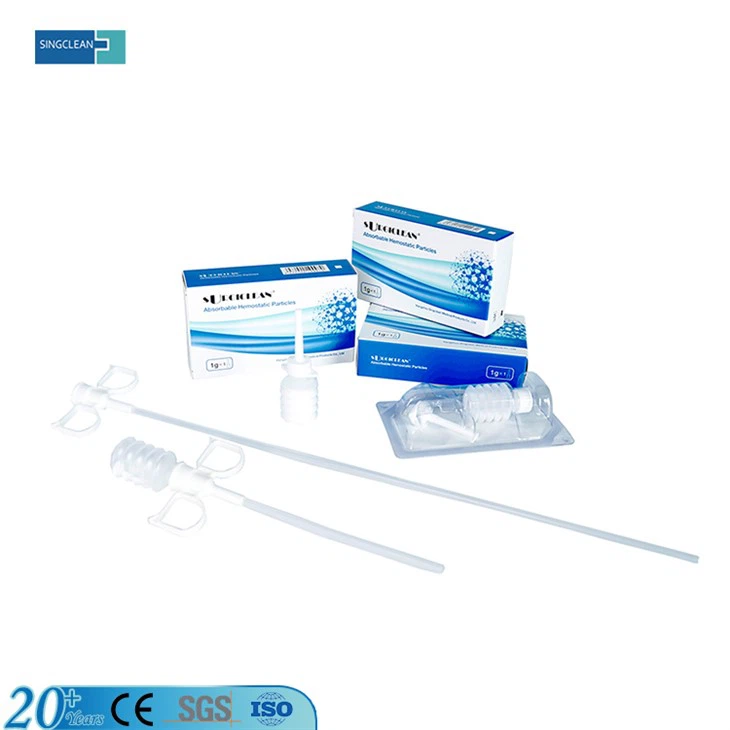
- Chitosan-based Hemostatic Particles: Chitosan is a natural polysaccharide derived from chitin, a component of the exoskeleton of crustaceans. Chitosan-based hemostatic particles have been shown to have excellent hemostatic properties due to their ability to interact with platelets and red blood cells, as well as their positive charge, which can attract negatively charged blood components.
- Silicate-based Hemostatic Particles: Silicate-based hemostatic particles are made from inorganic materials such as kaolin or zeolite. These particles have a high surface area and can absorb water from the blood, concentrating the coagulation factors and promoting clot formation. They also activate the intrinsic pathway of the coagulation cascade.
- Starch-based Hemostatic Particles: Starch-based hemostatic particles are made from natural starches such as potato or corn starch. They are biocompatible and biodegradable, and they work by absorbing water from the blood and swelling, which helps to form a physical barrier at the site of injury. They also promote platelet aggregation and activation.
Applications of Hemostatic Particles
Hemostatic particles have a wide range of applications in both medical and non-medical settings. Some of the common applications include:
- Surgical Procedures: Hemostatic particles are commonly used in surgical procedures to control bleeding during and after surgery. They can be applied directly to the bleeding site or used in combination with other hemostatic agents.
- Trauma Care: In trauma situations, such as severe bleeding from a gunshot wound or a car accident, hemostatic particles can be used to quickly stop bleeding and save lives. They can be applied to the wound using a syringe or a powder dispenser.
- Dental Procedures: Hemostatic particles are also used in dental procedures to control bleeding after tooth extraction or other dental surgeries. They can be applied to the socket to promote clot formation and reduce the risk of post-operative bleeding.
- Veterinary Medicine: Hemostatic particles are used in veterinary medicine to control bleeding in animals during surgical procedures or after injuries.
Advantages of Using Hemostatic Particles
There are several advantages to using hemostatic particles for bleeding control:
- Rapid Action: Hemostatic particles can act quickly to stop bleeding, often within minutes. This is especially important in emergency situations where every second counts.
- Ease of Use: Hemostatic particles are easy to apply and can be used by both medical professionals and non-medical personnel. They can be applied directly to the bleeding site without the need for complex equipment or training.
- Biocompatibility: Most hemostatic particles are biocompatible and biodegradable, which means they are well-tolerated by the body and do not cause any significant adverse effects.
- Versatility: Hemostatic particles can be used in a variety of settings and for different types of bleeding, making them a versatile solution for bleeding control.
Conclusion
Hemostatic particles are a powerful tool in the fight against bleeding. By promoting platelet activation, aggregation, and the formation of fibrin clots, they can quickly and effectively stop bleeding in a variety of situations. As a supplier of high-quality hemostatic particles, we are committed to providing our customers with the best products and solutions for bleeding control.
If you are interested in learning more about our Haemostatic Powder, Wound Clotting Powder, or Absorbable Hemostatic Agents, or if you have any questions about our products, please don't hesitate to contact us. We look forward to discussing your needs and helping you find the right hemostatic solution for your application.
References
- Hoffman M, Monroe DM 3rd. A cell-based model of hemostasis. Thromb Haemost. 2001;85(6):958-965.
- Goodnough LT, Shander A, Brecher ME. Transfusion medicine. Part I: blood component therapy. N Engl J Med. 2002;347(18):1432-1440.
- Rock G, Semple JW, Freedman J. Platelets. Lancet. 2007;370(9595):1549-1562.
- Levi M, van der Poll T. Inflammation and coagulation. Circ Res. 2010;107(1):101-111.
- Zhao Y, Liu Y, Zhang Y, et al. Chitosan-based hemostatic materials: A review. Carbohydr Polym. 2018;192:262-273.