


Can hemostatic gauze pads be used on deep cuts? This is a question that often arises in emergency medical situations and first - aid scenarios. As a supplier of hemostatic gauze pads, I've witnessed firsthand the importance of understanding the capabilities and limitations of these products. In this blog, we'll explore the use of hemostatic gauze pads on deep cuts from a scientific and practical perspective.
Understanding Deep Cuts
Deep cuts are not just surface wounds. They penetrate through multiple layers of the skin, often reaching the subcutaneous tissue, muscles, or even deeper structures. These types of wounds are characterized by significant bleeding, as they can sever larger blood vessels. The bleeding from deep cuts can be rapid and difficult to control, posing a serious risk of blood loss and shock.
The key to treating deep cuts is to stop the bleeding as quickly as possible. Traditional methods such as direct pressure with a regular gauze pad may not be sufficient in many cases. This is where hemostatic gauze pads come into play.
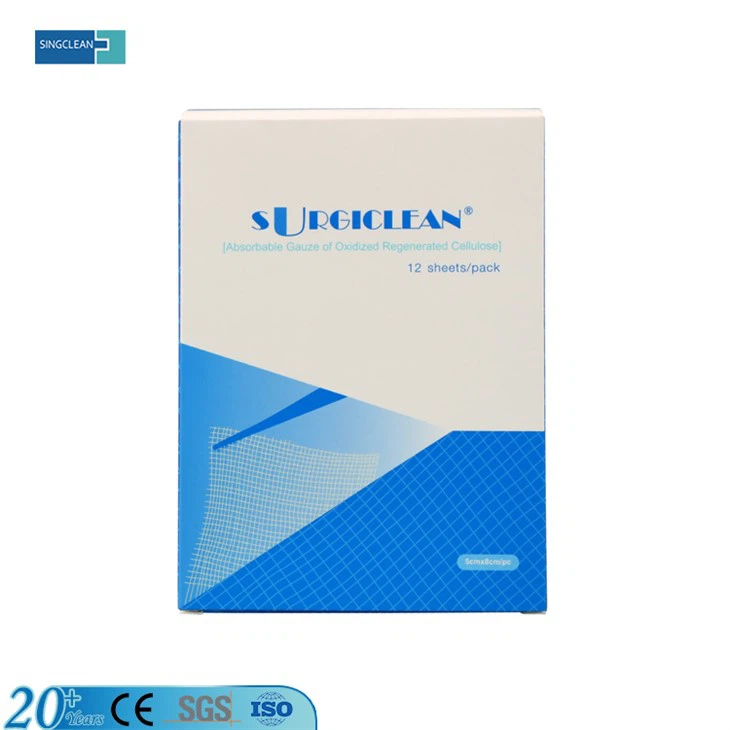

What are Hemostatic Gauze Pads?
Hemostatic gauze pads are specially designed medical products that are intended to promote blood clotting and stop bleeding more effectively than standard gauze. They are often impregnated with substances that have hemostatic properties, such as chitosan or kaolin.
Chitosan is a natural polymer derived from crustacean shells. It works by interacting with the blood platelets and red blood cells, causing them to aggregate and form a clot. Kaolin, on the other hand, is a clay mineral that activates the body's intrinsic clotting cascade, accelerating the formation of a fibrin clot.
Our company offers a range of high - quality hemostatic products, including Hemostatic Gauze Dressing, Absorbable Hemostatic Gauze, and Hemostatic Dressing. These products are designed to provide rapid and effective hemostasis in various types of wounds.
Using Hemostatic Gauze Pads on Deep Cuts
When it comes to using hemostatic gauze pads on deep cuts, there are several important steps to follow:
Preparation
Before applying the hemostatic gauze pad, it's crucial to ensure that the wound is as clean as possible. Remove any visible debris or foreign objects from the wound, if it can be done safely. Wash your hands thoroughly or wear sterile gloves to prevent infection.
Application
Take the hemostatic gauze pad and place it directly over the wound. Apply firm and continuous pressure for at least 3 - 5 minutes. The pressure helps to bring the edges of the wound together and allows the hemostatic agents in the gauze to interact with the blood. Do not lift the gauze pad to check the bleeding during this time, as it may disrupt the clot formation.
Monitoring
After the initial 3 - 5 minutes of pressure, carefully check if the bleeding has stopped. If the bleeding continues, apply another hemostatic gauze pad on top of the first one and continue applying pressure for an additional 3 - 5 minutes.
Securement
Once the bleeding has stopped, secure the hemostatic gauze pad in place with a bandage or adhesive tape. Make sure the bandage is not too tight, as it may restrict blood flow to the area.
Scientific Evidence
Numerous studies have demonstrated the effectiveness of hemostatic gauze pads in controlling bleeding from deep cuts. A study published in the Journal of Trauma and Acute Care Surgery compared the use of hemostatic gauze with traditional gauze in the treatment of severe bleeding wounds. The results showed that the hemostatic gauze significantly reduced the time to hemostasis and the amount of blood loss.
Another research conducted on animal models found that hemostatic gauze impregnated with chitosan was able to form a stable clot within minutes, even in the presence of high - pressure arterial bleeding. These findings suggest that hemostatic gauze pads are a valuable tool in the management of deep cuts.
Limitations and Considerations
While hemostatic gauze pads are effective in many cases, they are not a substitute for professional medical care. Deep cuts often require further treatment, such as stitches, antibiotics to prevent infection, and tetanus prophylaxis.
It's also important to note that hemostatic gauze pads may not work as well in patients with certain medical conditions, such as hemophilia or other bleeding disorders. In these cases, additional hemostatic measures may be necessary.
Storage and Shelf Life
Proper storage of hemostatic gauze pads is essential to maintain their effectiveness. They should be stored in a cool, dry place, away from direct sunlight and moisture. Most hemostatic gauze pads have a shelf life of 2 - 3 years, but it's important to check the expiration date before use.
Conclusion
In conclusion, hemostatic gauze pads can be effectively used on deep cuts to control bleeding. Their ability to promote rapid clotting makes them a valuable addition to any first - aid kit. However, it's important to remember that they are a temporary measure and professional medical attention should be sought as soon as possible.
If you're interested in learning more about our hemostatic gauze pads or would like to discuss a potential purchase, please feel free to reach out. Our team of experts is ready to assist you in finding the right products for your needs.
References
- Journal of Trauma and Acute Care Surgery, "Comparison of hemostatic gauze and traditional gauze in severe bleeding wounds"
- Research on animal models regarding chitosan - impregnated hemostatic gauze