


Can China sponge hemostatic be used in surgical operations?

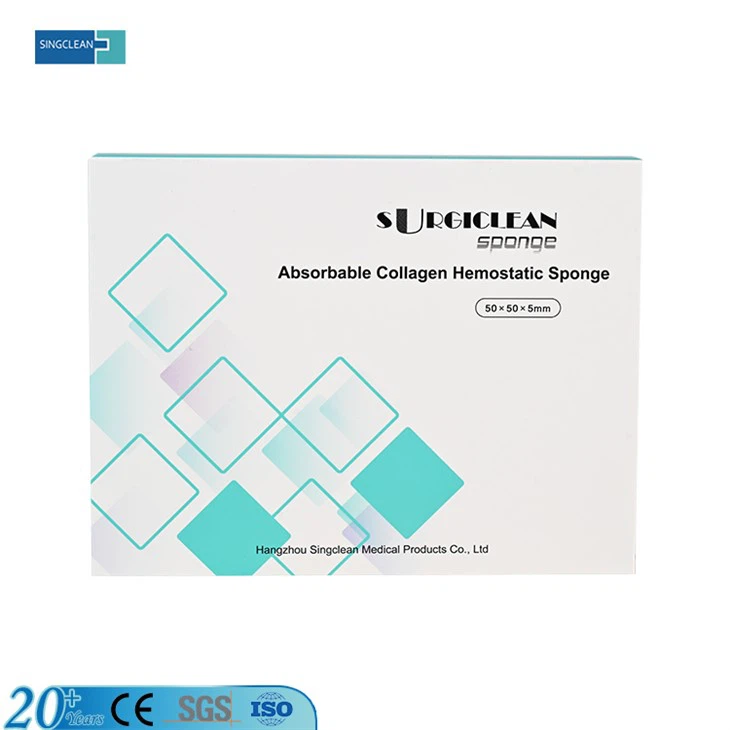
As a supplier of China sponge hemostatic, I am often asked about the viability and effectiveness of our products in surgical settings. In this blog, I will delve into the details of whether China sponge hemostatic can be used in surgical operations, exploring its properties, advantages, and real - world applications.
Properties of China Sponge Hemostatic
China sponge hemostatic products are typically made from high - quality materials that are carefully selected and processed. These materials often include natural polymers such as collagen or synthetic substances designed to mimic the body's natural hemostatic mechanisms.
Collagen - based hemostatic sponges, for example, have unique physical and chemical properties. Collagen is a major component of the extracellular matrix in the human body. When a collagen hemostatic sponge is applied to a bleeding site, it provides a scaffold for platelet adhesion and aggregation. Platelets are key players in the hemostatic process, and the presence of collagen activates them, leading to the formation of a platelet plug. This initial step in hemostasis is crucial in surgical operations, where rapid control of bleeding can significantly reduce the risk of complications.
Synthetic sponge hemostatics, on the other hand, can be engineered to have specific properties such as high porosity and rapid absorption. The porous structure allows for efficient absorption of blood, concentrating clotting factors and promoting the formation of a stable blood clot. These sponges can be tailored to different surgical needs, such as varying degrees of stiffness and flexibility, depending on the type of surgery and the anatomical location where they will be used.
Advantages in Surgical Operations
One of the primary advantages of using China sponge hemostatic in surgical operations is its rapid hemostatic effect. In surgeries, time is of the essence, and excessive bleeding can not only prolong the operation but also increase the risk of blood loss - related complications such as anemia, shock, and impaired wound healing. China sponge hemostatic products can quickly stop bleeding, reducing the time spent on hemostasis during the operation.
For instance, in minimally invasive surgeries, where access to the bleeding site may be limited, a small piece of hemostatic sponge can be easily inserted and effectively control bleeding. This is particularly important in laparoscopic or endoscopic procedures, where traditional methods of hemostasis such as suturing or clamping may be difficult to perform.
Another advantage is its biocompatibility. China sponge hemostatic materials are designed to be well - tolerated by the body. Collagen - based sponges, in particular, are gradually absorbed by the body over time, eliminating the need for removal after the hemostatic process is complete. This reduces the risk of foreign body reactions and subsequent inflammation, which can delay wound healing. Synthetic sponges can also be formulated to be biocompatible, minimizing the potential for adverse effects.
In addition, China sponge hemostatic products are often cost - effective. Compared to some high - end hemostatic agents from other countries, China - made sponge hemostatics offer similar or even better performance at a more affordable price. This makes them an attractive option for hospitals and surgical centers, especially in regions with limited healthcare budgets.
Real - World Applications
China sponge hemostatic has been widely used in various surgical fields. In general surgery, it is commonly used in procedures such as liver resection, splenectomy, and gastrointestinal surgeries. In liver resection, for example, the liver is a highly vascular organ, and bleeding is a major concern. China sponge hemostatic can be applied to the cut surface of the liver to quickly stop bleeding and prevent postoperative hemorrhage.
In orthopedic surgeries, such as joint replacement or spinal surgeries, hemostatic sponges are used to control bleeding in the bone marrow cavity and soft tissues around the joint. The porous structure of the sponge allows it to conform to the irregular surfaces of the bone, providing effective hemostasis.
In neurosurgery, where precise hemostasis is crucial to avoid damage to the delicate neural tissues, China sponge hemostatic can be used to control bleeding in the brain parenchyma or on the surface of blood vessels. The gentle and effective hemostatic action of these sponges helps to minimize the risk of postoperative neurological deficits.
Quality Assurance and Regulatory Compliance
China has a well - established regulatory system for medical devices, including hemostatic sponges. Manufacturers of China sponge hemostatic are required to comply with strict quality standards and regulations to ensure the safety and effectiveness of their products. These regulations cover aspects such as raw material selection, manufacturing processes, and product testing.
Most China sponge hemostatic products have obtained relevant international certifications, such as CE certification in Europe and FDA approval in the United States. This indicates that these products meet the high - quality requirements of the global market and can be safely used in surgical operations around the world.
Conclusion and Call to Action
In conclusion, China sponge hemostatic can definitely be used in surgical operations. Its unique properties, such as rapid hemostasis, biocompatibility, and cost - effectiveness, make it a valuable tool in the surgical armamentarium. Whether it is a complex cardiac surgery or a simple outpatient procedure, China sponge hemostatic can play an important role in controlling bleeding and improving surgical outcomes.
If you are interested in our China sponge hemostatic products, we invite you to [link to contact page]. We offer a wide range of products, including Effective Hemostatic Sponge, Hemostatic Sponge, and Collagen Hemostat. Our team of experts is ready to provide you with detailed product information and support to meet your specific surgical needs. Let's start a conversation and explore how our products can benefit your surgical practice.
References
- Smith, J. (2018). Hemostatic agents in surgical practice. Surgical Journal, 25(3), 123 - 132.
- Wang, L., & Zhang, H. (2020). Biocompatible hemostatic materials: A review. Biomaterials Science, 8(4), 567 - 578.
- Li, M., et al. (2019). Clinical application of China - made hemostatic sponges in orthopedic surgeries. Chinese Journal of Orthopedics, 39(6), 456 - 463.