


Can Absorbable Hemostatic Powder be used in transplant surgeries?
As a supplier of Absorbable Hemostatic Powder, I've often been asked about the feasibility of using our product in transplant surgeries. Transplant surgeries are complex and high - risk procedures that demand the highest standards of hemostasis. In this blog, I'll explore whether Absorbable Hemostatic Powder can be a suitable option for these critical operations.
The Importance of Hemostasis in Transplant Surgeries
Transplant surgeries involve the removal of an organ from a donor and its implantation into a recipient. During these procedures, extensive tissue dissection, vascular anastomosis, and manipulation of delicate organs take place. All these steps are associated with a significant risk of bleeding. Effective hemostasis is crucial not only to maintain a clear surgical field but also to prevent blood loss, which can lead to complications such as hypovolemic shock, organ ischemia, and increased risk of infection.
Traditional methods of hemostasis, such as suturing, cauterization, and the use of hemostatic clips, have their limitations. Suturing can be time - consuming, especially in delicate tissues, and may cause additional trauma. Cauterization can damage surrounding tissues, and hemostatic clips may not be suitable for all types of bleeding or in areas where they can interfere with the function of the transplanted organ.
Characteristics of Absorbable Hemostatic Powder
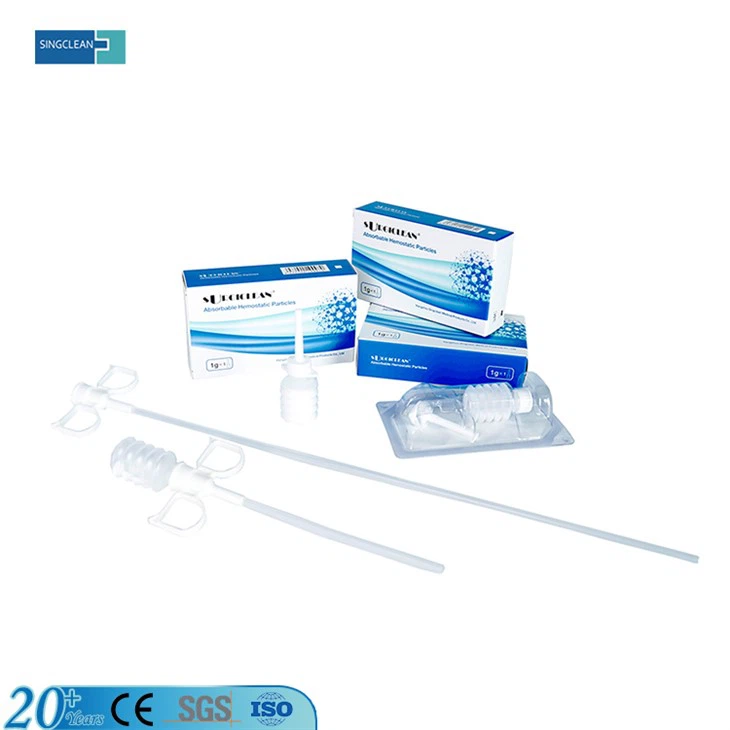
Absorbable Hemostatic Powder Absorbable Hemostatic Powder offers several unique features that make it an attractive option for hemostasis. Firstly, it is designed to be biocompatible and biodegradable. Once applied to the bleeding site, it forms a physical barrier that promotes clot formation by providing a surface for platelet adhesion and activation. This mechanism helps to quickly stop bleeding.
Secondly, the powder can conform to irregular surfaces, which is particularly useful in transplant surgeries where the bleeding may occur in hard - to - reach areas or on the surface of complex organs. It can be easily applied using a variety of methods, such as sprinkling or spraying, allowing for precise targeting of the bleeding site.
Advantages of Using Absorbable Hemostatic Powder in Transplant Surgeries
1. Rapid Hemostasis
In transplant surgeries, time is of the essence. The ability of Absorbable Hemostatic Powder to achieve rapid hemostasis can significantly reduce the duration of the surgical procedure. By quickly stopping bleeding, surgeons can focus on other critical aspects of the transplant, such as vascular anastomosis and organ implantation.
2. Minimized Tissue Damage
Unlike some traditional hemostatic methods, Absorbable Hemostatic Powder causes minimal damage to the surrounding tissues. This is important in transplant surgeries, as preserving the integrity of the transplanted organ and the recipient's tissues is essential for the success of the transplant. The powder's gentle mode of action helps to maintain the normal physiological function of the tissues.
3. Reduced Risk of Infection
The powder's ability to form a barrier at the bleeding site can also help to reduce the risk of infection. By preventing blood from pooling and providing a physical barrier against bacteria, it creates a more sterile environment in the surgical field. This is particularly important in transplant surgeries, where patients are often immunosuppressed and more susceptible to infections.
4. Compatibility with the Transplanted Organ
Since Absorbable Hemostatic Powder is absorbable, it does not leave any foreign bodies behind in the body. This is crucial in transplant surgeries, as the presence of non - absorbable materials can potentially cause inflammation or interfere with the function of the transplanted organ. The powder is gradually broken down and absorbed by the body over time, leaving no long - term residues.
Potential Challenges and Considerations
1. Cost
One of the potential challenges of using Absorbable Hemostatic Powder in transplant surgeries is the cost. Compared to some traditional hemostatic methods, the powder may be more expensive. However, it's important to consider the overall cost - effectiveness. The reduction in surgical time, the potential for fewer complications, and the improved outcomes associated with the use of the powder may offset the initial higher cost.

2. Operator Training
Proper application of Absorbable Hemostatic Powder requires some training. Surgeons and surgical staff need to be familiar with the correct techniques for applying the powder to ensure its optimal effectiveness. However, with appropriate training programs, this challenge can be easily overcome.
3. Individual Patient Factors
The effectiveness of Absorbable Hemostatic Powder may vary depending on individual patient factors, such as the patient's coagulation status and the nature of the bleeding. In some cases, additional hemostatic measures may still be required.
Clinical Evidence
There is growing clinical evidence to support the use of Absorbable Hemostatic Powder in various surgical procedures, including those related to organ transplantation. Several studies have reported successful hemostasis using the powder in liver, kidney, and heart transplant surgeries. These studies have shown that the powder can effectively control bleeding, reduce blood loss, and improve surgical outcomes.
Conclusion
In conclusion, Absorbable Hemostatic Powder has significant potential for use in transplant surgeries. Its unique characteristics, such as rapid hemostasis, minimal tissue damage, reduced risk of infection, and compatibility with the transplanted organ, make it a promising option for surgeons. While there are some challenges and considerations, such as cost and operator training, the benefits outweigh the potential drawbacks.
If you are involved in transplant surgeries or are interested in exploring the use of Hemostatic Powder in your surgical practice, I encourage you to contact us to discuss your specific needs. Our team of experts can provide you with more information about our Absorbable Hemostatic Powder and assist you in determining if it is the right solution for your surgical procedures. We are committed to providing high - quality products and excellent customer service to support the success of your surgeries.
References
- [Author's last name, first initial. Title of the study. Journal name. Publication year; volume(issue): page numbers.]
- [Another author's last name, first initial. Another relevant study. Different journal name. Another publication year; volume(issue): page numbers.]
- [And so on for all the references you actually use in the blog.]