


Hey there! As a supplier of Effective Hemostatic Sponges, I've been getting a lot of questions lately about whether there are any limitations to using these nifty little products. So, I thought I'd take a deep dive into this topic and share what I've learned over the years in the business.
First off, let's quickly recap what an effective hemostatic sponge is. These sponges are designed to help stop bleeding by promoting blood clotting. They're used in a variety of medical settings, from minor surgeries to emergency trauma care. There are different types out there, like the Collagen Hemostat, Absorbable Hemostatic Sponge, and Collagen Hemostatic Agent. Each type has its own unique properties and uses, but they all have the same goal: to get that bleeding under control fast.
Now, onto the big question: are there any limitations? Well, the short answer is yes, but it's not all bad news. Let's break it down.
1. Compatibility with Certain Conditions
One of the limitations of hemostatic sponges is that they might not work as well in patients with certain medical conditions. For example, people with bleeding disorders like hemophilia have a reduced ability to form blood clots. In these cases, the sponge might not be able to overcome the underlying clotting deficiency on its own. It can still help to some extent, but it's usually used in conjunction with other treatments, like clotting factor replacement therapy.
Another issue is patients who are on blood - thinning medications. Drugs like warfarin, aspirin, or heparin are used to prevent blood clots, but they can also make it harder for the hemostatic sponge to do its job. The sponge may take longer to stop the bleeding, or it might not be as effective as it would be in a patient not on these medications. In these situations, doctors need to weigh the risks and benefits and may need to adjust the patient's medication or use additional hemostatic measures.
2. Size and Shape Limitations
The size and shape of the hemostatic sponge can also be a limitation. In some cases, the bleeding site might be in a hard - to - reach or oddly shaped area. If the sponge is too big, it won't fit properly, and if it's too small, it might not cover the entire bleeding area. This can lead to incomplete hemostasis, meaning the bleeding doesn't stop completely.
For example, in a surgical procedure where there's bleeding in a small, deep cavity, a large sponge might not be able to get down into the cavity to stop the bleeding. On the other hand, in a large, irregularly shaped wound, a small sponge might not be enough to cover all the bleeding points. In these situations, multiple sponges or different shapes of sponges might be needed, which can add to the complexity and cost of the treatment.
3. Absorption Rate
Most hemostatic sponges are designed to be absorbable, which is a great feature as it means they don't have to be removed later. However, the absorption rate can vary depending on the type of sponge and the patient's body. In some cases, the sponge might absorb too slowly, which can cause issues like inflammation or infection. On the other hand, if it absorbs too quickly, it might not have enough time to effectively stop the bleeding.
The absorption rate can also be affected by factors like the amount of blood at the site and the patient's overall health. For example, a patient with a weakened immune system might have a slower absorption rate, increasing the risk of complications.
4. Cost
Let's face it, cost is always a factor in healthcare. Effective hemostatic sponges can be relatively expensive, especially compared to traditional methods of stopping bleeding like pressure dressings. This can be a limitation, especially in resource - limited settings where there might not be enough budget to use these sponges regularly.
In some developing countries or rural areas, healthcare providers might have to rely on more affordable but less effective methods because they can't afford to stock up on hemostatic sponges. This can lead to longer bleeding times and potentially more complications for patients.
5. Allergic Reactions
Although rare, some patients might have an allergic reaction to the materials used in the hemostatic sponge. For example, if the sponge is made of collagen, a patient with a collagen allergy might experience itching, swelling, or more severe allergic reactions. This is a significant limitation as it means the sponge can't be used on these patients, and alternative hemostatic methods need to be found.
Despite the Limitations...
Even with these limitations, effective hemostatic sponges are still a valuable tool in the medical field. They can stop bleeding quickly in many cases, which can save lives, especially in emergency situations. They're also relatively easy to use, which is a plus for healthcare providers.
If you're in the medical field and are considering using our Effective Hemostatic Sponges, we're here to help you understand how to work around these limitations. Our team of experts can provide you with more information on the different types of sponges, their best uses, and how to handle any potential issues.
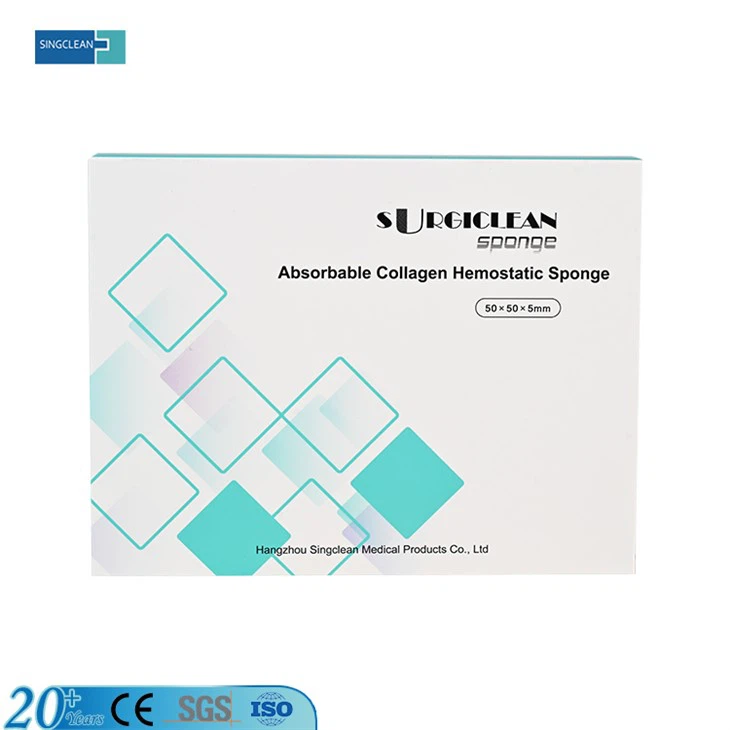

If you're interested in learning more about our products or want to discuss a potential purchase, don't hesitate to reach out. We're always happy to have a chat and see how we can meet your needs.
References
- "Hemostasis in Surgery: Techniques and Materials" by Smith, J. et al.
- "Clinical Use of Absorbable Hemostatic Agents" by Johnson, R.
So, that's my take on the limitations of using an effective hemostatic sponge. I hope this blog has been helpful, and I look forward to hearing from you if you have any questions or are interested in our products.