


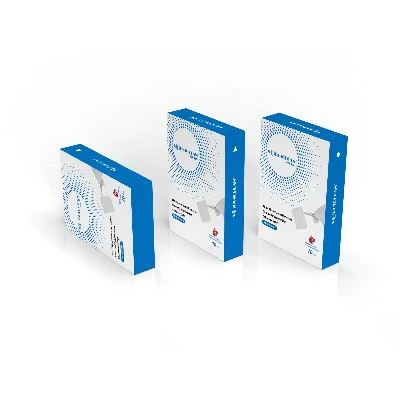
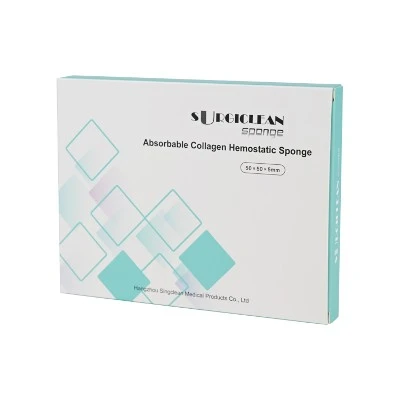

What is Absorbable Hemostatic Fibril?
Absorbable hemostatic fibrils represent an advanced class of medical biomaterials designed to achieve rapid hemorrhage control through physicochemical interactions while enabling natural degradation post-application. This dual functionality eliminates the need for secondary removal procedures, positioning them as ideal solutions for modern surgical challenges. Current market offerings primarily comprise four formulations:
The main type of Absorbable Hemostatic Fibril including Collagen Absorbable Hemostatic Fibril, Oxidized Regenerated Cellulose Absorbable Hemostatic Fibril, Chitosan Absorbable Hemostatic Fibril and Gelatin Absorbable Hemostatic Fibril.

Characters of Absorbable Hemostatic Fibril
Rapid hemostasis ability: Absorbable Hemostatic Fibril concentrates the coagulation factors in the blood through high water absorption, or accelerates the coagulation process by activating platelets/prothrombin. Some material like chitosan has a positive charge and can attract negatively charged red blood cells to form clots.
Biocompatibility and Safety: Exhibiting non-pyrogenic, non-immunogenic characteristics, these materials demonstrate exceptional tissue compatibility. Their degradation products (amino acids, monosaccharides) undergo natural metabolic clearance without inducing inflammatory cascades.
Degradable: Degradation timelines ranging from 48 hours to 12 weeks can be engineered to align with specific tissue regeneration rates. For instance, collagen matrices typically resorb within 3-4 weeks post-implantation.
Good Adaptability: The fibril shape can fit irregular wound surfaces and is suitable for the narrow space of minimally invasive surgery. Also, it can be layer into different shapes to meet the special needs for surgeries.
Application
| General Surgery | Trauma Care | Chronic Wound Management | Specialized fields |
| Hepatic/splenic hemorrhage control, laparoscopic bleeding management | Pre-hospital hemorrhage containment in combat/accident injuries | Diabetic ulcer debridement, burn wound bed preparation | Dental alveolar sealing, postpartum hemorrhage control, microsurgical repair |
Market Prospect
Driven by aging demographics and rising minimally invasive procedure volumes, the global absorbable hemostat market is projected to expand at an 8.2% CAGR through 2030.
Market analysts anticipate sector valuation surpassing $5.1 billion by 2030, with ORC-based solutions capturing dominant market share.
Surgiclean Fibril Absorbable Hemostat (Oxidized Regenerated Cellulose)
This sterile, absorbable non-woven hemostatic agent is engineered through oxidized regenerated cellulose (ORC) technology. Its layered non-woven structure allows intraoperative separation and customization for precise adaptation to complex anatomical sites, including deep or irregular bleeding surfaces. Compared to traditional knitted formats, the fibrillar three-dimensional architecture enhances procedural flexibility and tissue conformity, optimizing hemostatic efficacy in challenging surgical scenarios. Key advantages include real-time moldability, minimally invasive delivery compatibility, and standardized absorbability with proven biocompatibility.

Click for Surgiclean Hemostatic Fiber Gauze
Conclusion
Absorbable Hemostatic Fibril represents a revolutionary advancement in hemostatic material technology. Its advantages of complete absorbability, controlled degradability, and superior hemostatic efficacy making it as a frontrunner in surgical and emergency care applications.