



Quick Summary: 3 Core Actions of Hemostatic Powder
| Mechanism | Effect | Onset Time |
|---|---|---|
| Physical scaffold | Platelet adhesion & aggregation | Immediate (0–15 sec) |
| Coagulation cascade activation | Thrombin burst & fibrin formation | 15–60 sec |
| Biodegradation | Complete absorption without residue | 7–14 days |
Key takeaway: Absorbable hemostatic powder accelerates natural hemostasis and reduces bleeding time to typically 1 minute in surgical applications.
1. Product Overview: Surgiclean® MPH Absorbable Hemostatic Particles
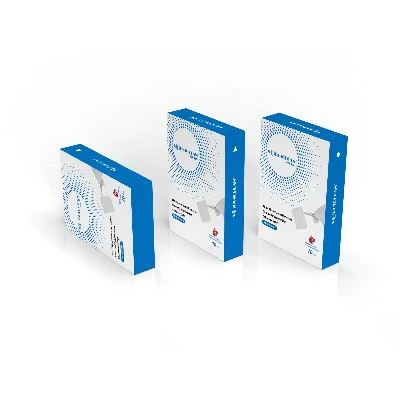
Surgiclean® MPH is an absorbable hemostatic powder indicated in surgical procedures as an adjunctive hemostatic device to assist when control of capillary, venous, and arteriolar bleeding by pressure, ligature, and other conventional procedures is ineffective or impractical.
Key Specifications:
Source: Plant starch (potato)
Technology: Reverse phase emulsification cross-linking technology
Particle size: 30.8–97 μm (spatial net microstructure)
Sterilization: EO sterilization
Available sizes: 0.5g, 1.0g, 2.0g, 3.0g, 5.0g per piece
The microporous structure provides a porosity that enables rapid blood absorption-comparable starch-based hemostats have demonstrated water absorption rates exceeding 1,200% .
2. Normal Hemostasis vs. Powder-Enhanced Hemostasis
| Phase | Normal Hemostasis | With Absorbable Hemostatic Powder |
|---|---|---|
| Fibrin clot strength | Baseline | 2–3× stronger than physiological clot |
| Time to complete hemostasis | 4–8 min | Typically 1 minute |
The powder does not replace the body's clotting system-it amplifies it by providing a highly reactive surface and localized pro-coagulant signals.

3. Mechanism of Absorbable Hemostatic Powder
3.1 Dual Action Mechanism
With hydrophilic molecular sieve, the hemostatic agent powder can absorb water in the blood instantly, and gather the formed components in the blood on the surface of the particles to produce "gelled matrix" and form a mechanical barrier to stop bleeding. At the same time, local concentrations of platelets, coagulation factors, and fibrin are greatly increased to initiate and strengthen endogenous coagulation mechanism. The dual mechanism co-formed clot block to stop bleeding.
3.2 Biodegradation & Absorption Kinetics
Unlike non-absorbable agents, Surgiclean® MPH is designed for complete clearance:
Final degradation products: Water and carbon dioxide
Complete absorption: Within 14 days
Safety profile: Over 810,000 pieces used with no reported adverse events
Independent studies on starch-based hemostatic powders have demonstrated that degradation and absorption is essentially completed after 42 days of implantation in the body, with no abnormalities observed in general signs, blood coagulation indicators, or pathological examination . Another study showed that calcium-enriched porous starch hemostats were almost completely absorbed by liver tissue after 14 days .
No secondary surgery is required for removal-ideal for internal surgical use.
4. Comparative Analysis: Hemostatic Powder vs. Other Agents
| Agent | Mechanism | Absorption | Best for | Limitation |
|---|---|---|---|---|
| Surgiclean® MPH | Physical + cascade activation | Yes (7–14 days) | Oozing surfaces, irregular wounds | Not for high-pressure arterial bleed |
| Non-absorbable hemostatic gauze | Physical + sometimes chitosan | No | Packing cavities | Requires removal |
| Gelatin sponge + thrombin | Physical scaffold + enzymatic | Yes (4–8 weeks) | Larger surface areas | Slower activation, requires mixing |
| Fibrin glue | Enzymatic coagulation | Yes (1–2 weeks) | Sealing anastomoses | Expensive, requires preparation |
Clinical recommendation: Use powder for diffuse parenchymal oozing (liver, spleen, thyroid) or bone surfaces-areas where gauze or sponges cannot conform.
5. Clinical Evidence & Safety Data
5.1 Safety Profile
| Parameter | Data |
|---|---|
| Clinical usage | Over 810,000 pieces used |
| Adverse events | None reported |
| Composition | 100% plant-based, thrombin-free, non-pyrogenic |
| Biocompatibility | Excellent, no allergic reactions, no toxic side effects |
5.2 Application Success Factors
According to clinical experience, the most common reasons for hemostasis failure include:
Hemostatic powder does not touch the bleeding point
Dry gauze is not pressed or pressing time is too short
Insufficient dosage
Solution: Only need to rinse the wound surface with normal saline, remove accumulated blood, and re-apply to achieve satisfactory hemostatic effect.
6. Clinical Applications by Surgical Specialty
Cardiovascular and Thoracic Surgery
Cardiovascular surgery: Aneurysm (around vascular anastomosis and tumor bed), coronary artery bypass grafting
Lung cancer surgery: Lung stump (stop bleeding, reduce lung leaks), lymph node dissection wounds
Esophageal cancer surgery: Esophageal bed, freeing stomach wound, lymph node dissection
Mediastinal tumor: Mediastinal bed, sternum split
General and Hepatobiliary Surgery
Hepatobiliary surgery: Hepatic lobectomy, biliary surgery, liver transplantation
Portal hypertension: Devascularization and shunting (spleen laceration, perivascular anastomosis)
Pancreas and spleen surgery: Splenectomy (spleen fossa and pedicle), pancreatic surgery
Gastrointestinal surgery: Gastric cancer (lymph node dissection), rectal cancer surgery
Thyroid and breast surgery: Thyroid parenchyma, axilla and chest wall
Orthopedic Surgery
Spine surgery: Cervical, thoracic, and lumbar spine (Note: Not for use in spinal canal)
Joint surgery: Hip replacement, knee replacement
Limb trauma: Upper and lower extremity fractures
Bone tumor: Extremities and spinal tumors
Minimally Invasive Surgery
Thyroid, splenectomy, gallbladder, adnexal tumors, and others
Contraindication: Surgiclean® MPH cannot be used in neurological or ophthalmic surgery.
7. Method of Usage
Prepare: Remove excess blood using aseptic sponge or gauze to expose the bleeding site
Apply: Apply Surgiclean® powder immediately, fully covering the wound area
Press: Press on the wound with a dry gauze for 2–3 minutes
Check: Irrigate excess powder once bleeding has stopped; if bleeding continues, repeat the above methods
Key Points:
Clotting process begins on contact regardless of patient's coagulation status
Complete hemostasis achieved within minutes (normally 1 minute)
Can be used repeatedly for the same wound
No mixing, no refrigeration-ready on demand
8. References
Peer-Reviewed Literature
Evaluation of the hemostatic efficacy and safety of an absorbable hemostatic powder based on a porcine intracranial hemorrhage model. PubMed, 2026. View on PubMed
Ardehali A, Spotnitz WD, et al. Evaluation of the safety and efficacy of a new hemostatic powder using a quantitative surface bleeding severity scale. Journal of Cardiac Surgery, 2019;34(1):50-62. View on PubMed
Evaluation of hemostatic powder vs. absorbable gelatin sponge and thrombin. Medline Abstract, 2019. View on Medscape
Bioabsorbable Carboxymethyl Starch–Calcium Ionic Assembly Powder as a Hemostatic Agent. PMC, 2022. View on PMC
Clinical comparison between microporous polysaccharide hemispheres (MPH) and fibrin glue in laparoscopic partial nephrectomy. PubMed, 2012. View on PubMed
Zhu J, et al. Hemostatic Efficacy and Biocompatibility Evaluation of a Novel Absorbable Porous Starch Hemostat. Surgical Innovation, 2022. View on PubMed
PERCLOT Absorbable Hemostatic Powder – Mechanism of Action. Baxter Advanced Surgery. View on Baxter