


As a trusted supplier of effective clotting gauze, I am often asked about the clotting capacity of our products. In this blog, I will delve into the science behind the clotting capacity of effective clotting gauze, exploring the mechanisms, factors, and applications.
Understanding the Basics of Blood Clotting
Before we discuss the clotting capacity of effective clotting gauze, it's essential to understand the natural process of blood clotting. When a blood vessel is damaged, a series of complex biological reactions are triggered to stop the bleeding. This process, known as hemostasis, involves three main steps: vascular spasm, platelet plug formation, and coagulation.
Vascular spasm is the immediate constriction of the damaged blood vessel, which reduces blood flow to the area. Platelets, small cell fragments in the blood, then adhere to the damaged vessel wall and aggregate to form a temporary plug. Finally, a cascade of enzymatic reactions leads to the conversion of fibrinogen, a soluble plasma protein, into insoluble fibrin threads. These fibrin threads form a mesh that traps blood cells and platelets, creating a stable blood clot.
How Effective Clotting Gauze Works
Effective clotting gauze is designed to enhance the natural blood - clotting process. There are several types of effective clotting gauze available on the market, each with its unique mechanism of action.
Absorbable Hemostat
One type of effective clotting gauze is the Absorbable Hemostat. Absorbable hemostats are typically made from materials that can be broken down and absorbed by the body over time. These materials work by providing a physical scaffold for platelet adhesion and aggregation. They also may interact with the coagulation factors in the blood, accelerating the formation of fibrin. For example, some absorbable hemostats contain substances that activate the intrinsic or extrinsic coagulation pathways, leading to more rapid clot formation.
Oxidized Cellulose Hemostatic Agent
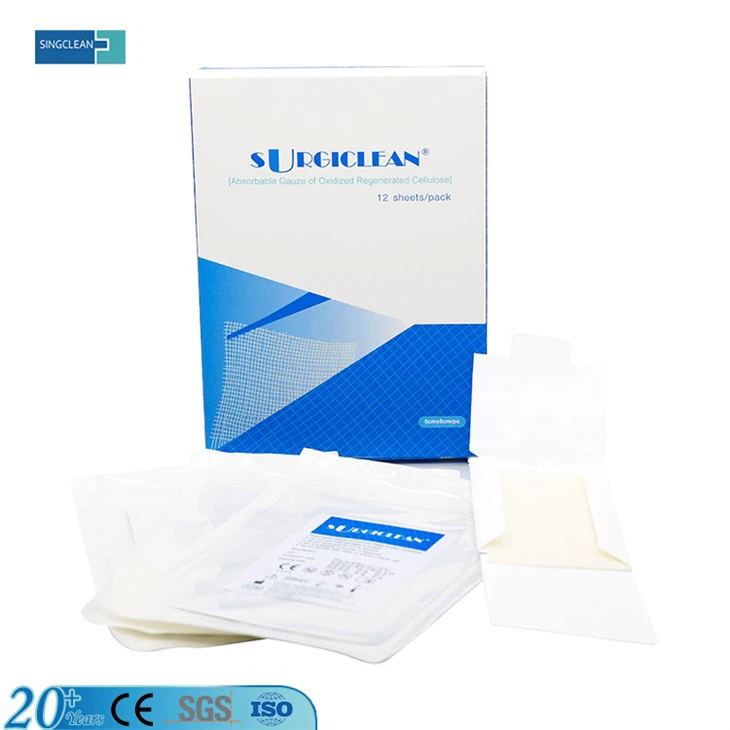
Oxidized Cellulose Hemostatic Agent is another form of effective clotting gauze. Oxidized cellulose is a modified form of cellulose that has been chemically treated to enhance its hemostatic properties. It works by lowering the local pH at the site of bleeding, which in turn activates platelets and promotes the conversion of fibrinogen to fibrin. Additionally, oxidized cellulose can physically entrap blood cells and platelets, helping to form a clot more quickly.
Hemostatic Gauze
Hemostatic Gauze is a general term for gauze that has been impregnated or coated with hemostatic agents. These agents can include substances such as chitosan, which has been shown to have excellent hemostatic properties. Chitosan works by binding to red blood cells and platelets, causing them to aggregate and form a clot. Hemostatic gauze also provides a large surface area for platelet adhesion, further enhancing the clotting process.
Measuring the Clotting Capacity
The clotting capacity of effective clotting gauze can be measured in several ways. One common method is the in - vitro clotting time test. In this test, a small amount of blood is placed on the gauze, and the time it takes for a clot to form is measured. A shorter clotting time indicates a higher clotting capacity.
Another way to measure clotting capacity is through in - vivo studies. These studies involve using animal models or human subjects to evaluate the effectiveness of the gauze in stopping bleeding. In in - vivo studies, factors such as the volume of blood loss, the time to hemostasis, and the stability of the clot are measured.

Factors Affecting Clotting Capacity
Several factors can affect the clotting capacity of effective clotting gauze.
Type of Gauze
As mentioned earlier, different types of effective clotting gauze have different mechanisms of action. The choice of gauze depends on the type and severity of the bleeding. For example, in cases of minor bleeding, a simple hemostatic gauze may be sufficient, while in more severe bleeding situations, an absorbable hemostat or an oxidized cellulose hemostatic agent may be required.
Blood Characteristics
The characteristics of the blood, such as the platelet count, the levels of coagulation factors, and the presence of anticoagulants, can also affect the clotting capacity of the gauze. For example, patients with low platelet counts or coagulation disorders may require a more potent clotting gauze to achieve hemostasis.
Wound Conditions
The condition of the wound, including the size, depth, and location, can impact the effectiveness of the clotting gauze. Larger and deeper wounds may require more gauze and a longer application time to achieve hemostasis. Additionally, wounds in areas with high blood flow, such as the scalp or the groin, may be more challenging to treat.
Applications of Effective Clotting Gauze
Effective clotting gauze has a wide range of applications in both medical and non - medical settings.
Medical Applications
In the medical field, effective clotting gauze is commonly used in surgical procedures to control bleeding. It can be used during general surgery, orthopedic surgery, and dental surgery, among others. It is also used in emergency medicine to treat trauma patients with severe bleeding. In addition, effective clotting gauze can be used in the treatment of nosebleeds, dental extractions, and other minor bleeding incidents.
Non - Medical Applications
Outside of the medical field, effective clotting gauze can be used in first - aid kits for home, workplace, or outdoor use. It can be used to treat minor cuts, scrapes, and abrasions. Hunters, hikers, and other outdoor enthusiasts often carry effective clotting gauze in their first - aid kits to be prepared for any bleeding emergencies.
Conclusion
The clotting capacity of effective clotting gauze is a crucial factor in its effectiveness in stopping bleeding. Different types of gauze work through various mechanisms to enhance the natural blood - clotting process. Measuring the clotting capacity can be done through in - vitro and in - vivo methods, and several factors, including the type of gauze, blood characteristics, and wound conditions, can affect its performance.
As a supplier of effective clotting gauze, we are committed to providing high - quality products with excellent clotting capacity. Our range of Absorbable Hemostat, Oxidized Cellulose Hemostatic Agent, and Hemostatic Gauze is designed to meet the diverse needs of our customers. Whether you are a medical professional looking for reliable hemostatic solutions or an individual in need of a first - aid product, we have the right clotting gauze for you.
If you are interested in learning more about our effective clotting gauze products or would like to discuss a potential purchase, please feel free to contact us. We are ready to provide you with detailed product information and support your procurement process.
References
- Hoffman M., Monroe D.M. (2001) A Cell - Based Model of Hemostasis. Thrombosis and Haemostasis, 85(6), 958 - 965.
- Goodnough L.T., Shander A., Brecher M.E. (2013) Transfusion Medicine. Lancet, 381(9881), 1845 - 1854.
- Dente C.J., Kauvar D.S., Wade C.E. et al. (2009) Hemostatic Resuscitation and Rapid Transfusion for Bleeding Combat Casualties. Journal of Trauma, 66(4), 876 - 882.