


When it comes to managing severe bleeding, effective clotting gauze plays a crucial role in saving lives. As a reliable supplier of high - quality effective clotting gauze, I am well - versed in the product and its proper application. In this blog, I will guide you through the correct way to apply effective clotting gauze, ensuring its maximum efficacy in hemostasis.
Understanding Effective Clotting Gauze
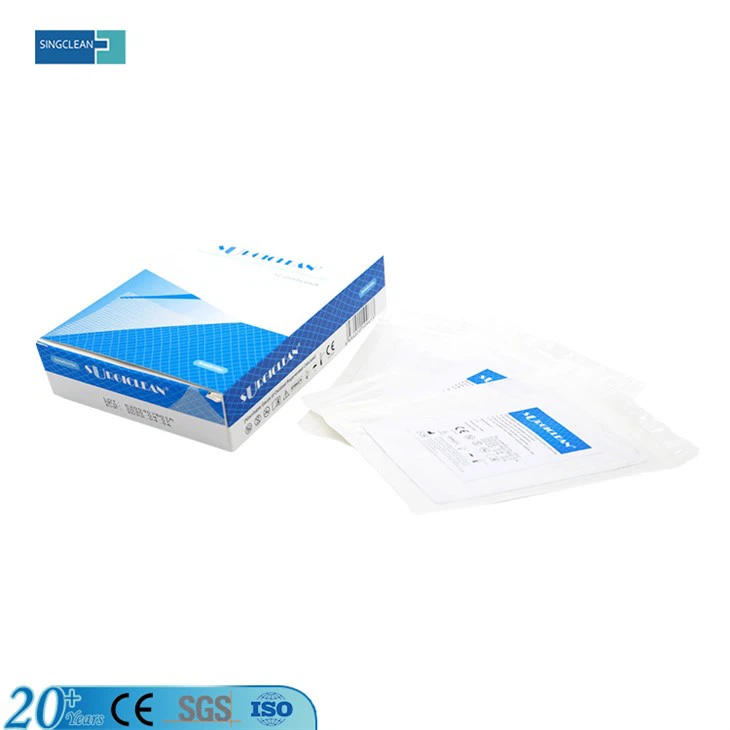
Effective clotting gauze is a specialized medical product designed to accelerate the natural blood - clotting process. It is typically made from materials that have hemostatic properties. For example, some clotting gauzes are made of oxidized cellulose. You can learn more about Oxidized Cellulose Dressing and Oxidized Cellulose Hemostatic Agent on our website. These materials work by interacting with the blood components, such as platelets and fibrinogen, to form a stable clot more rapidly.

Pre - application Preparation
Before applying the clotting gauze, it is essential to take some preparatory steps. First, ensure your own safety. Wear appropriate personal protective equipment (PPE), such as gloves, to prevent cross - contamination. This is not only important for your well - being but also for the patient's safety.
Next, assess the wound. Determine the size, depth, and location of the bleeding. If the wound is large or deep, or if there is an embedded object, it may require additional medical attention. However, the clotting gauze can still be used as a temporary measure to control the bleeding until professional help arrives.
Gather all the necessary supplies. In addition to the clotting gauze, you may need clean scissors to cut the gauze to the appropriate size, and a pressure bandage if available. Make sure everything is within easy reach.
Application Steps
- Cut the Gauze: If the wound is smaller than the size of the clotting gauze, use clean scissors to cut the gauze to a size that can fully cover the wound. It is important to cut the gauze as close to the wound as possible to avoid unnecessary handling and potential contamination.
- Remove the Packaging: Carefully open the packaging of the clotting gauze. Avoid touching the inner surface of the gauze with your fingers to prevent introducing foreign substances.
- Apply the Gauze to the Wound: Place the clotting gauze directly on the bleeding wound. Ensure that the entire wound is covered. If the wound is irregularly shaped, you may need to fold or layer the gauze to ensure complete coverage.
- Apply Pressure: Once the gauze is in place, apply firm and continuous pressure on the gauze with your hand. The pressure helps the clotting gauze to come into full contact with the blood and promotes the clotting process. Hold the pressure for at least 3 - 5 minutes without releasing it. If the bleeding persists after 5 minutes, continue applying pressure for another 5 minutes.
- Secure the Gauze: If available, apply a pressure bandage over the clotting gauze. Wrap the bandage tightly but not so tight that it restricts blood circulation. The pressure bandage helps to maintain the pressure on the wound and keeps the clotting gauze in place.
Special Considerations for Different Wound Types
- Arterial Bleeding: Arterial bleeding is characterized by bright red blood that spurts out rhythmically. This type of bleeding is more severe and requires immediate attention. When dealing with arterial bleeding, in addition to applying the clotting gauze and pressure, you may need to elevate the injured limb above the level of the heart to reduce blood flow to the wound. If possible, use a tourniquet proximal to the wound as a last resort, but only if the bleeding cannot be controlled by other means.
- Venous Bleeding: Venous bleeding is usually a steady flow of dark red blood. Applying the clotting gauze and pressure is often sufficient to control venous bleeding. Elevating the limb can also help reduce the blood flow and speed up the clotting process.
- Wounds with Foreign Objects: If there is a foreign object embedded in the wound, do not attempt to remove it. Instead, apply the clotting gauze around the object and apply pressure. Removing the foreign object may cause further damage and increase the bleeding.
Post - application Monitoring
After applying the clotting gauze, it is important to monitor the wound closely. Check for any signs of continued bleeding, such as blood seeping through the gauze or bandage. If the bleeding stops, do not remove the gauze immediately. Leave it in place until medical professionals can assess the wound.
Observe the patient's vital signs, such as heart rate, breathing, and level of consciousness. If the patient shows signs of shock, such as pale skin, rapid breathing, or confusion, seek immediate medical help.
Storage and Shelf - life of Clotting Gauze
Proper storage of the clotting gauze is essential to maintain its effectiveness. Store the gauze in a cool, dry place away from direct sunlight. Check the expiration date regularly, and do not use the gauze if it has expired. Expired clotting gauze may not be as effective in promoting clotting.
Benefits of Using Our Effective Clotting Gauze
Our effective clotting gauze offers several advantages. Firstly, it is made from high - quality materials that have been rigorously tested for safety and efficacy. The Hemostatic Dressing we provide is designed to work quickly and effectively in various bleeding situations.
Secondly, our clotting gauze is easy to use. The simple application process makes it suitable for both medical professionals and non - medical personnel in emergency situations.
Finally, we offer a wide range of clotting gauze products to meet different needs. Whether you need a small - sized gauze for minor wounds or a large - sized one for more severe injuries, we have the right product for you.
Conclusion
Applying effective clotting gauze correctly can significantly improve the chances of controlling severe bleeding and saving lives. By following the steps outlined in this blog, you can ensure that the clotting gauze is used to its maximum potential.
If you are interested in purchasing our high - quality effective clotting gauze, we welcome you to contact us for further details and to discuss your specific requirements. Our team of experts is ready to assist you in finding the best solution for your hemostasis needs.
References
- American Red Cross. First Aid: Responding to Emergencies.
- National Institute of Health. Wound Healing and Hemostasis Research.
- World Health Organization. Guidelines on First Aid in Low - and Middle - Income Countries.