


Hey there! As a supplier of sponge absorbable hemostats, I often get asked whether these nifty little products require special handling during transportation. Well, let's dive right in and explore this topic.
First off, what exactly is a sponge absorbable hemostat? It's a medical device used to control bleeding during surgical procedures. These sponges are made from materials like collagen, which are biocompatible and can be absorbed by the body over time. There are different types available, such as the Collagen Hemostatic Agent, Collagen Hemostat, and Hemostatic Sponge.
Now, let's talk about why transportation matters. The effectiveness of a sponge absorbable hemostat depends on its physical and chemical properties. If these properties are compromised during transportation, the hemostat might not work as intended when it reaches the end - user, which could have serious consequences in a surgical setting.
One of the key factors to consider during transportation is temperature. Most sponge absorbable hemostats are sensitive to extreme temperatures. High temperatures can cause the collagen structure in the sponge to break down. This means that the sponge might lose its ability to absorb blood effectively or could even degrade into an unusable form. On the other hand, very low temperatures can make the sponge brittle, and it might crack or break apart.
So, what kind of temperature range is ideal? Well, typically, these hemostats should be transported within a temperature range of 2 - 8 degrees Celsius. This is a relatively narrow range, and it requires careful monitoring. Specialized shipping containers with temperature - control features are often used to ensure that the hemostats stay within this range. These containers are equipped with insulation and sometimes even active cooling systems to maintain the right temperature.
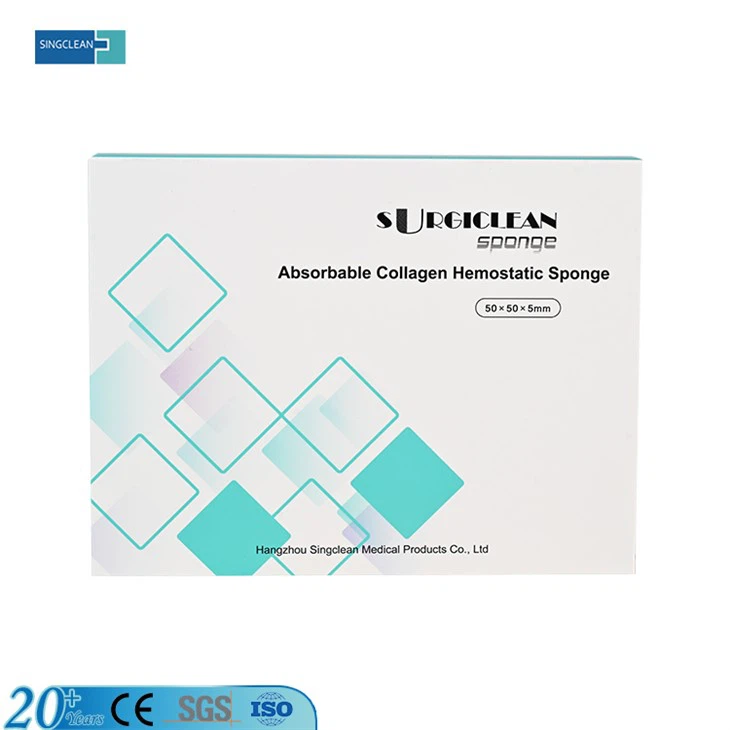

Another important aspect is humidity. Excessive humidity can cause the sponge to absorb moisture from the air. This can lead to mold growth or changes in the sponge's physical properties. For example, a moist sponge might become sticky and difficult to handle during a surgical procedure. To combat this, the hemostats are usually packed in moisture - resistant packaging. The packaging is designed to protect the sponge from external humidity and keep it in a dry state throughout the transportation process.
Vibration is also a concern. During transportation, the hemostats are subjected to various vibrations, especially if they are being shipped by road or air. Strong vibrations can cause the sponge to break or damage its internal structure. To minimize this risk, the products are often packed in shock - absorbing materials. Foam inserts or cushioning materials are used to surround the hemostats and absorb any shocks or vibrations that occur during transit.
Light is another factor that can affect the quality of sponge absorbable hemostats. Some materials in the hemostats can be sensitive to light, especially ultraviolet (UV) light. Prolonged exposure to UV light can cause chemical changes in the sponge, which might reduce its effectiveness. That's why the packaging is usually opaque, which blocks out light and protects the hemostat from any potential light - induced damage.
Now, let's talk about documentation and tracking. When transporting sponge absorbable hemostats, detailed documentation is essential. This includes information about the product, such as its batch number, expiration date, and storage conditions. There should also be records of the temperature and humidity levels during transportation. This documentation is important for quality control and traceability. In case there are any issues with the product, the records can be used to determine if the transportation process was a contributing factor.
Tracking is also crucial. With modern technology, it's possible to track the location and condition of the hemostats in real - time. GPS tracking devices can be used to monitor the movement of the shipment, and sensors can be installed to measure temperature, humidity, and vibration. This allows the supplier and the customer to have full visibility into the transportation process and take appropriate action if any problems arise.
In addition to these technical aspects, there are also regulatory requirements to consider. Different countries and regions have their own regulations regarding the transportation of medical devices, including sponge absorbable hemostats. These regulations are in place to ensure the safety and efficacy of the products. As a supplier, it's our responsibility to make sure that we comply with all the relevant regulations. This might involve obtaining special permits or certifications for transportation.
So, to answer the question, yes, sponge absorbable hemostats do require special handling during transportation. From temperature and humidity control to shock absorption and light protection, every aspect of the transportation process needs to be carefully managed to ensure that the hemostats reach the end - user in perfect condition.
If you're in the market for high - quality sponge absorbable hemostats, look no further. We, as a supplier, take all the necessary steps to ensure that our products are transported under the best possible conditions. We have the expertise and the infrastructure to handle the transportation of these sensitive medical devices. Whether you're a hospital, a surgical center, or a distributor, we can provide you with the products you need.
If you're interested in learning more about our sponge absorbable hemostats or would like to start a procurement discussion, don't hesitate to reach out. We're here to answer all your questions and work with you to meet your specific needs.
References
- Medical Device Transportation Guidelines, International Medical Device Regulators Forum (IMDRF)
- Collagen - based Biomaterials in Medicine, Journal of Biomedical Materials Research