


In the field of emergency medical treatment, the rapid control of severe bleeding is crucial for saving lives. Two commonly used tools for hemostasis are safe gauze hemostats and tourniquets. As a supplier of safe gauze hemostats, I am often asked about the effectiveness of these two methods. In this blog, I will explore whether safe gauze hemostats work better than tourniquets based on scientific evidence and practical applications.
Understanding Tourniquets
Tourniquets have been used for centuries to control bleeding. They work by applying pressure to the blood vessels, preventing blood flow to the injured area. Tourniquets are typically used in cases of severe limb bleeding, such as those caused by traumatic injuries or amputations.
One of the main advantages of tourniquets is their simplicity and ease of use. They can be quickly applied by non - medical personnel in emergency situations. For example, in combat zones or during natural disasters, soldiers or first responders can rapidly apply a tourniquet to stop life - threatening bleeding. According to a study published in the Journal of Trauma and Acute Care Surgery, tourniquet use in combat has significantly reduced the mortality rate from limb - related bleeding (Blackbourne et al., 2011).
However, tourniquets also have some limitations. Prolonged use of tourniquets can cause tissue ischemia, nerve damage, and muscle necrosis. The pressure applied by the tourniquet cuts off the blood supply not only to the injured area but also to the healthy tissues downstream. In addition, tourniquets are only effective for limb bleeding and cannot be used for non - limb injuries such as abdominal or chest bleeding.

The Science Behind Safe Gauze Hemostats
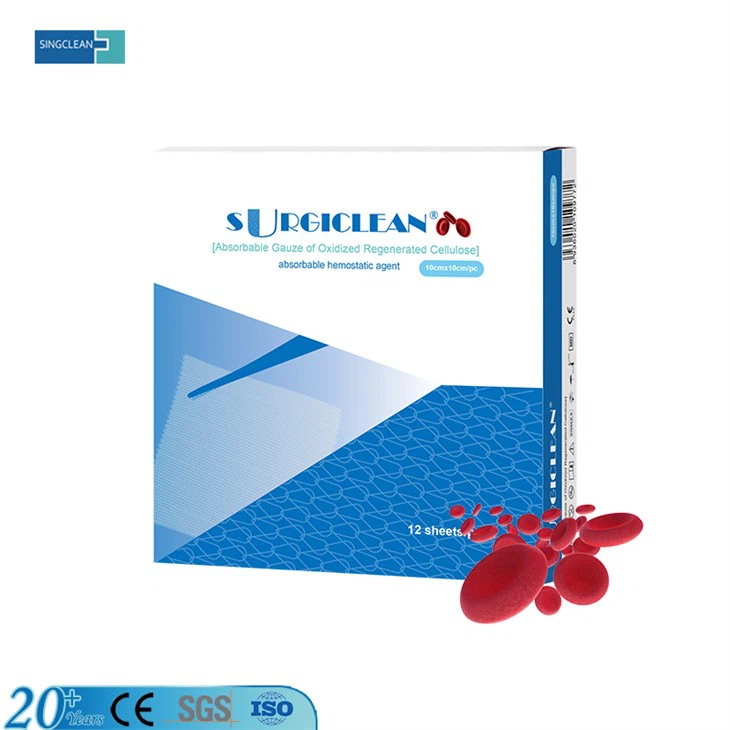
Safe gauze hemostats, also known as hemostatic gauzes, are designed to promote blood clotting at the site of injury. These gauzes are often impregnated with substances such as chitosan or kaolin, which have hemostatic properties. Chitosan, a natural polymer derived from crustacean shells, can interact with red blood cells and platelets to form a clot. Kaolin, a type of clay, activates the coagulation cascade, accelerating the formation of blood clots.
One of the key benefits of safe gauze hemostats is their ability to be used in a variety of bleeding situations. Unlike tourniquets, they can be applied to non - limb injuries, including wounds in the abdomen, chest, and head. For example, in cases of internal bleeding during surgery, hemostatic gauzes can be placed directly on the bleeding site to control the bleeding.
Safe gauze hemostats are also less likely to cause long - term damage compared to tourniquets. Since they work by promoting natural clotting mechanisms rather than completely blocking blood flow, the risk of tissue ischemia and nerve damage is significantly reduced. A study in the Annals of Surgery showed that the use of hemostatic gauzes in liver surgery effectively reduced blood loss and had fewer complications compared to traditional methods (Boffard et al., 2008).
Comparing the Effectiveness in Different Scenarios
Limb Bleeding
In cases of limb bleeding, both tourniquets and safe gauze hemostats can be effective. Tourniquets are still the first choice for immediate, life - saving control of severe limb bleeding, especially when the source of bleeding is difficult to access or when there is a large amount of blood loss. However, once the patient is in a more stable condition, the tourniquet should be removed as soon as possible to avoid complications. At this time, a safe gauze hemostat can be applied to the wound to continue to control bleeding and promote healing.
For example, in a pre - hospital setting, a first responder may quickly apply a tourniquet to a patient with a severe leg injury. Once the patient reaches the hospital, the medical team can remove the tourniquet and use a Hemostatic Gauze Dressing to manage the remaining bleeding and prevent re - bleeding.
Non - Limb Bleeding
When it comes to non - limb bleeding, safe gauze hemostats clearly have an advantage over tourniquets. Tourniquets are not applicable in these situations, while hemostatic gauzes can be used to control bleeding in various internal and external non - limb wounds. For instance, in cases of epistaxis (nosebleeds), a Blood Stop Gauze can be inserted into the nasal cavity to stop the bleeding. In abdominal or chest injuries, hemostatic gauzes can be placed directly on the bleeding organs or tissues to promote clotting.
Practical Considerations
In addition to effectiveness, there are other practical considerations when choosing between safe gauze hemostats and tourniquets. Cost is an important factor, especially for healthcare providers and emergency response organizations. Tourniquets are generally less expensive than hemostatic gauzes, but the long - term costs associated with tourniquet - related complications may outweigh the initial savings.
Storage and shelf - life are also important. Tourniquets are relatively easy to store and have a long shelf - life. Safe gauze hemostats, on the other hand, may require specific storage conditions to maintain their hemostatic properties. However, many modern hemostatic gauzes are designed to have a long shelf - life and can be stored at room temperature.
Conclusion
In conclusion, both safe gauze hemostats and tourniquets have their own advantages and disadvantages. Tourniquets are effective for immediate control of severe limb bleeding, but they carry the risk of long - term complications. Safe gauze hemostats, on the other hand, can be used in a wider range of bleeding situations and are less likely to cause long - term damage.
As a supplier of safe gauze hemostats, I believe that these products offer a valuable alternative to tourniquets, especially in non - limb bleeding situations and for long - term hemostasis management. Our Hemostatic Dressing is designed to provide fast and effective hemostasis while minimizing the risk of complications.
If you are interested in learning more about our safe gauze hemostats or would like to discuss potential procurement opportunities, please feel free to contact us. We are committed to providing high - quality hemostatic products to meet your needs.
References
Blackbourne, L. H., Del Junco, D. J., Mallett, S. D., et al. (2011). Prehospital tourniquet use in a combat environment: 2 - year prospective experience. Journal of Trauma and Acute Care Surgery, 70(3), 569 - 575.
Boffard, K. D., Yellin, A., Levy, J. H., et al. (2008). Efficacy and safety of a hemostatic dressing in pre - hospital trauma patients with non - compressible torso hemorrhage: a randomized, placebo - controlled, double - blind clinical trial. Annals of Surgery, 248(2), 228 - 237.