


Hey there! I'm a supplier of wound packing gauze, and today I wanna chat about how wound packing gauze interacts with wound dressing. It's a topic that's super important in the world of wound care, and I'm excited to share some insights with you.
First off, let's talk about what wound packing gauze and wound dressing are. Wound packing gauze is a type of material that's used to fill in deep wounds. It helps to absorb excess fluid, prevent infection, and promote healing. On the other hand, wound dressing is a covering that's placed over the wound to protect it from further damage, keep it clean, and provide a moist environment for healing.
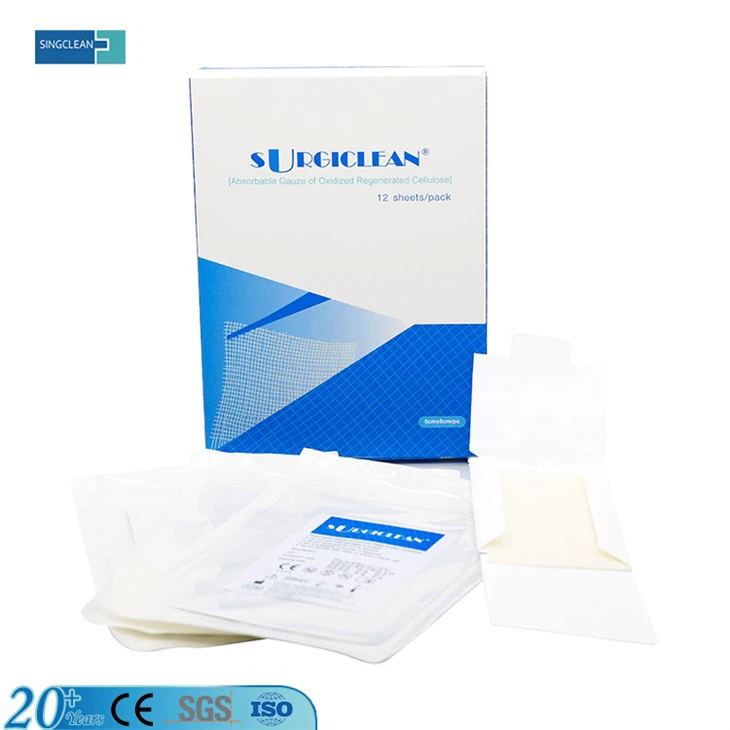

So, how do these two work together? Well, it all starts with the application. When a wound is deep, the first step is to pack it with the gauze. The gauze is carefully inserted into the wound, making sure to fill all the nooks and crannies. This helps to soak up any blood or other fluids that are present in the wound. It also acts as a physical barrier, preventing bacteria from entering the wound and causing an infection.
Once the wound is packed with gauze, the next step is to apply the wound dressing. The dressing is placed over the packed wound, providing an additional layer of protection. It helps to keep the gauze in place and also keeps the wound clean and protected from the outside environment.
One of the key interactions between wound packing gauze and wound dressing is the management of moisture. The gauze absorbs excess fluid from the wound, but it also needs to allow for some evaporation. If the wound is too dry, the healing process can be slowed down. On the other hand, if there's too much moisture, it can lead to maceration of the surrounding tissue, which can also impede healing. The wound dressing plays a crucial role here. It helps to regulate the moisture level in the wound by allowing for the right amount of evaporation. Some dressings are designed to be semi - permeable, which means they can let moisture out while still keeping bacteria and other contaminants out.
Another important aspect of the interaction is the hemostatic effect. Some wound packing gauzes, like the Oxidized Cellulose Hemostatic Agent, are designed to promote blood clotting. When these gauzes are used in combination with a wound dressing, they can work together to stop bleeding more effectively. The gauze comes into direct contact with the wound site and helps to form a clot, while the dressing provides pressure and support to keep the clot in place.
Hemostatic Gauze is another great example. It contains special agents that can speed up the clotting process. When it's packed into a wound and covered with a dressing, it can quickly stop bleeding, which is especially important in cases of severe wounds.
Hemostatic Gauze Pad is also useful in this regard. It can be placed over the wound and held in place by the dressing. The pad helps to control bleeding and provides a stable environment for the initial stages of wound healing.
The choice of wound packing gauze and wound dressing also depends on the type of wound. For example, in a chronic wound, such as a diabetic ulcer, the gauze and dressing need to be able to manage the high levels of exudate. A highly absorbent gauze might be used, along with a dressing that can maintain a moist environment for a longer period. In an acute wound, like a surgical incision, the focus might be more on hemostasis and preventing infection. So, a hemostatic gauze and a sterile dressing would be more appropriate.
The frequency of changing the wound packing gauze and dressing is also an important factor in their interaction. If the gauze and dressing are left in place for too long, it can lead to the growth of bacteria and other complications. However, changing them too frequently can also disrupt the healing process. The healthcare provider needs to assess the condition of the wound regularly and determine the optimal time for changing the gauze and dressing.
In addition to the physical interactions, there are also some chemical interactions between the two. Some wound dressings are impregnated with antibiotics or other medications. When these dressings come into contact with the wound packing gauze, the medications can be slowly released into the wound, providing additional protection against infection.
Overall, the interaction between wound packing gauze and wound dressing is a complex but crucial part of wound care. They work together to create an optimal environment for wound healing, manage moisture, control bleeding, and prevent infection.
If you're in the market for high - quality wound packing gauze or are interested in learning more about how these products interact with wound dressings, I'd love to have a chat with you. Whether you're a healthcare provider, a distributor, or someone involved in the wound care industry, we can have a detailed discussion about your needs and how our products can fit into your requirements. Reach out to me, and let's start a conversation about improving wound care.
References
- Textbook of Wound Management, 5th Edition
- Journal of Wound Care, various issues
- Wound Healing: Biochemical and Clinical Aspects, 3rd Edition