


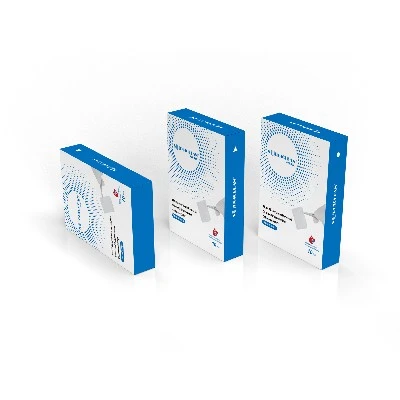
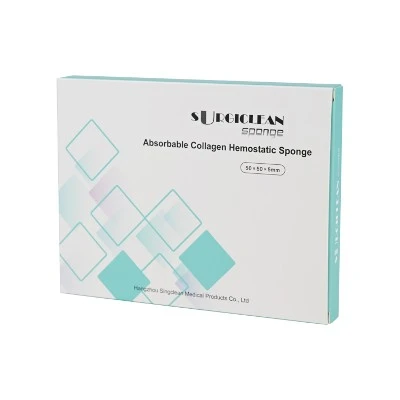

Hi there! As a supplier of Fibrillar Hemostat, I'm excited to share with you how this innovative product helps control bleeding. It represents an important advancement in hemostatic technology.
Understanding the Basics of Bleeding
When a blood vessel is damaged, the body initiates a natural clotting process known as hemostasis. This involves two key mechanisms: platelet activation and the coagulation cascade.
Platelets are small cell fragments that rush to the injury site, where they adhere to the exposed vessel wall and to each other, forming a temporary platelet plug. Simultaneously, a series of proteins called clotting factors are activated in a stepwise sequence. This cascade ultimately generates thrombin, which converts fibrinogen into fibrin. The fibrin strands form a mesh that reinforces the platelet plug, creating a stable clot that stops bleeding.
How Fibrillar Hemostat Works
Fibrillar Hemostat is a specialized hemostatic agent designed to accelerate this natural process. Its mechanism of action depends on the specific material composition-common types include oxidized regenerated cellulose.
High Surface Area for Platelet Interaction
One of the key features of fibrillar hemostats is their expanded surface area. The loose, fibrillar structure provides a large surface that facilitates platelet adhesion and aggregation. When applied to a bleeding wound, platelets readily attach to the fibers, helping to form a mechanical barrier that reduces blood flow and promotes clot formation.
Mechanisms of Hemostasis (Product-Dependent)
Different fibrillar hemostats achieve hemostasis through distinct mechanisms:
Oxidized regenerated cellulose (ORC) : Creates a low-pH environment upon contact with blood, causing protein denaturation and erythrocyte aggregation. This forms a gelatinous clot that is largely independent of the body's coagulation cascade. ORC also provides a physical scaffold for platelet adhesion.
It is important to note that not all fibrillar hemostats "activate clotting factors" in the traditional sense. ORC, for example, does not rely on or accelerate the enzymatic coagulation cascade; instead, it works primarily through physical and chemical mechanisms.
Absorbability
Many fibrillar hemostats are absorbable. Hemostatic Fiber Gauze, for instance, is gradually absorbed by the body over 7-14 days. This eliminates the need for removal, reducing the risk of re-bleeding or additional trauma. However, absorbability varies by product-some fibrillar hemostats are non-absorbable and must be removed after hemostasis is achieved.

Practical Applications
In Surgical Procedures
Fibrillar hemostats are widely used in surgery. Surgeons often encounter capillary, venous, or small arterial bleeding during operations. Fibrillar hemostats can be applied directly to the bleeding site and easily molded to conform to irregular wound surfaces, providing effective hemostasis without the need for sutures or cautery in appropriate situations.
Conclusion
Fibrillar Hemostat represents a valuable category of hemostatic agents that enhance the body's natural clotting process. Its high surface area, mechanical scaffold properties, and (in some formulations) absorbability make it a useful tool in surgical and emergency settings.
If you are a surgeon, first responder, or hospital administrator looking for reliable hemostatic solutions, we are here to help. We are a trusted supplier of high-quality fibrillar hemostats, committed to supporting better patient outcomes.
If you are interested in purchasing Fibrillar Hemostat for your medical facility or organization, please reach out to us. We can provide detailed product information, including specifications, availability, and pricing. We are dedicated to excellent customer service and helping you find the right product for your specific needs.
References
Achneck, H. E., et al. (2010). A comprehensive review of topical hemostatic agents: efficacy and recommendations for use. Annals of Surgery, 251(2), 217–228.
Sileshi, B., et al. (2008). Topical hemostatic agents in surgical practice. Journal of Surgical Research, 144(1), 54–62.
Vyas, K. S., & Saha, S. P. (2013). Comparison of hemostatic agents used in surgery. Innovations, 8(5), 328–333.