


Effective clotting gauze has emerged as a crucial tool in modern medicine, especially in controlling bleeding and promoting wound healing. As a supplier of high - quality effective clotting gauze, I've had the opportunity to explore in depth how this remarkable product interacts with the immune system. In this blog, I'll share some insights into this fascinating topic.
The Basics of Effective Clotting Gauze
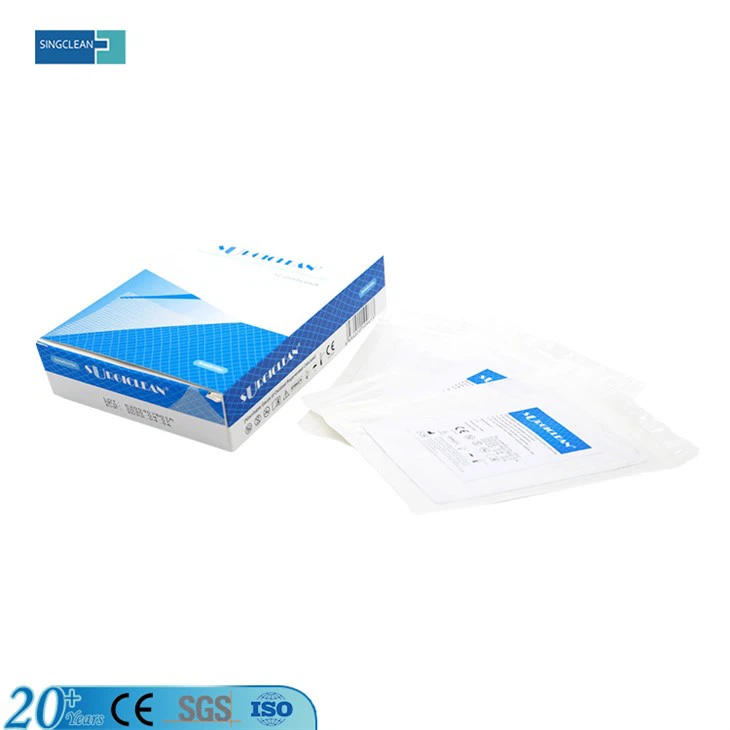
Effective clotting gauze comes in various forms, such as Oxidized Cellulose Hemostatic Agent, Blood Stop Gauze, and Hemostatic Dressing. These products are designed to rapidly initiate the clotting process when in contact with blood. They work by providing a physical scaffold for platelets to adhere to, and some also have chemical properties that can activate the coagulation cascade.
Initial Interaction with the Immune System
When effective clotting gauze is applied to a bleeding wound, it immediately comes into contact with the body's immune cells. The first responders in the immune system are the neutrophils. These white blood cells are attracted to the site of injury by chemical signals released from damaged tissues and the clotting gauze itself. The physical presence of the gauze can act as a foreign body, triggering an immune response. However, modern clotting gauzes are designed to be biocompatible, which means they are less likely to cause a severe inflammatory reaction.
The clotting process initiated by the gauze is closely linked to the immune response. As the platelets aggregate on the surface of the gauze and form a clot, they release cytokines and growth factors. These molecules not only promote further clot formation but also attract immune cells to the area. For example, platelet - derived growth factor (PDGF) can stimulate the migration of macrophages, another important type of immune cell.
Macrophage Involvement
Macrophages play a dual role in the context of effective clotting gauze and wound healing. On one hand, they are responsible for phagocytosing debris, bacteria, and any foreign particles that may be present at the wound site, including small fragments of the clotting gauze. This helps to prevent infection and clean up the area for the next stage of healing. On the other hand, macrophages secrete cytokines and growth factors that are essential for tissue repair.
The interaction between the clotting gauze and macrophages can be influenced by the composition of the gauze. Some clotting gauzes are impregnated with substances that can modulate the macrophage response. For instance, certain natural polymers used in the gauze can enhance the anti - inflammatory properties of macrophages, reducing the risk of excessive inflammation and promoting a more efficient healing process.
Role of the Complement System
The complement system is a part of the innate immune system that consists of a series of proteins. When effective clotting gauze is introduced to the wound, it can activate the complement cascade. Activation of the complement system leads to the generation of various molecules, such as C3a and C5a, which are chemotactic factors. These factors attract immune cells to the site of injury and also help to opsonize pathogens, making them easier to be phagocytosed by macrophages and neutrophils.
However, an over - activation of the complement system can be detrimental. High - quality clotting gauzes are engineered to activate the complement system in a controlled manner. This ensures that the immune response is sufficient to fight off infection and promote healing without causing excessive tissue damage.
Long - term Effects on the Immune System
In the long - term, effective clotting gauze can have a positive impact on the immune system's ability to heal the wound. As the clot formed with the help of the gauze matures, it provides a stable environment for tissue regeneration. The immune system gradually transitions from an inflammatory phase to a reparative phase. During this time, the clotting gauze may be gradually absorbed by the body, depending on its composition.
Some clotting gauzes are made of materials that can be completely degraded by the body's enzymes. As they break down, they release substances that can further support the immune - mediated healing process. For example, certain polysaccharides in the gauze can stimulate the production of collagen, a key protein in tissue repair.
Clinical Significance
The interaction between effective clotting gauze and the immune system has significant clinical implications. In surgical settings, the use of clotting gauze can reduce the risk of post - operative bleeding and infection. By promptly controlling bleeding, the gauze allows the immune system to focus on preventing infection and promoting tissue repair.
In trauma cases, especially in pre - hospital settings, effective clotting gauze can be a life - saving tool. It can rapidly stop bleeding, which is crucial in preventing shock and improving the patient's chances of survival. The immune system can then work more effectively to deal with any associated injuries and prevent complications.
Conclusion
In conclusion, effective clotting gauze has a complex and dynamic interaction with the immune system. From the initial activation of immune cells to the long - term support of tissue repair, the gauze plays a vital role in the wound - healing process. As a supplier of Oxidized Cellulose Hemostatic Agent, Blood Stop Gauze, and Hemostatic Dressing, I am proud to offer products that are designed to work in harmony with the body's natural immune defenses.
If you are interested in learning more about our effective clotting gauze products or would like to discuss potential procurement opportunities, please feel free to reach out. We are committed to providing high - quality solutions for your hemostatic needs.

References
- Kumar, V., Abbas, A. K., Aster, J. C. (Eds.). (2020). Robbins and Cotran Pathologic Basis of Disease. Elsevier.
- Guyton, A. C., Hall, J. E. (2016). Textbook of Medical Physiology. Elsevier.
- Mescher, A. L. (2018). Junqueira's Basic Histology: Text and Atlas. McGraw - Hill Education.