


Hey there! I'm a supplier of hemostatic dressing, and today I want to dig into a question that often pops up: Can hemostatic dressing be used on joint wounds?
Let's start by understanding what joint wounds are. Joints are complex areas of our body where two or more bones meet. They're surrounded by a lot of soft tissues, ligaments, and tendons, and they're constantly in motion. When a joint gets wounded, it can be a real pain – both literally and figuratively. The movement of the joint makes it challenging to keep the wound stable, and the blood flow in these areas can be quite significant due to the rich vascular network.
Now, let's talk about hemostatic dressings. These are pretty amazing products. They're designed to stop bleeding quickly and effectively. There are different types of hemostatic dressings out there, like Oxidized Cellulose Hemostatic Agent, Hemostatic Gauze, and Blood Stop Gauze. Each of these has its own unique properties and ways of working.
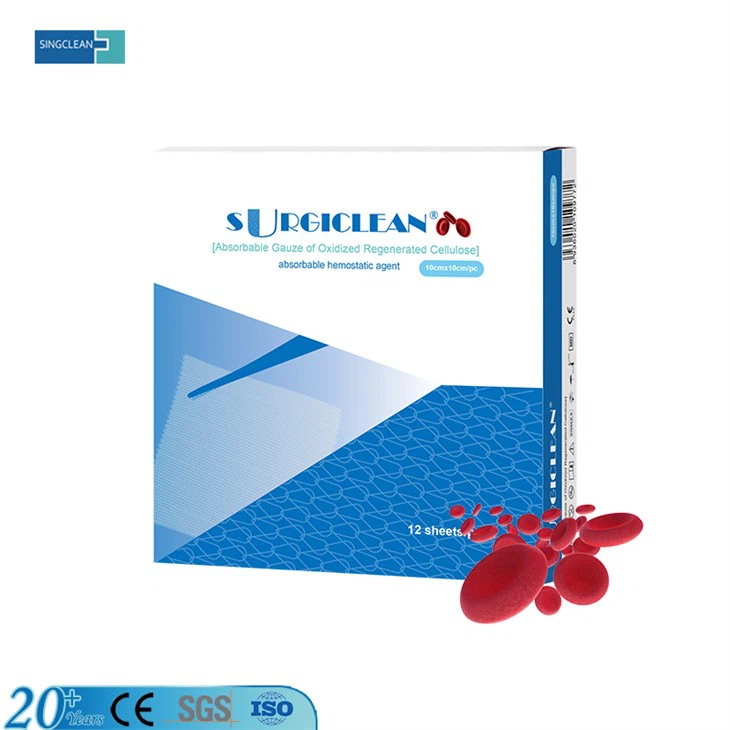
So, can we use hemostatic dressing on joint wounds? The short answer is yes, but there are some things to keep in mind.
One of the main challenges with using hemostatic dressing on joint wounds is the movement. Joints are always moving, whether it's a simple bend of the knee or a twist of the wrist. This movement can cause the dressing to shift or come loose, which might affect its ability to stop the bleeding. To counter this, it's important to use a dressing that can adhere well to the skin and stay in place even with movement. Some hemostatic dressings come with an adhesive backing or can be secured with a bandage to keep them in position.
Another factor to consider is the depth and severity of the wound. Joint wounds can range from minor scrapes to deep lacerations. For minor wounds, a simple hemostatic dressing might do the trick. But for more severe wounds, especially those that involve damage to deeper tissues or blood vessels, additional medical attention might be required. In these cases, the hemostatic dressing can be used as a first - aid measure to control the bleeding until professional help arrives.

The type of hemostatic dressing also matters. Oxidized cellulose hemostatic agents, for example, work by promoting blood clotting. They can be very effective in stopping bleeding, but they need to be applied correctly. The cellulose material interacts with the blood to form a gel - like substance that helps seal the wound. Hemostatic gauze, on the other hand, is often made of materials that can absorb blood and provide a physical barrier to prevent further bleeding. Blood stop gauze is designed to quickly stop bleeding and can be a great option for joint wounds.
When using hemostatic dressing on joint wounds, it's crucial to clean the wound first. Any dirt or debris in the wound can increase the risk of infection. Then, carefully apply the hemostatic dressing. Make sure to cover the entire wound area and press it firmly to ensure good contact with the skin.
It's also important to monitor the wound after applying the dressing. Check for any signs of continued bleeding, swelling, or infection. If the bleeding doesn't stop after a reasonable amount of time or if the wound shows signs of infection, such as redness, warmth, or pus, seek medical help immediately.
Now, as a supplier of hemostatic dressings, I can tell you that we've put a lot of research and development into our products. Our hemostatic dressings are made from high - quality materials and are designed to be effective in a variety of situations, including joint wounds. We understand the unique challenges that joint wounds present, and our products are formulated to address those challenges.
If you're in the market for hemostatic dressings, whether it's for a medical facility, first - aid kit, or other applications, I encourage you to reach out to us. We can provide you with detailed information about our products, their features, and how they can be used effectively. We're committed to providing the best quality hemostatic dressings at competitive prices.
In conclusion, hemostatic dressings can be used on joint wounds, but it's important to take into account the movement of the joint, the severity of the wound, and the type of dressing. With the right approach and the right product, you can effectively control bleeding and promote the healing of joint wounds.
So, if you're interested in learning more about our hemostatic dressings or have any questions, don't hesitate to contact us. We're here to help you find the best solution for your needs.