


In the realm of medical science, the development of effective hemostatic solutions has always been a critical area of focus. Safe gauze hemostats, in particular, have played a significant role in controlling bleeding across various medical scenarios. As a supplier of safe gauze hemostats, I am constantly on the lookout for new technologies that can enhance the performance and safety of these essential medical products.
Traditional Safe Gauze Hemostats and Their Limitations
Traditional safe gauze hemostats have been a staple in medical settings for decades. These gauzes work primarily through a physical mechanism of absorbing blood and applying pressure to the wound site. The porous structure of the gauze allows it to soak up blood, promoting the formation of a blood clot. However, they do have certain limitations.
One of the main drawbacks is the time it takes to achieve hemostasis. In cases of severe bleeding, every second counts, and traditional gauzes may not be able to stop the bleeding quickly enough. Additionally, they may not be as effective in situations where the blood flow is high or the wound is deep. Another limitation is the risk of infection. If the gauze is not properly sterilized or if it remains in the wound for an extended period, it can introduce bacteria and lead to complications.
New Technologies in Safe Gauze Hemostats
Hemostatic Agents Incorporation
One of the most significant advancements in safe gauze hemostats is the incorporation of hemostatic agents. These agents can accelerate the blood - clotting process by activating the body's natural clotting factors. For example, some gauzes are now impregnated with chitosan, a natural polymer derived from crustacean shells. Chitosan has been shown to have excellent hemostatic properties. It can bind to red blood cells and platelets, promoting their aggregation and the formation of a stable clot. This technology has been particularly effective in reducing the time to hemostasis, especially in traumatic injuries.
Another commonly used hemostatic agent is kaolin. Kaolin is a type of clay that activates factor XII in the intrinsic coagulation pathway. When applied to a wound, kaolin - impregnated gauze can quickly initiate the clotting cascade, leading to faster bleeding control. These types of gauzes are often used in military and emergency medical settings where rapid hemostasis is crucial.

Advanced Material Design
In addition to the use of hemostatic agents, there have been significant improvements in the material design of safe gauze hemostats. Newer gauzes are made from advanced fibers that offer better absorbency and strength. For instance, some gauzes are now made from synthetic fibers that are more resistant to tearing and can hold a larger volume of blood compared to traditional cotton gauzes.
Moreover, the structure of the gauze has also been optimized. Some manufacturers have developed gauzes with a three - dimensional structure that allows for better blood penetration and clot formation. This design ensures that the hemostatic agents are evenly distributed throughout the wound site, maximizing their effectiveness.
Antimicrobial Properties
To address the issue of infection, many new safe gauze hemostats are now equipped with antimicrobial properties. Some gauzes are coated with silver nanoparticles, which have broad - spectrum antibacterial activity. Silver nanoparticles can inhibit the growth of bacteria by disrupting their cell membranes and interfering with their metabolic processes. This not only reduces the risk of infection but also promotes faster wound healing.
Examples of New - Generation Safe Gauze Hemostats
Hemostatic Dressing
Hemostatic Dressing is one such product that showcases the latest technologies in safe gauze hemostats. It is designed to be highly absorbent and is impregnated with a powerful hemostatic agent. The dressing is also treated with an antimicrobial coating to prevent infection. Its unique design allows it to conform to the shape of the wound, ensuring maximum contact with the bleeding site and effective hemostasis.
Hemostatic Gauze Pad
Hemostatic Gauze Pad is another innovative product. It is made from a high - performance synthetic fiber that offers superior strength and absorbency. The pad is embedded with a hemostatic agent that can rapidly stop bleeding. Its compact size makes it convenient for use in various medical settings, from ambulances to operating rooms.
Hemostatic Gauze
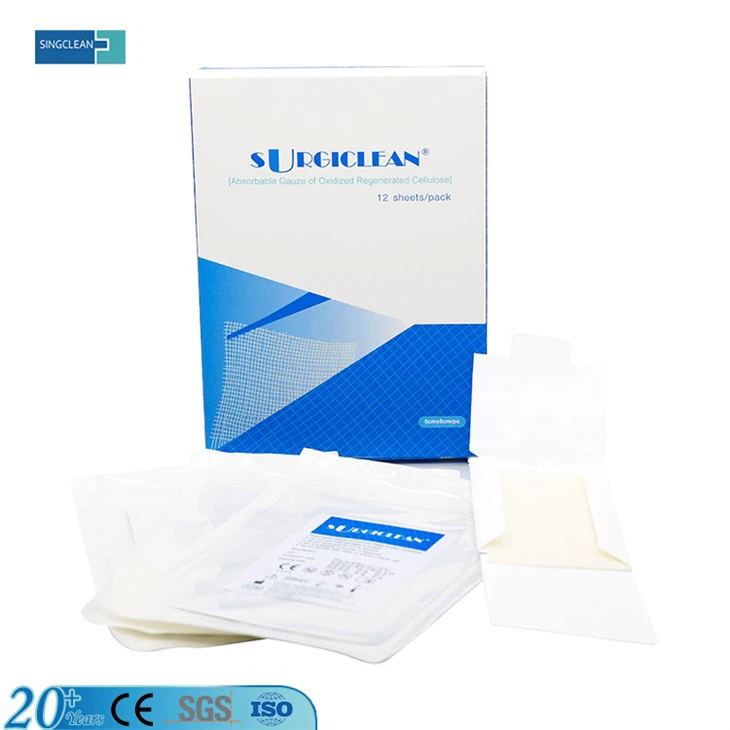
Hemostatic Gauze is a versatile option that combines the benefits of advanced materials and hemostatic agents. It is available in different sizes and can be easily cut to fit the wound. The gauze has a three - dimensional structure that enhances blood absorption and clot formation. It also has an antimicrobial layer to protect against infection.
Benefits of New Technologies in Safe Gauze Hemostats
The new technologies in safe gauze hemostats offer several benefits. Firstly, they significantly reduce the time to hemostasis, which can be life - saving in cases of severe bleeding. Secondly, the improved absorbency and strength of the new gauzes make them more reliable and easier to use. They can handle larger volumes of blood without tearing, ensuring that the wound is properly covered and protected.
The antimicrobial properties of these gauzes are also a major advantage. By reducing the risk of infection, they can minimize the need for antibiotics and other post - operative treatments, leading to faster recovery times for patients. Additionally, the advanced design of the gauzes allows for better conformability to the wound, which improves the overall effectiveness of the hemostatic process.
Contact for Procurement
If you are interested in learning more about our safe gauze hemostats or if you are looking to procure these products for your medical facility, we would be more than happy to assist you. Our team of experts can provide you with detailed information about the features and benefits of our products, as well as answer any questions you may have. We are committed to providing high - quality safe gauze hemostats that meet the highest standards of safety and effectiveness.
References
- A. K. Sharma, et al. "Chitosan - based hemostatic agents: A review." International Journal of Biological Macromolecules, 2019.
- B. R. Patel, et al. "Kaolin - impregnated gauze for hemostasis in trauma." Journal of Trauma and Acute Care Surgery, 2018.
- C. L. Smith, et al. "Antimicrobial silver nanoparticles in wound care." Wound Repair and Regeneration, 2020.